On this page
- The Old Town & Episcopal Castle
- Haapsalu Promenade & Kuursaal
- African Beach
- The White Lady Legend
- Haapsalu Railway Station & Museum
- Mud Therapy & Spa Culture
- Ilon’s Wonderland Museum
- Eating & Drinking in Haapsalu
- Day Trips from Haapsalu
- 2026 Budget Reality
- Getting to Haapsalu in 2026
- Frequently Asked Questions
💰 Click here to see Estonia Budget Breakdown
💰 Prices updated: October, 2026. Budget figures are estimates — always verify before travel.
Exchange Rate: $1 USD = €0.88
Daily Budget (per person)
Shoestring: €40.00 – €70.00 ($45.45 – $79.55)
Mid-range: €120.00 – €250.00 ($136.36 – $284.09)
Comfortable: €300.00 – €900.00 ($340.91 – $1,022.73)
Accommodation (per night)
Hostel/guesthouse: €15.00 – €40.00 ($17.05 – $45.45)
Mid-range hotel: €60.00 – €150.00 ($68.18 – $170.45)
Food (per meal)
Budget meal: €15.00 ($17.05)
Mid-range meal: €35.00 ($39.77)
Upscale meal: €100.00 ($113.64)
Transport
Single metro/bus trip: €2.00 ($2.27)
Monthly transport pass: €30.00 ($34.09)
Haapsalu gets overlooked constantly. Visitors fly into Tallinn, scroll through the usual lists, and end up choosing Tartu or Pärnu. That’s a mistake. This small coastal town of around 10,000 people on Estonia’s western coast is one of the most genuinely atmospheric places in the country — a place where a 13th-century bishop’s castle sits a five-minute walk from a sandy beach, and where the evening light over the bay in summer turns everything amber. In 2026, with improved bus connections from Tallinn and several attractions freshly updated, there’s no better time to make the trip.
The Old Town & Episcopal Castle
The Episcopal Castle is the heart of Haapsalu’s history, and it’s far more impressive in person than any photo suggests. Built in the 13th century by the Teutonic Order and later expanded by the Bishop of Ösel-Wiek, the complex includes a massive fortress wall, a round tower you can climb, and the cathedral — one of the best-preserved medieval church interiors in Estonia. The stone is cool and slightly damp even on warm days, and standing inside the roofless outer walls gives a real sense of the structure’s original scale.
The castle is managed by the Haapsalu and Läänemaa Museums, and as of 2026 the entry fee is around 7 EUR for adults, with a combined ticket covering the castle and the town museum available for 10 EUR. Summer evenings bring outdoor theatre and concerts inside the castle walls — check the local events calendar when you book accommodation, as these sell out.
The Old Town surrounding the castle is compact and walkable. The wooden houses along Karja, Kooli, and Wiedemanni streets have been carefully maintained, most painted in pale yellows, greens, and whites. There are no tacky souvenir shops cluttering the lanes — Haapsalu has largely avoided that.
Haapsalu Promenade & Kuursaal
The seaside promenade stretching along the bay is where Haapsalu’s 19th-century resort identity is most visible. The Kuursaal — a grand white wooden pavilion built in 1898 — anchors the western end of the walk. It’s been a concert venue, a café, and at various points a near-ruin. A significant restoration project that began in 2023 wrapped up in late 2025, and the building is now fully operational again as an event venue and café with a terrace facing the water.
Walking the promenade in the morning, you’ll hear the quiet slap of water against the wooden pier and smell the faint salt-and-seaweed mix of the shallow bay. The path is flat and easy, popular with locals cycling to work and older residents doing their daily walk. The famous African Beach sits at one end; the town marina and small fishing boats dot the other. The entire promenade takes about 25 minutes to walk end to end at a relaxed pace.
African Beach
The name sounds absurd for a small Estonian coastal town, and locals will cheerfully tell you so. “African Beach” — Aafrika rand in Estonian — earned the nickname in the early 20th century because its sheltered position makes it noticeably warmer than other spots on the bay. The shallow water heats up quickly in summer, reaching 22–24°C on good July days, which is genuinely warm by Baltic standards.
The beach itself is a mix of fine sand and smooth pebbles, backed by a small grassy area with a few benches and a changing cabin. It’s not a resort beach with sun loungers and vendors — it’s the kind of place families bring a blanket and teenagers play music from a phone speaker. Come here around 7–8 PM on a clear evening when the light is low and the bay turns copper. Most tourists have left, and you’ll have a strong claim to one of the quieter, more beautiful evening spots in western Estonia.
The White Lady Legend
Every August, visitors gather in the dark cathedral nave to watch the wall beside the northern window. According to local legend, on the night of the full moon in August, the face of a young woman appears in the window — the ghost of a girl who fell in love with a canon of the cathedral and was sealed into the wall as punishment. The bishop apparently had no tolerance for that sort of thing.
The story is local legend, not verified history, but the effect is real: when moonlight hits the pointed window arch at the right angle, a luminous female face does appear in the stone. The town celebrates this with the White Lady Days festival each August — several days of medieval markets, concerts, and the nightly candlelit vigil inside the cathedral. If your trip overlaps with late August, reorganise your schedule to be here for it.

Haapsalu Railway Station & Museum
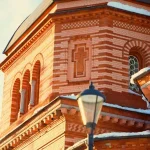
Haapsalu’s old railway station holds a specific kind of record: its covered platform is 216 metres long, built in 1905 specifically to accommodate the private imperial train of Tsar Nicholas II, who visited the town for its therapeutic mud treatments. The station stopped receiving regular passenger trains in 1995, but the building and platform have been preserved and converted into a railway museum.
The museum houses several restored Soviet-era locomotives, old carriages you can enter, and a detailed history of Estonian railway development. It’s more engaging than it sounds — particularly for anyone travelling with children, who tend to go very quiet and focused when climbing into the cab of a diesel locomotive. Entry in 2026 is around 5 EUR for adults. There’s also ongoing advocacy for reinstating a Tallinn–Haapsalu passenger rail connection, with Rail Baltica discussions occasionally touching on western branch options, though no confirmed timeline exists as of mid-2026.
Mud Therapy & Spa Culture
Haapsalu became famous across the Russian Empire in the 19th century because of its therapeutic blue clay, found in the shallow bay. Tchekhov visited. So did various Baltic German nobility. The mud — technically a marine silt rich in sulphur compounds — was prescribed for joint conditions, nerve pain, and rheumatism. The tradition never fully died.
Today, the main centre for mud treatments is the Haapsalu Spa Centre (Haapsalu Kuurordi Ravikeskus), which offers both traditional mud wraps and modern physiotherapy treatments. A standard mud bath session runs 35–55 EUR depending on duration. The mud itself has an earthy, mineral smell — not unpleasant, more like deep lake bottom — and the warmth soaks into your joints in a way that’s noticeably different from a regular sauna. It’s not a luxury spa experience; it’s more clinical and purposeful, which is exactly what regulars come back for.
Ilon’s Wonderland Museum
Ilon Wikland was born in Haapsalu in 1930 and went on to illustrate the original Astrid Lindgren books — including Pippi Longstocking and Emil of Lönneberga — making her one of the most widely read illustrators in the world. Most visitors outside Scandinavia and Estonia have never heard of her, which makes the small museum dedicated to her life and work a genuine discovery.
Ilon’s Wonderland (Iloni Imedemaa) is housed in a charming wooden building near the town centre and is designed to be interactive — children can draw, explore recreated scenes from the books, and handle props. Adults tend to spend longer than expected once they recognise the illustrations from childhood. Entry is around 6 EUR for adults, 4 EUR for children. The museum is closed on Mondays.
Eating & Drinking in Haapsalu
The food scene is small but has improved noticeably since 2023. Here are the specific places worth your time:
- Restaurant Vetka — the most consistently praised kitchen in town. Fish dishes using locally caught perch and pike-perch, served in a simple interior that doesn’t try too hard. Book ahead in July and August.
- Krahv Bistro — reliable Estonian classics: black bread with sprats, pork knuckle, and good local beer on tap. Casual, central, no reservations needed.
- Hapsal Dietrich — a café and deli inside a historic building near the castle. Good for coffee, open sandwiches, and pastries. The sourdough rye bread they sell is worth buying a loaf to take back to Tallinn.
- Haapsalu Chocolaterie — the town’s most-visited sweet stop. Handmade chocolates and marzipan in a small workshop you can peek into. Try the sea salt caramel.
Most meals at a mid-range restaurant run 12–20 EUR per main course. A coffee is 2.50–3.50 EUR. Haapsalu doesn’t have a late-night scene to speak of — the town quiets down by 10 PM even in summer.
Day Trips from Haapsalu
Haapsalu works well as a base for exploring the surrounding Läänemaa coast:
- Noarootsi Peninsula — a 20-minute drive north, this peninsula was historically home to Estonian Swedes (rannarootslased) and still has the quiet, end-of-the-road feeling of a place time hasn’t fully caught up with. The Noarootsi Museum in Pürksi tells the community’s story clearly and without sentimentality.
- Vormsi Island — Estonia’s fourth-largest island, reached by ferry from Rohuküla harbour (10 km from Haapsalu). The crossing takes about 45 minutes. Vormsi has almost no cars, a medieval church with a distinctive wheel-cross cemetery, and cycling trails through juniper meadows. The ferry runs several times daily in summer; check the TS Laevad schedule before you go.
- Lihula — a small town about 40 km southeast, worth a stop for its museum and the access it provides to the Matsalu National Park, one of Europe’s most important wetland bird migration areas.
2026 Budget Reality
Haapsalu is noticeably more affordable than Tallinn’s Old Town, though prices have risen across the board since 2024.
- Budget accommodation — guesthouses and smaller B&Bs: 45–65 EUR per night for a double room.
- Mid-range hotels — well-run hotels near the promenade or Old Town: 80–120 EUR per night.
- Comfortable / boutique options — the best-appointed properties with spa access: 130–180 EUR per night.
- Meals — a full sit-down dinner with drinks at a mid-range restaurant: 25–40 EUR per person.
- Activities — most museums and attractions cluster between 5–10 EUR per entry. A mud spa session adds 35–55 EUR. A full day of sightseeing without the spa runs well under 30 EUR in total entry fees.
A couple spending a weekend in Haapsalu — two nights accommodation, all meals, activities, and the ferry to Vormsi — can expect to spend 350–500 EUR total depending on accommodation tier and appetite.
Getting to Haapsalu in 2026
There is no direct passenger train to Haapsalu as of 2026. The main option is bus from Tallinn’s Bussijaam (bus station), operated by Lux Express and SEBE. The journey takes approximately 1 hour 45 minutes and costs 6–12 EUR one way depending on the operator and how far in advance you book. Buses run several times daily, with the first departure from Tallinn around 7 AM and the last return around 8 PM.
Driving from Tallinn takes about 1 hour 30 minutes via the Tallinn–Haapsalu highway (Route 10), which was resurfaced along its western section in 2025. Car rental from Tallinn Airport gives you the most flexibility, especially if you plan to visit Noarootsi or catch the Vormsi ferry. Parking in Haapsalu is free in most areas and rarely an issue outside the peak summer weeks.
From Pärnu, the drive is around 1 hour 20 minutes, making a Haapsalu–Pärnu combination logical for anyone doing a west coast loop.
Frequently Asked Questions
How many days do you need in Haapsalu?
Two full days is the comfortable minimum. Day one covers the castle, Old Town, promenade, and beach. Day two allows time for a mud spa session, the railway and Ilon’s Wonderland museums, and a half-day trip to Vormsi or Noarootsi. Three days gives you room to slow down and actually enjoy the pace the town is built for.
Is Haapsalu worth visiting in winter?
Yes, though the experience is completely different. The promenade and bay are atmospheric under snow or ice, the castle is crowd-free, and several cafés and restaurants stay open year-round. Some attractions, including Ilon’s Wonderland, have reduced winter hours. The mud spa centre operates throughout the year and is actually more popular in the colder months.
What is Haapsalu best known for?
Historically, its therapeutic mud baths drew 19th-century aristocracy and Russian imperial visitors, including Tchaikovsky. Today it’s equally known for the White Lady ghost legend, the medieval Episcopal Castle, and its well-preserved wooden resort architecture. It’s often described as one of Estonia’s most romantic small towns.
Can you do Haapsalu as a day trip from Tallinn?
Technically yes — the bus takes under two hours each way and the town is compact. But a day trip leaves little time to properly see the castle, museum, and promenade, and cuts out any chance of a spa session or Vormsi ferry. An overnight stay transforms the trip significantly and costs far less than equivalent accommodation in Tallinn.
When is the best time to visit Haapsalu?
June through August is peak season — warm bay water, the promenade fully alive, and the White Lady Days festival in late August. June is particularly good: fewer crowds than July, long evenings, and the wildflower meadows around town in full colour. May and September offer quieter visits with most attractions still open and accommodation prices lower.
Explore more
Haapsalu Travel Essentials: Your Guide to Getting There, Getting Around & Top Tips
Haapsalu Food Guide: The Best Restaurants, Cafes & Seaside Dining
Your Essential Guide to Shopping in Haapsalu, Estonia
📷 Featured image by Christian Vasile on Unsplash.