On this page
- The Haunting Drama of Paldiski’s Past and Present
- History That Shapes the Landscape
- The Dramatic Pakri Cliffs and Lighthouse
- Soviet Military Legacy and Nuclear Submarine Training Centre
- Getting to Paldiski from Tallinn and Beyond
- Where to Eat and What to Expect
- Day Trip or Overnight Stay?
- Costs and Budget Planning for 2026
- Frequently Asked Questions
💰 Click here to see Estonia Budget Breakdown
💰 Prices updated: October, 2026. Budget figures are estimates — always verify before travel.
Exchange Rate: $1 USD = €0.88
Daily Budget (per person)
Shoestring: €40.00 – €70.00 ($45.45 – $79.55)
Mid-range: €120.00 – €250.00 ($136.36 – $284.09)
Comfortable: €300.00 – €900.00 ($340.91 – $1,022.73)
Accommodation (per night)
Hostel/guesthouse: €15.00 – €40.00 ($17.05 – $45.45)
Mid-range hotel: €60.00 – €150.00 ($68.18 – $170.45)
Food (per meal)
Budget meal: €15.00 ($17.05)
Mid-range meal: €35.00 ($39.77)
Upscale meal: €100.00 ($113.64)
Transport
Single metro/bus trip: €2.00 ($2.27)
Monthly transport pass: €30.00 ($34.09)
Paldiski sits at Estonia’s northwestern tip like a dramatic full stop to the country’s coastline. This former Soviet nuclear submarine training base has transformed into one of Estonia’s most hauntingly beautiful destinations, where 25-meter limestone cliffs meet the Baltic Sea and abandoned military structures tell stories of a secretive past. Many travelers skip Paldiski entirely, put off by its industrial reputation, but those who make the 45-kilometer journey from Tallinn discover a place where raw natural beauty collides with fascinating Soviet history.
The Haunting Drama of Paldiski’s Past and Present
Paldiski defies easy categorization. The town’s name means “Baltic Port” in German, but its modern identity was forged during five decades as a closed Soviet military city. From 1946 to 1994, civilians needed special permits just to enter, and the town’s 16,000 residents lived alongside nuclear reactor training facilities that prepared submarine crews for the Soviet Navy.
Today, Paldiski’s population has dropped to around 3,500, but the dramatic setting remains unchanged. The Pakri Peninsula juts into the Baltic like a stone fortress, its lighthouse standing sentinel over waters that have claimed countless ships. The contrast between the town’s industrial port facilities and the wild beauty of its cliffs creates an atmosphere unlike anywhere else in Estonia.
Walking through Paldiski’s quiet streets, you’ll pass Soviet-era apartment blocks alongside newer shipping containers from the active cargo port. The town serves as Estonia’s second-largest port after Tallinn, handling ferry connections to Sweden and Germany while maintaining its role as a crucial Baltic shipping hub.
History That Shapes the Landscape
Understanding Paldiski requires grasping its layered history. The area’s strategic importance dates to medieval times when the Pakri Peninsula served as a navigation landmark for Baltic traders. Swedish forces built the first fortifications here in the 17th century, recognizing the peninsula’s value as a defensive position.
The German occupation during World War II brought submarine bases and coastal artillery positions. But it was the Soviet military that transformed Paldiski into something unprecedented: a nuclear submarine training facility built around two land-based nuclear reactors. These reactors, operational from 1968 to 1994, powered full-scale submarine compartments where crews trained for deployment to the Arctic.
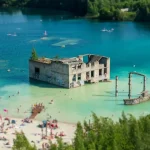
The reactor facilities were decommissioned and dismantled with international assistance, but their concrete foundations remain visible near the port. Walking past these hulking structures, now partially overgrown with Baltic coastal vegetation, provides a stark reminder of the Cold War’s reach into every corner of Europe.
The end of Soviet occupation in 1994 left Paldiski economically devastated. Most residents departed, leaving behind apartment blocks that still stand partially empty. The town has slowly rebuilt around its natural advantages: the deep-water port and stunning coastal location that originally attracted military planners now draw cargo ships and adventure travelers.
The Dramatic Pakri Cliffs and Lighthouse
The Pakri Peninsula’s limestone cliffs form Estonia’s most dramatic coastline, rising 25 meters above the Baltic in sheer white walls that extend for several kilometers. These cliffs resulted from millions of years of sediment deposits, later carved by glacial action and Baltic storms into their current spectacular form.
The Pakri Lighthouse, built in 1889, stands 52 meters tall on the peninsula’s northwestern point. Its red brick tower houses a light visible for 17 nautical miles, guiding ships through the treacherous waters where multiple underwater rocks have claimed vessels over centuries. The lighthouse keeper’s quarters now serve as a small museum, open during summer months with irregular hours that depend on volunteer availability.
Hiking along the cliff tops requires careful attention to safety, as the limestone edge can be unstable and there are no protective barriers. The best viewing points lie about 500 meters north of the lighthouse, where natural indentations in the rock provide secure spots to observe the dramatic drop-off. The sound of waves crashing against the cliff base 25 meters below creates a constant backdrop of natural drama.
Spring and autumn bring migrating seabirds to the cliffs, including white-tailed eagles and various gull species. The exposed grassland on top of the cliffs blooms with wild flowers in late May and June, creating a carpet of color above the stark white limestone and blue Baltic waters.
Accessing the Cliffs
A gravel road leads from Paldiski’s center to the lighthouse, suitable for regular cars but requiring careful driving due to potholes. The 3-kilometer drive passes abandoned Soviet military installations and offers glimpses of the cliffs before reaching the lighthouse parking area. From here, walking paths lead to various viewpoints, though some require scrambling over uneven limestone surfaces.
Soviet Military Legacy and Nuclear Submarine Training Centre
The most fascinating aspect of Paldiski’s Soviet period remains the nuclear submarine training facility, unique in the Baltic region. The complex included two PWR reactor installations that powered mock submarine compartments where crews learned to operate nuclear vessels before deployment to the Soviet Northern Fleet.
Today, visitors can observe the massive concrete structures that once housed the reactors and training facilities. These buildings, stripped of their radioactive components during decommissioning, stand as monuments to Cold War engineering. The reactor compartment training halls, each the size of aircraft hangars, gave submarine crews experience with actual nuclear systems without going to sea.
The town’s Soviet-era apartment blocks tell their own story of military life during the closed city period. These five and six-story buildings housed naval personnel and their families in a self-contained community complete with schools, shops, and recreation facilities. Many apartments remain occupied, though at far lower density than during the military period.

Walking through the former military areas reveals remnants of the infrastructure that supported thousands of personnel: concrete foundations of demolished buildings, sections of military railway, and portions of the perimeter fence that once enclosed the entire facility. The scale of the operation becomes clear when considering that Paldiski trained crews for the Soviet Union’s entire nuclear submarine fleet.
Getting to Paldiski from Tallinn and Beyond
Paldiski sits at the end of Estonia’s western peninsula, accessible by road and rail from Tallinn. The most straightforward route involves taking bus number 127 from Tallinn’s central bus station, a journey of approximately 75 minutes that costs €3.20 for a one-way ticket. Buses run every 2-3 hours throughout the day, with reduced service on weekends.
Driving from Tallinn takes 45-50 minutes via the A180 highway, which provides the most flexible option for exploring both Paldiski and the surrounding Pakri Peninsula. The road passes through Keila and follows the scenic Pakri Bay coastline for the final 15 kilometers. Parking in Paldiski presents no difficulties, with ample space near the port and lighthouse areas.
The Elron regional train service connects Tallinn to Paldiski three times daily, following a route that takes approximately 70 minutes and costs €2.80. This scenic rail journey passes through Estonia’s coastal forests and provides glimpses of the Baltic before arriving at Paldiski’s small station near the port area. The train schedule makes day trips feasible but requires careful timing for return journeys.
Ferry Connections
Paldiski serves as Estonia’s secondary international ferry port, with regular connections to Kapellskär, Sweden operated by Tallink. These overnight ferries provide an alternative entry point to Estonia for travelers arriving from Scandinavia, though most visitors to Paldiski arrive overland from Tallinn.

Where to Eat and What to Expect
Paldiski’s dining scene reflects its small population and industrial character, with limited but authentic options that serve both locals and port workers. The most reliable choice is Pakri Pub, located near the port area, which serves hearty Estonian fare including fresh Baltic fish when available. Their fish soup, made with locally caught perch and pike, carries the rich flavor of traditional Estonian coastal cooking served in generous portions for €6-8.
The pub’s interior maintains the no-frills atmosphere of a working port town, with maritime decorations and conversations in both Estonian and Russian reflecting the town’s demographic mix. Their selection of Estonian beers includes local Saku varieties alongside international options popular with visiting truck drivers and ferry passengers.
A small grocery store near the bus station stocks basic supplies, but travelers planning extended stays should bring food from Tallinn’s better-stocked supermarkets. The store’s limited selection reflects Paldiski’s small population, though it covers essentials for day trip supplies.
Several food trucks occasionally operate near the port during busy shipping periods, serving simple meals to port workers. These operations run on irregular schedules and may not coincide with tourist visits, making them unreliable for meal planning.
Day Trip or Overnight Stay?
Most visitors treat Paldiski as a day trip from Tallinn, and the town’s limited infrastructure makes this the practical choice for most travelers. The bus schedule allows for 4-5 hours of exploration time, sufficient to visit the cliffs, lighthouse, and former Soviet facilities while having lunch at the local pub.
Overnight accommodation exists but remains extremely limited. The only proper hotel, Pakri Hotel, offers basic rooms at €45-60 per night but operates more as housing for port workers than tourist accommodation. The facility provides clean but spartan rooms with shared bathroom facilities and minimal amenities.
Some travelers choose to stay overnight to experience Paldiski’s atmospheric sunsets over the Baltic, which can be spectacular when viewed from the cliffs during clear weather. The town’s quiet evening atmosphere, with minimal light pollution, also provides excellent stargazing opportunities rare near populated areas.
Private accommodation through Estonian rental platforms occasionally appears but shouldn’t be counted on for spontaneous visits. The limited options and basic facilities make day trips the recommended approach unless you specifically seek the experience of staying in a former Soviet closed city.
Costs and Budget Planning for 2026
Paldiski represents one of Estonia’s most affordable destinations, with transportation comprising the major expense for most visitors. Budget planning should account for these 2026 price ranges:
Transportation
- Bus from Tallinn: €3.20 one-way, €6.40 round-trip
- Train from Tallinn: €2.80 one-way, €5.60 round-trip
- Driving costs: €8-10 fuel plus potential parking fees
Food and Drink
- Lunch at Pakri Pub: €8-12 for main course
- Local beer: €3-4 per bottle
- Grocery supplies: €5-8 for basic snacks and drinks
Accommodation (if staying overnight)
- Pakri Hotel: €45-60 per night for basic room
- Private rentals: €35-55 per night when available
Activities
- Lighthouse museum: €2-3 during summer season
- Cliff walks and Soviet site exploration: Free
A typical day trip budget ranges from €15-25 per person including transportation and meals, making Paldiski highly accessible for budget-conscious travelers. The absence of entrance fees for most attractions keeps costs minimal once you arrive.
Frequently Asked Questions
Is Paldiski safe to visit considering its nuclear past?
Yes, Paldiski is completely safe. International agencies supervised the complete removal of all radioactive materials in the 1990s, and radiation levels are normal throughout the area.
Can you climb the Pakri Lighthouse?
The lighthouse interior is occasionally open during summer months with guided tours, but access depends on volunteer availability. Check locally or call ahead to confirm opening times.
How long should I plan to spend in Paldiski?
A full day trip allows 4-5 hours to see the main attractions: cliffs, lighthouse, Soviet sites, and lunch. This timing works well with public transport schedules back to Tallinn.
Are there any restrictions on photographing the former Soviet facilities?
No restrictions apply to photographing the visible Soviet-era structures. However, avoid the active port areas where security measures prohibit photography of current shipping operations.
What’s the best time of year to visit Paldiski’s cliffs?
April through October offers the best weather for cliff walks and lighthouse visits. Winter visits face harsh coastal winds and potential ice on paths, though the dramatic winter seascapes can be spectacular.
📷 Featured image by Leo Roomets on Unsplash.