On this page
- Why Regional Estonia Deserves More Than a Day Trip
- The Five Regions at a Glance
- Unmissable Sights Outside Tallinn
- Where and What to Eat Across the Regions
- Getting Around Regional Estonia
- The Best Day Trips from Tallinn
- Regional Festivals and Seasonal Events
- Shopping and Local Crafts Outside the Capital
- Where to Stay by Region and Budget
- Weather and the Best Time to Visit Each Region
- Practical Tips for Traveling Outside Tallinn
- Budget Breakdown — Daily Costs Across Regional Estonia
- Frequently Asked Questions
💰 Click here to see Estonia Budget Breakdown
💰 Prices updated: October, 2026. Budget figures are estimates — always verify before travel.
Exchange Rate: $1 USD = €0.88
Daily Budget (per person)
Shoestring: €40.00 – €70.00 ($45.45 – $79.55)
Mid-range: €120.00 – €250.00 ($136.36 – $284.09)
Comfortable: €300.00 – €900.00 ($340.91 – $1,022.73)
Accommodation (per night)
Hostel/guesthouse: €15.00 – €40.00 ($17.05 – $45.45)
Mid-range hotel: €60.00 – €150.00 ($68.18 – $170.45)
Food (per meal)
Budget meal: €15.00 ($17.05)
Mid-range meal: €35.00 ($39.77)
Upscale meal: €100.00 ($113.64)
Transport
Single metro/bus trip: €2.00 ($2.27)
Monthly transport pass: €30.00 ($34.09)
Why Regional Estonia Deserves More Than a Day Trip
Most visitors to Estonia spend their entire trip inside Tallinn’s Old Town walls, eat a bowl of elk soup, walk the Toompea hill, and fly home convinced they’ve seen the country. They haven’t. In 2026, with improved bus connections, newly paved cycling routes, and growing accommodation options outside the capital, there has never been a better time to push past the city limits. Regional Estonia is where the country actually lives — in amber-lit manor houses, in bog trails that smell of peat and pine, in fishing villages where the morning catch still lands on wooden docks. If you’ve already done Tallinn, or if you’re simply the kind of traveler who prefers depth over convenience, this guide is for you.
The Five Regions at a Glance
Estonia divides naturally into five distinct travel regions, each with its own rhythm and character. Understanding the differences saves you from driving three hours in the wrong direction.
Northern Estonia (Põhja-Eesti)
Home to Tallinn and the rugged North Estonian Limestone Escarpment — a 1,200-kilometre-long coastal cliff — this region blends urban energy with dramatic coastal scenery. Lahemaa National Park sits here, an hour east of Tallinn. Suited to first-time visitors who want nature without straying too far.
Southern Estonia (Lõuna-Eesti)
This is Estonia’s cultural heartland. Tartu, the university city, anchors the south with its intellectual energy, bookshops, and craft beer bars along the Emajõgi river. The Seto and Võro regions carry indigenous cultural traditions that survived Soviet-era suppression. Best for travelers interested in history, folk culture, and slower travel.
Western Estonia and the Islands (Lääne-Eesti)
Saaremaa, Hiiumaa, and Muhu island form Estonia’s island world — juniper meadows, windmills, limestone churches, and almost no crowds outside July and August. The mainland coast around Haapsalu has a spa town atmosphere that dates to the 19th century. Ideal for those seeking genuine remoteness and nature.
Eastern Estonia (Ida-Viru)
The most misunderstood region. Narva sits on the Russian border with a spectacular fortress, and the oil-shale industrial landscape around Kohtla-Järve is being actively reimagined as dark tourism and industrial heritage. Lake Peipus — Europe’s fifth-largest lake — stretches south with Old Believer fishing villages and exceptional sunsets. Suited to adventurous, curious travelers.
Central Estonia (Kesk-Eesti)
Largely overlooked, this region is forest, bog, and small market towns. Paide, the geographic centre of Estonia, hosts the Opinion Festival every August. Good for hiking and cycling rather than sightseeing checkboxes.
Unmissable Sights Outside Tallinn
Estonia’s most memorable experiences are spread across the countryside and its small cities. These are the places worth reorganizing an itinerary around.
Lahemaa National Park
Established in 1971 as the USSR’s first national park, Lahemaa covers 725 square kilometres of coastal forest, bog, and rocky bays. The Viru Bog boardwalk trail is accessible year-round — in late autumn, the bog grass turns rust-red and the silence is almost physical. Palmse Manor, a restored Baltic-German estate, gives context to the region’s layered history. The village of Käsmu, known as the “Captain’s Village,” has a maritime museum and some of the most photographable stone walls in the country.
Narva and Hermann Castle
Standing at the Estonian-Russian border, Hermann Castle faces the Russian Ivangorod Fortress across a 50-metre-wide river. Since 2024, Narva’s cultural investment has accelerated significantly — the Narva Museum inside the castle was expanded, and the city’s Art Residency programme has drawn international attention. The border crossing itself remains operational in 2026, though most visitors come for the atmosphere rather than to cross. The view from the castle tower at dusk, with two fortresses lit against the sky, is one of the most striking scenes in the entire Baltic region.
Saaremaa Island — Kaali Meteorite Crater and Kuressaare Castle
The Kaali crater, formed roughly 3,500 years ago when a meteorite fragmented over the island, is quiet and strange — a small lake sitting inside a perfect bowl of dolomite rock surrounded by birch trees. Kuressaare Bishop’s Castle, constructed in the 14th century and remarkably intact, houses the Saaremaa Museum. The castle courtyard in summer smells of cut grass and old stone in equal measure.
Tartu — Estonia’s Second City
Tartu is not a day trip — it deserves two nights minimum. The AHHAA Science Centre on the riverbank is genuinely one of the best interactive science museums in Northern Europe, popular with adults as much as children. The Estonian National Museum, opened in 2016 and still drawing strong visitor numbers in 2026, presents 11,000 years of Estonian cultural history across a building whose architecture alone justifies the journey. Town Hall Square has outdoor café tables from May through September, and the hill above it — Toomemägi — gives a green, leafy contrast to the city’s street-level energy.
Setomaa and the Võromaa Cultural Landscape
The southeastern corner of Estonia is where the Seto people maintain a living folk culture — distinct language, polyphonic singing (leelo, recognized by UNESCO), and silver jewellery traditions. The Seto Farm Museum in Värska is small but worth the detour. This region feels genuinely different from the rest of Estonia, and the landscape — low hills, rye fields, wooden farmhouses — reinforces that feeling.
Where and What to Eat Across the Regions
Regional Estonian food culture is not uniform. Each area has its own markets, producers, and local specialties that you simply won’t find in Tallinn’s tourist restaurants.
Tartu Food Scene
Tartu Market Hall (Tartu Turg) on Vabaduse puiestee is the best food market outside Tallinn. Stalls sell local cheeses, smoked fish from Lake Peipus, and dark rye bread still warm from the oven. The smell of the bread cooling on wooden boards near the bakery counters is the single strongest sensory memory most visitors take away from the city. The Aparaaditehas creative quarter on the south bank of the Emajõgi houses several independent food spots and a street food courtyard that operates through summer weekends.
Saaremaa and the Islands
Look for local lamb on restaurant menus — Saaremaa lamb is genuinely distinctive due to the island’s juniper-rich pastures. The Kuressaare market square on Friday mornings has local producers selling island honey, smoked fish, and handmade preserves. Roadside farm stalls near Lümanda sell produce on the honour system — you take what you need and leave the correct coins in a tin.
Eastern Estonia — Lake Peipus
The Old Believer villages along Lake Peipus — Kolkja, Raja, Kasepää — are known for smoked and marinated fish. Several family-run operations smoke vendace and pike-perch on-site; you can often buy directly from the smoking shed. The lakeside restaurants in Mustvee and Kallaste serve fresh fish in ways that owe nothing to fine-dining trends and everything to local tradition.
Võromaa and the South
The southern region’s farm restaurants and rural guesthouses serve the most traditional Estonian food you’ll encounter anywhere. Blood sausage (verivorst), sauerkraut, and barley dishes appear on menus that haven’t changed much in decades. The Võro market on Saturday mornings is small but authentic — mostly local people shopping, not tourists.
Getting Around Regional Estonia
This is the practical question that stops most visitors from leaving Tallinn in the first place. The honest answer: a rental car gives you the most freedom, but you can manage without one in certain regions.
Buses
The national bus network (tpilet.ee) connects Tallinn to Tartu, Pärnu, Narva, Haapsalu, and Kuressaare with regular services. Tallinn–Tartu takes about 2.5 hours and buses run every 30–60 minutes during peak hours. Tickets are cheap — around €8–14 one way depending on the operator and booking time. Rural connections are less frequent; check schedules carefully, as some routes only run twice daily.
Trains
Elron trains serve Tallinn–Tartu, Tallinn–Narva, Tallinn–Pärnu (seasonal), and several smaller routes. The Tallinn–Tartu train takes about 2 hours and costs €8–12. In 2026, Rail Baltica construction continues along the Tallinn–Pärnu corridor, with the full Tallinn–Riga rail link projected for 2030. Temporary disruptions to road crossings near Pärnu are worth checking before driving that route.
Car Rental
For island access, southern Estonia, and anywhere you want to stop spontaneously on a forest road, renting a car is the right call. Rates from Tallinn Airport in 2026 start around €35–55 per day for a basic category. Estonian roads outside Tallinn are generally in good condition; gravel roads (kruusatee) are common in rural areas and are perfectly manageable in a standard car.
Island Ferries
TS Laevad operates the Virtsu–Kuivastu route to Muhu/Saaremaa and the Rohuküla–Heltermaa route to Hiiumaa. Both are vehicle ferries. Booking online in advance is strongly recommended between mid-June and mid-August — walk-on foot passengers can usually board same-day, but car spaces sell out. The Saaremaa crossing takes about 30 minutes and costs around €5 per person; car transport is additional.
The Best Day Trips from Tallinn
If you’re based in Tallinn and want to explore without relocating, these five destinations offer the best return on travel time.
- Lahemaa National Park — 75 km east. Drive or join a guided tour. Full day recommended. Viru Bog + Palmse Manor + Käsmu village is a solid itinerary.
- Haapsalu — 100 km southwest. 2–2.5 hours by bus. Episcopal Castle ruins, wooden seaside promenade, the Ilon’s Wonderland children’s museum. Best between May and September.
- Pärnu — 130 km south. 2 hours by bus or train. Estonia’s summer capital has a long white-sand beach, a lively promenade, and a spa culture that dates back centuries. Worth a full day in summer.
- Rakvere — 100 km east. 1 hour by bus or train. The Rakvere Castle living history complex is one of the most interactive medieval attractions in Estonia — better for adults than most expect.
- Paldiski — 45 km west. 1 hour by train. A former Soviet nuclear submarine base with a haunting post-industrial landscape and dramatic limestone cliffs. Unusual, quiet, and rarely visited by tourists.
Regional Festivals and Seasonal Events
Timing a regional Estonia trip around a festival transforms the experience. These events are not tourist productions — they’re attended primarily by Estonians.
- Seto Kingdom Days (Setomaa, August) — The Seto people elect their king (Ülempää) in an annual ceremony. Folk music, traditional dress, and leelo singing fill the village of Obinitsa. One of the most authentic cultural events in the country.
- Opinion Festival / Arvamusfestival (Paide, August) — Held in the ruins of Paide Castle, this annual public debate festival draws politicians, academics, and ordinary Estonians to discuss national issues outdoors. Unusual, stimulating, and free to attend.
- Haapsalu Horror and Fantasy Film Festival (Haapsalu, April) — A small but serious genre film festival held in the atmospheric Bishop’s Castle ruins. Screenings happen outdoors after dark.
- Viljandi Folk Music Festival (Viljandi, July) — The biggest folk music festival in the Baltics. Held around the old castle ruins with performances on multiple stages. Camping is part of the experience. Book accommodation months in advance.
- Lake Peipus Onion Festival (Peipsiääre, September) — A hyper-local harvest festival in the Old Believer communities, celebrating the region’s onion-growing tradition. Small, genuine, and memorable.
Shopping and Local Crafts Outside the Capital
Tallinn’s Old Town sells Estonian crafts, but the prices reflect the tourist footfall. Regional Estonia is where the actual makers are.
Tartu
Antoniuse Õu, a courtyard complex off Ülikooli street in central Tartu, houses independent makers selling ceramics, leather goods, and knitwear. The artisan quality is high and prices are noticeably lower than equivalent Tallinn shops.
Saaremaa
Saaremaa has a strong tradition of dolomite stone carving, and you’ll find decorative pieces at craft stalls near Kuressaare Castle. The island’s juniper woodwork — bowls, utensils, small furniture pieces — is worth looking for in local farm shops and the Kuressaare market.
Setomaa
Seto silver jewellery (hõbe) is the most distinctive regional craft in Estonia. The characteristic large brooches and necklaces are made by a small number of certified artisans. Buying directly from a Seto craftsperson in Võrumaa or at a regional fair is both cheaper and more meaningful than buying in Tallinn. Look for the Seto Käsitöö quality mark.
Viljandi
The streets around Lossi and Pikk in central Viljandi have a cluster of independent design shops and studios that have grown significantly since 2023. Good for Estonian linen, printed textiles, and natural cosmetics.
Where to Stay by Region and Budget
Accommodation options vary widely across regions. Here’s what to realistically expect at each tier.
Budget (under €50/night)
Hostels exist in Tartu (Hostel Tartu, Looming Hostel) and Pärnu. Rural guesthouses (külalistemaja) across all regions frequently offer clean private rooms for €35–50. Camping with your own tent costs €10–20 at most designated sites, including sites inside Lahemaa National Park.
Mid-Range (€50–120/night)
This tier has the best options regionally. Saaremaa has several spa hotels in and around Kuressaare in this range. Tartu has business-style hotels and boutique guesthouses along the Emajõgi riverbank. Farm guesthouses across southern Estonia with breakfast included often hit this price point perfectly.
Comfortable/Luxury (€120+/night)
Manor house hotels (mõis) are the standout accommodation experience in regional Estonia. Sagadi Manor in Lahemaa (€120–180), Vihula Manor near the coast (€150–250), and Padise Manor west of Tallinn (€110–170) all operate as full hotel properties with restaurants. Saaremaa Spa Hotels (Meri Spa, Georg Ots Spa Hotel) in Kuressaare run €130–220 per night in high season.
Weather and the Best Time to Visit Each Region
Estonia has four distinct seasons and the right time to visit genuinely depends on which region and what you want from it.
- June–August: Peak season everywhere. Islands and coastal areas (Saaremaa, Pärnu) are at their best — warm, long days, water temperatures reaching 20°C in a good summer. Lahemaa is lush and full of wildlife. Expect higher prices and advance booking requirements.
- September–October: Arguably the best time for nature travel. Lahemaa bog trails turn copper and gold. Lake Peipus is quiet and mirror-still. Temperatures 10–16°C. Accommodation prices drop by 20–30%.
- November–February: Cold (−5 to −15°C possible in January), but Estonia in snow is genuinely beautiful. Frozen Lake Peipus becomes drivable in deep winter. Setomaa farms and manor house hotels offer fireplace evenings. Viljandi’s Ugala Theatre has strong winter programming.
- March–May: Shoulder season with rapidly changing conditions. Snow can persist through March in southern Estonia. By May, the countryside is green and the tourist infrastructure reopens without summer crowds.
Practical Tips for Traveling Outside Tallinn
A few things catch visitors off guard when they leave the capital.
- Language: English is widely spoken in Tartu and Pärnu, and in hotels and tourist sites everywhere. In rural areas — particularly eastern Estonia and Setomaa — Russian or Estonian are more useful. A translation app handles most situations.
- Mobile coverage: 4G coverage is strong along main roads and in all towns. In deep forest and bog areas of central Estonia, coverage drops. Download offline maps before entering Lahemaa or the Kõrvemaa wilderness.
- Fuel: Petrol stations are present in all towns but can be 30–50 km apart in rural areas. Fill up when you see one if you’re on a gravel road route. EV charging stations exist in most towns; Elmo Rent operates a national network with growing rural coverage in 2026.
- Cash: Most places accept card payment, but rural farm stalls, small markets, and some older guesthouses prefer cash. Keep €20–50 in small notes when traveling through countryside areas.
- Tipping: Not mandatory but appreciated. Round up the bill or leave 10% in sit-down restaurants. Not expected in cafés or food markets.
- Safety: Regional Estonia is very safe. Wildlife to be aware of: ticks are present in forested areas May–September; use repellent and check after forest walks. Tick-borne encephalitis vaccine is recommended for extended forest travel.
Budget Breakdown — Daily Costs Across Regional Estonia
Regional Estonia is noticeably cheaper than Tallinn once you’re outside the capital’s tourist zone.
Budget Traveler — €40–65/day
- Accommodation: hostel dorm or basic rural guesthouse — €15–30
- Food: market lunches, supermarket supplies, one sit-down meal — €15–20
- Transport: bus/train tickets — €5–12
- Activities: most national parks and nature sites are free to enter
Mid-Range Traveler — €90–150/day
- Accommodation: mid-range guesthouse or spa hotel — €60–100
- Food: two restaurant meals per day — €25–40
- Transport: car rental share or taxis — €20–35
- Activities: museum entries, guided tours — €10–20
Comfortable Traveler — €180–280/day
- Accommodation: manor house hotel — €130–200
- Food: farm restaurant dinners, regional tasting menus — €50–70
- Transport: private car rental — €40–60
- Activities: spa treatments, private guides — €30–60
Frequently Asked Questions
Do I need a car to explore regional Estonia?
Not for every destination. Tartu, Pärnu, Narva, and Haapsalu are all reachable by bus or train from Tallinn. For the islands, Lahemaa beyond the main villages, Setomaa, and Lake Peipus, a rental car gives you significantly more flexibility and access to places the bus network simply doesn’t reach.
How many days should I spend outside Tallinn?
Three to five days gives you enough time to cover one or two regions properly. A week allows you to combine southern Estonia (Tartu, Setomaa) with the islands or eastern Estonia. Trying to cover all five regions in one trip results in too much driving and not enough time in any single place.
Is regional Estonia safe for solo travelers?
Yes. Estonia consistently ranks among the safest countries in Europe, and this extends to rural areas. Solo female travelers report no particular concerns. The main practical issue is not safety but logistics — some rural areas have limited public transport, making a car or pre-booked tours more practical for solo visitors without their own vehicle.
What is the best region in Estonia for nature travel?
Lahemaa National Park in the north is the most accessible. Saaremaa has the most varied landscapes — coast, bog, meadow, and forest — in a compact island area. For bog-walking specifically, the Soomaa National Park in central-western Estonia offers guided canoe trips through flooded forest in spring, which is unlike anything else in the Baltics.
Are English menus and signs common outside Tallinn?
In Tartu, Pärnu, Kuressaare, and all major tourist sites, English menus and signage are standard. In smaller towns and rural areas, Estonian (and sometimes Russian in the east) dominate. Restaurant staff in most towns speak enough English to handle ordering. Google Translate’s camera function handles menus and signs effectively where English isn’t available.
Explore more
Tallinn Nightlife Hotspots: The Ultimate Guide to Bars & Clubs
Live Music in Tallinn: Best Venues to Catch Local & International Acts
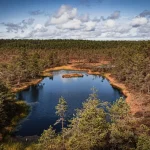
📷 Featured image by Margo Evardson on Unsplash.