Before You Land, Understand This
Estonia gets roughly 3 million visitors a year, and a growing number of them leave confused — not by the language or the landscape, but by the people. Estonians are reserved, precise, and deeply private. That combination reads as coldness to many Western Europeans and North Americans, but it isn’t. It’s cultural code, and once you understand it, interactions that felt awkward suddenly make sense. This guide covers the unwritten rules that Estonians actually live by — the ones no hotel brochure mentions.
Greetings and First Impressions
The standard Estonian greeting is a firm handshake with direct eye contact. This applies whether you’re meeting someone at a business lunch or being introduced at a friend’s apartment. Eye contact during a handshake is not optional — breaking it comes across as evasive or untrustworthy. Among close friends, a hug is acceptable, but only after a real relationship has been established. Kissing on the cheek is not an Estonian custom and will cause visible discomfort if you attempt it.
Use first names only when someone explicitly invites it. In professional contexts especially, wait to be told. Estonians introduce themselves by first name only in casual settings, but that doesn’t mean they want you doing the same immediately.
Now, the silence. Estonians are entirely comfortable with long pauses in conversation. A silence of five or ten seconds between sentences is not a problem — it means the person is thinking. Jumping in to fill every pause with chatter signals nervousness or social desperation. Let silences breathe. If you’re waiting for an enthusiastic “yes, that’s a great idea!” you may wait a long time. A quiet nod or a brief “jah” (yes) often carries the same weight.
Smiling at strangers in public is not a cultural norm. If an Estonian doesn’t smile at you on the street, they’re not being hostile. They simply don’t perform friendliness for people they don’t know. Once you’ve actually spent time with an Estonian and earned a degree of trust, the warmth comes through clearly — it’s just not given away for free.
The Sauna as Sacred Space
The sauna — saun in Estonian — is not a wellness trend here. It’s a deeply rooted social institution, historically used for bathing, giving birth, healing the sick, and preparing the dead for burial. Estonians have been using saunas for over a thousand years. When you’re invited to someone’s sauna, you’ve been invited into something genuinely personal.
The first rule is nudity. In traditional Estonian sauna culture, you go in without a swimsuit. Mixed-gender saunas among close friends are common and perfectly normal — nudity in this context carries zero sexual charge. If you’re uncomfortable, a small towel is acceptable to sit on, but wrapping it around yourself like a swimsuit looks conspicuously foreign. Public saunas and spa facilities have their own rules — swimwear is often required there — but in a private home sauna, follow the lead of your hosts.
You sit on a wooden bench (the higher, the hotter), and someone — usually the host — controls the leil, which is the steam created by throwing water onto the hot stones. It’s polite to ask before you add water yourself. Birch branches (viht or vihveldamine) soaked in hot water are used to gently beat the skin — this improves circulation and smells of warm, green leaves in a way that’s hard to describe until you’ve experienced it firsthand. Accept if someone offers to use one on you. It’s a gesture of care.

Don’t rush. A proper sauna session involves multiple rounds: heat, then cooling off outside or in cold water, then back in again. Conversation in the sauna is relaxed and often more honest than anywhere else. Estonians open up in the sauna. Don’t bring your phone. Don’t check messages. This is one of the few genuinely phone-free cultural spaces that Estonians still protect.
After the sauna, beer, cider, or cold water is typical. Snacks like dark bread, salted fish, or sausages cooked over an open fire are common. Thank your host explicitly — being invited to a private sauna is a significant gesture of trust and friendship.
Dining at an Estonian Home
Being invited to eat at an Estonian home is rare and meaningful. Estonians guard their private spaces carefully. If you receive an invitation, take it seriously.
Bring something. Flowers, wine, chocolate, or a quality food item all work. Flowers should come in odd numbers (even numbers are for funerals — more on this in the next section). Arrive on time — not five minutes early, and not fifteen minutes late. Punctuality in Estonia is a form of respect, not a formality.
At the table, wait to be seated rather than choosing your own spot. The host will typically indicate where to sit. Don’t begin eating until the host has started or given a signal. There’s no formal grace or prayer in most secular Estonian homes, but a brief moment of acknowledgment — a raised glass, a quiet “head isu” (bon appétit) — marks the start of the meal.
Estonians tend to eat in courses: cold dishes first (salads, cold cuts, marinated vegetables), then soup, then a main course. Portions are generous and refusing repeatedly can be taken as a mild insult. If you don’t eat something, say so quietly and directly at the start — Estonians respect directness far more than polite evasion.

Drinking customs deserve special attention. Toasts (terviseks — “to health”) are made before drinking, and it’s expected that you make eye contact with each person you clink glasses with. Missing someone is genuinely noticed. Refilling your own glass without offering to others first is considered self-centred. If you don’t drink alcohol, say so early — nobody will push you, but they do want to know so they can provide an alternative.
Knowing when to leave is a subtle art. Estonians won’t tell you directly that the evening is over — that would feel rude to them. Instead, the signs are: the host starts clearing plates without offering dessert, coffee has been served and finished, conversation becomes shorter. Start wrapping up when you notice these signals. Overstaying by an hour in an Estonian home is a social misstep that will be remembered.
Navigating Personal Space in Public
Estonia has one of the highest personal space expectations in Europe. The comfortable conversational distance is noticeably larger than in southern European or Latin American cultures — roughly an arm’s length. Stand closer than that and you’ll see people unconsciously step back.
Public transport in Tallinn and Tartu operates with unspoken rules that locals follow instinctively. Keep your voice low on buses and trams. Phone calls are considered disruptive and should be kept short and quiet — or taken off the vehicle entirely. In 2026, Tallinn’s expanded tram network (lines 4 and 5 were extended significantly in late 2025) means more tourists are mixing with commuters during peak hours. Commuters are not interested in conversation and will not engage if you try to start one.

Queuing is taken seriously. Cutting into a queue — even accidentally — will generate a response, usually a pointed stare or a firm word. The queue at a pharmacy, a government office, or a supermarket checkout is sacred. Wait your turn. If you’re at a deli counter or bakery, take a number if there is one.
In forests, parks, and nature spaces, Estonians treat silence as the default. Lahemaa National Park, for example, is the kind of place where the crunch of frost underfoot on a trail through birch forest at dawn is something people come specifically to hear. Playing music through a speaker, speaking loudly, or disturbing wildlife is met with genuine disapproval. Nature is not a backdrop for socialising — it’s a destination in its own right.
Gift-Giving Rules
The flower rule is the most commonly violated by visitors, and it causes genuine embarrassment. When bringing flowers to an Estonian home, always bring an odd number — 3, 5, 7, 9, or more. Even numbers (2, 4, 6) are reserved for funerals and mourning. This is not a superstition — it’s a live, practiced social norm. Showing up with a dozen roses is a genuine cultural error.
Yellow flowers carry associations with separation and conflict in some older Estonian cultural memory, though this has faded among younger generations. To be safe with older hosts, stick to white, red, or mixed arrangements. Potted plants are an increasingly acceptable alternative, particularly as more Estonians live in apartment buildings with limited space for cut flowers.
For other gifts: quality over novelty. Estonians appreciate craftsmanship and practicality. A good bottle of wine, a locally made product from your home country, quality chocolate, or a book are all well-received. Avoid bringing cheap souvenirs or anything that feels like an afterthought. Gifts are usually opened privately rather than in front of the giver — don’t expect an immediate enthusiastic reaction. This is normal.

At Christmas and for birthdays, gift-giving expectations are lower than in many Western European countries. Estonians are not performative about gifts. A thoughtful small item carries more weight than an expensive one that misses the mark.
Business and Professional Settings
Foreign professionals working with Estonians — through e-residency, joint ventures, or in-person collaboration — often describe the communication style as blunt. An Estonian colleague who says “this plan won’t work” without preamble is not being aggressive. They’re being efficient. Decorating criticism with compliments or softening feedback with excessive politeness is not standard practice and sometimes reads as dishonest.
Meetings start on time. If you’re the one calling the meeting, be there first. Agendas are taken seriously, and going significantly off-topic is viewed as disorganised. Estonians tend to prepare thoroughly before meetings rather than using the meeting itself as a brainstorming session. Coming underprepared is noticed.
Decisions often take longer than visitors expect. Estonians don’t make commitments impulsively, even in business. A meeting that ends without a clear “yes” isn’t necessarily a failure — it may mean the other party is thinking carefully. Following up once or twice by email (not phone) is appropriate. Persistent calling or pressure tactics backfire badly.
Business cards are still used in 2026, particularly in formal sectors. Present yours without fanfare — no two-handed presentation ceremony as in some Asian business cultures, but don’t toss it casually across a table either. Treat a business card as a basic professional courtesy.
The e-residency community has brought thousands of foreign entrepreneurs into digital contact with Estonia’s business culture since 2014. In 2026, with over 120,000 active e-residents globally, there’s now a well-developed support infrastructure — but the actual Estonians you work with still operate by these same cultural rules. The digital layer doesn’t change the human layer.

2026 Budget Reality — Social Costs and Contributions
Understanding what social activities cost helps you participate without awkwardness. Here’s what to expect in 2026:
- Public sauna entry (budget): €5–€10 per session at municipal or community saunas in cities like Tartu and Pärnu. Some older neighbourhood saunas charge as little as €4.
- Spa or upscale sauna (mid-range): €20–€45 per person for a 2–3 hour session at a dedicated sauna venue, including use of cold pools and rest areas.
- Private sauna rental (comfortable): €50–€120 for a full evening rental of a standalone sauna cottage, typically including firewood, outdoor access, and sometimes a small terrace with a grill.
- Host gift (budget): €8–€15 covers a decent bottle of wine, a box of quality chocolates, or a small bunch of flowers from a florist (not a petrol station).
- Host gift (mid-range): €20–€40 for a nicer bottle of wine or spirits, a quality food basket, or a crafted Estonian product like a linen item or artisan food product.
- Business lunch (mid-range): €15–€25 per person at a typical Tallinn or Tartu business lunch venue, including a main course and non-alcoholic drink. Alcohol at lunch is rare in business contexts.
- Dining out in a group — splitting the bill: Estonians split bills precisely. Don’t assume someone will cover the table. Bring a card — virtually everywhere in Estonia accepts contactless payment in 2026.
One practical note: tipping in Estonia is not mandatory. In restaurants, rounding up or leaving 10% is appreciated but not expected. For personal services like a massage or a guided tour, €2–€5 is a thoughtful gesture. Never feel pressured — no Estonian server will make you feel bad for not tipping.
Frequently Asked Questions
Are Estonians really as unfriendly as people say?
No — they’re private, not unfriendly. Estonians don’t perform warmth for strangers, but once you’ve spent real time with someone and earned a degree of trust, the relationship is genuine and lasting. Think of the reserve as a door, not a wall. It opens; it just takes a little longer than you might be used to.

Is nudity in the sauna mandatory if I’m invited?
Not strictly mandatory, but going in with a swimsuit in a private home sauna will mark you as an outsider. A small towel to sit on is universally accepted and nobody will comment. Observe what your hosts do and follow their lead. In public spa facilities, swimwear is usually required — the setting determines the norm.
How do I handle the silence during conversations with Estonians?
Sit with it. Silence in Estonian conversation signals thought, not awkwardness. Don’t rush to fill every pause with noise. Matching the rhythm of a quieter conversation style takes a few interactions to get comfortable with, but once you stop fighting the silence, the exchange actually feels more honest and relaxed.
What’s the biggest etiquette mistake tourists make in Estonia?
Being too loud in public spaces — on public transport, in restaurants, in nature areas — is the most common complaint locals have about visitors. The second most common is bringing even-numbered flowers to a home. These two errors are easily avoided once you know about them, and avoiding them signals genuine cultural awareness to your Estonian hosts.
Do I need to speak Estonian to avoid social mistakes?
No — nearly all Estonians under 60 speak excellent English, and most are comfortable using it. Making a genuine effort with a few Estonian words (aitäh for thank you, tere for hello) is warmly received, but fluency isn’t expected. What matters far more is following the behavioural customs covered here. Cultural respect reads louder than linguistic effort.
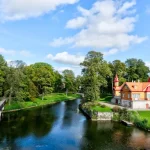
📷 Featured image by Maksim Shutov on Unsplash.