On this page
- Tartu Is Smaller Than You Think — Plan Your Stay Accordingly
- Tartu’s Neighbourhoods — A Quick Mental Map
- Old Town & Town Hall Square — The Centre of Everything
- Ülejõe & Supilinn — Character, Community, and Better Value
- Toomemägi & University Quarter — Quiet, Green, Central
- Annelinn & the Outer Districts — Budget Practicality
- Best Budget Stays in Tartu — Under €50 per Night
- Best Mid-Range Hotels in Tartu — €60 to €120 per Night
- Best Upscale & Boutique Hotels in Tartu — €130 and Above
- Apartments & Alternative Accommodation in Tartu 2026
- 2026 Accommodation Costs in Tartu — What to Actually Budget
- Booking Tips Specific to Tartu in 2026
- Frequently Asked Questions
💰 Click here to see Estonia Budget Breakdown
💰 Prices updated: October, 2026. Budget figures are estimates — always verify before travel.
Exchange Rate: $1 USD = €0.88
Daily Budget (per person)
Shoestring: €40.00 – €70.00 ($45.45 – $79.55)
Mid-range: €120.00 – €250.00 ($136.36 – $284.09)
Comfortable: €300.00 – €900.00 ($340.91 – $1,022.73)
Accommodation (per night)
Hostel/guesthouse: €15.00 – €40.00 ($17.05 – $45.45)
Mid-range hotel: €60.00 – €150.00 ($68.18 – $170.45)
Food (per meal)
Budget meal: €15.00 ($17.05)
Mid-range meal: €35.00 ($39.77)
Upscale meal: €100.00 ($113.64)
Transport
Single metro/bus trip: €2.00 ($2.27)
Monthly transport pass: €30.00 ($34.09)
Tartu Is Smaller Than You Think — Plan Your Stay Accordingly
Tartu gets roughly 1.5 million visitors a year now, and in 2026 that number is climbing after the city’s stint as a European Capital of Culture in 2024 put it firmly on the international radar. The problem most first-time visitors run into: they book accommodation the same way they would for Tallinn — throwing darts at a map and hoping for the best. Tartu is compact, yes, but the difference between staying in the right neighbourhood and the wrong one is the difference between walking to everything and spending 15 minutes on a bus every time you want a coffee. This guide cuts through the noise and tells you exactly where to sleep, what you’ll pay in 2026, and which areas suit your travel style.
Tartu’s Neighbourhoods — A Quick Mental Map
Tartu sits on both banks of the Emajõgi River. The right bank holds the historic core — Old Town, Toomemägi Hill, and the University Quarter. The left bank is where locals actually live, anchored by the Ülejõe district and the quirky wooden-house neighbourhood of Supilinn. Further out, Annelinn is a Soviet-era residential area with cheap accommodation and good bus links. For most visitors, staying on the right bank within 10 minutes’ walk of Town Hall Square is the sweet spot. Everything else is a trade-off between price and convenience.
Old Town & Town Hall Square — The Centre of Everything
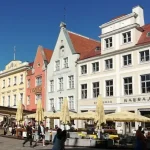
If this is your first time in Tartu, start here. The Old Town is a walkable cluster of 18th and 19th-century neoclassical buildings, cobblestone lanes, and the famous tilting house on Town Hall Square. Staying in this area means you’re steps from the University of Tartu main building, the Estonian National Museum’s city outpost, and the densest concentration of restaurants and bars in Tartu.
The atmosphere shifts by hour. Early mornings smell of fresh bread from the bakeries on Rüütli Street — that yeasty, slightly sweet scent drifting out of propped-open doors before the crowds arrive. By evening the square fills with students and travellers spilling out of wine bars. It’s never rowdy, but it’s alive.
Old Town suits first-time visitors, couples, and anyone who wants maximum convenience. The trade-off is noise on weekend nights, and prices run 10–20% higher than equivalent rooms elsewhere in the city. Streets like Küütri, Gildi, and Rüütli have the highest concentration of hotels.
Ülejõe & Supilinn — Character, Community, and Better Value
Cross the Kaarsild (Arch Bridge) and you’re in Ülejõe, Tartu’s left-bank residential district. It’s not a tourist zone — it’s where university staff, young families, and artists actually live. Accommodation here is mostly smaller guesthouses, apartment rentals, and a handful of boutique properties tucked into converted wooden buildings.
Supilinn — literally “Soup Town,” named after its streets named after vegetables — sits at the northern end of the left bank. This neighbourhood feels like someone froze a small Estonian town in 1910 and forgot to thaw it out. Wooden houses, overgrown gardens, cats on windowsills. In 2026 it’s firmly on the radar of slow-travel types and digital nomads who want a quiet base with genuine local texture. There are no hotels here in the traditional sense, but apartment rentals through local agencies and a few registered guesthouses fill the gap.
The walk from Supilinn or Ülejõe to Town Hall Square takes 10–15 minutes on foot, or about 5 minutes by bike. Tartu’s city bike scheme covers this area fully. For longer stays — a week or more — the left bank offers noticeably better value and a more lived-in experience.

Toomemägi & University Quarter — Quiet, Green, Central
Toomemägi is the forested hill that rises directly behind the Old Town, crowned by the ruins of a 13th-century cathedral. The University Quarter wraps around its lower slopes and spills along Lossi Street. This area is calm, green, and architecturally beautiful — neoclassical university buildings alongside park pathways where students walk between lectures.
Accommodation here is limited but well-suited to business travellers and academics visiting the university. A handful of university-affiliated guesthouses operate in this zone, offering clean, no-frills rooms at reasonable prices. You’re still within 10 minutes’ walk of Town Hall Square, but the ambient noise drops significantly. If you’re sensitive to city sounds and want greenery outside the window, this is your area.
Annelinn & the Outer Districts — Budget Practicality
Annelinn is Tartu’s largest residential district, built during the Soviet era on the southeastern edge of the city. It’s a landscape of panel-block apartment buildings, wide roads, and local supermarkets — not pretty, but functional. Budget hotels and hostel-style accommodation here run significantly cheaper than the centre, and bus connections to Old Town take around 15–20 minutes.
Annelinn suits solo travellers watching every euro, people with early-morning bus departures from the South Estonian Bus Terminal, and anyone who genuinely doesn’t spend much time in their room. It’s not a neighbourhood that rewards wandering, but it does the job efficiently.
Best Budget Stays in Tartu — Under €50 per Night
Tartu’s budget accommodation scene has improved noticeably since 2024. The Capital of Culture year brought investment that upgraded several older hostels and opened new ones.

- Tartu Student Village Guesthouses (Raatuse Street area): University-run accommodation available to non-students outside term time. Dorm beds from €15, private rooms from €28. Basic but clean, with fast Wi-Fi and excellent bus connections.
- Hostel Looming: Located near the Aparaaditehas creative hub, this hostel draws younger travellers and digital nomads. Dorm beds around €18–22. Common kitchen, bike hire on-site, genuinely sociable atmosphere.
- Ülejõe Guesthouses: Several family-run guesthouses on the left bank offer private rooms from €35–45 with shared bathroom. No reception desks or lobby — you get a door code and a phone number. Works well if you’re self-sufficient.
Best Mid-Range Hotels in Tartu — €60 to €120 per Night
This is where Tartu delivers the best value for most travellers. Mid-range properties here give you private bathrooms, reliable breakfast, and central locations for prices that would get you a budget room in Tallinn.
- Hotel Tartu: A reliable three-star property on Soola Street, walking distance from both Old Town and the river. Rooms are straightforward but well-maintained. Doubles from €65 in low season, up to €100 in summer. Free parking is a genuine plus for drivers.
- Antonius Hotel: A converted medieval merchant house on Ülikooli Street. Stone walls, exposed beams, rooms that feel genuinely old rather than artificially themed. Doubles typically €85–115. Breakfast uses local produce and is worth waking up for.
- London Hotel: On Rüütli Street in the Old Town core, this is a clean and comfortable mid-range option with a long-standing reputation. Doubles from €70. The location is hard to beat for first-timers — you’re at the centre of everything.
- Barclay Hotel: Facing Town Hall Square directly, the Barclay sits in a 19th-century building with rooms that have been thoughtfully modernised. Mid-range prices (€80–120) for a genuinely prime address.
Best Upscale & Boutique Hotels in Tartu — €130 and Above
Tartu doesn’t have a five-star hotel in the international chain sense, and that’s actually a feature rather than a bug. The top-end options here are independent boutique properties with real character — the kind of places that get recommended by word of mouth rather than loyalty programme algorithms.

- Lydia Hotel: Named after Lydia Koidula, Estonia’s 19th-century poet, this is Tartu’s most polished boutique property. It sits on the corner of Ülikooli and Küütri streets, and the design references Estonian literary history without being heavy-handed about it. Rooms are spacious, linens are high quality, and the in-house restaurant is among the best in the city. Doubles from €140 in low season, €180+ in summer. In 2026 it remains the default recommendation for travellers who want the full Tartu experience without compromise.
- Villa Margaretha: A converted early-20th-century townhouse near Toomemägi, this small guesthouse has just six rooms. It feels more like staying in a well-curated private home than a hotel. Doubles from €130. Booking well in advance is essential — it fills up months ahead during the university calendar’s peak periods.
- Tartu City Hotel (Upgraded 2025): After a significant renovation completed in late 2025, this property near the Emajõgi riverbank now competes properly in the upper-mid and boutique space. River-facing rooms, contemporary Estonian design, and a ground-floor café that functions as a genuine neighbourhood spot rather than a hotel afterthought. Doubles from €120.
Apartments & Alternative Accommodation in Tartu 2026
Tartu’s short-term rental market is regulated more tightly in 2026 than it was two years ago. The city introduced registration requirements for Airbnb-style rentals in mid-2025, which pushed several unregistered listings offline but improved quality across the board. What remains is generally more reliable.
For stays of three nights or longer, self-catering apartments make strong sense in Tartu. The Aparaaditehas area and Supilinn have the most interesting apartment options — think converted factory units with industrial design elements or wooden-house flats with original early-20th-century features. Prices for a one-bedroom apartment run €55–90 per night depending on location and season.

Local agencies worth checking directly include Tartu Apartment Rentals (tartuapartments.ee) and several property managers who list on Booking.com but also accept direct enquiries. Direct bookings typically include more flexible check-in arrangements, which matters when you’re arriving late after a bus from Tallinn.
University of Tartu accommodation is also available to conference attendees and visiting researchers year-round — not widely advertised but accessible through the university’s accommodation services portal.
2026 Accommodation Costs in Tartu — What to Actually Budget
Tartu runs roughly 20–30% cheaper than Tallinn for equivalent accommodation. These are realistic 2026 figures for a standard double room per night, including local tax where applicable:
- Budget (dorm or basic private): €15–45. Hostels, university guesthouses, left-bank family rooms.
- Mid-Range (private room, en-suite, breakfast possible): €60–120. Most visitors fall in this band. Good value for the quality you get.
- Comfortable/Boutique: €130–190. Lydia Hotel, Villa Margaretha, upgraded riverside properties.
- Peak Season Premium: Add 20–35% to any of the above during June–August and during major university events (graduation week in late June is particularly busy).
- Apartments (self-catering, 1-bed): €55–90 per night. Better value for groups of two or stays over four nights.
Tourist tax in Tartu as of 2026 is €2 per person per night, capped at seven nights. It’s usually added at checkout rather than included in quoted prices online — factor it in when comparing options.
Booking Tips Specific to Tartu in 2026
Tartu’s accommodation market has some quirks that catch visitors off guard. Here’s what to know before you book.
Book early for June and graduation week. The University of Tartu graduation ceremonies in late June draw thousands of families to a small city. Hotels fill up 2–3 months in advance. If you’re visiting in late June, this is not optional advice.

The Aparaaditehas area is worth prioritising. This creative quarter, anchored by the former weapons factory converted into studios, cafés, and food markets, has become one of Tartu’s most compelling places to spend time in 2026. Staying nearby — either in Ülejõe or within walking distance — gives you easy access without committing to the full tourist-centre experience.
Tartu has no central train station close to the Old Town. Tartu train station sits about 1.5 kilometres south of Town Hall Square — a 20-minute walk or short bus ride. If you’re arriving by train (from Tallinn, roughly 2.5 hours), factor this into your accommodation choice. Staying in Annelinn puts you closer to the station but further from everything interesting.
Rail Baltica context for 2026: Construction progress on Rail Baltica continues to affect long-term infrastructure planning, but for travellers visiting Tartu in 2026, the relevant update is that the Tallinn–Tartu rail line has seen improved rolling stock since early 2025, making train travel a genuinely comfortable option again. Several hotels near Tartu station now market themselves specifically to rail arrivals.
Parking matters for drivers. If you’re driving from Tallinn or arriving by car, note that Old Town has restricted parking zones. Several mid-range hotels on the edge of the centre (Hotel Tartu on Soola Street, for example) include free parking that saves €8–12 per day in street or car park fees.
Check what’s included in the rate. Tartu’s smaller guesthouses often include breakfast as a genuine home-cooked meal — dark rye bread, local cheese, cold cuts, eggs. Larger hotels often charge €10–15 extra for breakfast that’s less interesting. Ask before booking.
Frequently Asked Questions
What is the best area to stay in Tartu for first-time visitors?
Old Town, centred around Town Hall Square, is the best base for first-timers. You’re within walking distance of Tartu’s main sights, restaurants, and the riverfront. It costs slightly more than other areas but saves time and bus fares. Streets like Küütri, Rüütli, and Ülikooli have the densest concentration of hotels and guesthouses.

Is Tartu cheaper than Tallinn for accommodation?
Yes, noticeably so. Expect to pay 20–30% less in Tartu for a comparable room. A mid-range double with en-suite bathroom costs €60–120 in Tartu versus €80–150 for equivalent quality in Tallinn’s Old Town. Boutique options at the top end of the Tartu market rarely exceed €190 per night even in peak season.
How far in advance should I book a hotel in Tartu?
For summer visits (June–August), book 6–8 weeks ahead minimum. For late June specifically — graduation week at the University of Tartu — book 2–3 months in advance. Outside peak season, Tartu has enough accommodation capacity that 1–2 weeks’ notice is usually sufficient for most budget and mid-range options.
Are there good apartment rentals in Tartu for longer stays?
Yes. After the 2025 registration requirements cleaned up the short-term rental market, the remaining apartment options are generally reliable. One-bedroom apartments in the Aparaaditehas area, Supilinn, and Ülejõe run €55–90 per night. For stays of four or more nights, apartments often undercut hotels on price while offering kitchen facilities and more space.
What is the tourist tax in Tartu and how is it charged?
As of 2026, Tartu charges a tourist tax of €2 per person per night, capped at seven consecutive nights. It applies to all accommodation types including apartments and guesthouses. Most properties add it at checkout rather than including it in the advertised nightly rate, so factor in an extra €2 per person when calculating your total accommodation budget.
Explore more
The Ultimate Guide to Tartu’s Best Neighbourhoods for Travelers
Which Tartu District is Right For Your Trip? A Traveler’s Guide
Eat Like a Local in Tartu: Authentic Estonian Dining Experiences
📷 Featured image by Klaus Janowitz on Unsplash.