On this page
- The Ferry from Virtsu to Kuivastu — Estonia’s Most Scenic Crossing
- Booking Ferry Tickets: Prices, Schedules & What’s Changed in 2026
- Driving to Saaremaa — Routes, Road Conditions & Parking at the Terminal
- Flying to Saaremaa — Kuressaare Airport & Current Routes
- Getting to Saaremaa Without a Car — Buses, Shared Rides & Combinations
- Arriving in Winter vs Summer — What Changes Between Seasons
- Getting Around Saaremaa Once You Arrive
- Budget Breakdown — What the Journey Will Cost You
- Practical Tips Before You Board or Buckle Up
- Frequently Asked Questions
💰 Click here to see Estonia Budget Breakdown
💰 Prices updated: October, 2026. Budget figures are estimates — always verify before travel.
Exchange Rate: $1 USD = €0.88
Daily Budget (per person)
Shoestring: €40.00 – €70.00 ($45.45 – $79.55)
Mid-range: €120.00 – €250.00 ($136.36 – $284.09)
Comfortable: €300.00 – €900.00 ($340.91 – $1,022.73)
Accommodation (per night)
Hostel/guesthouse: €15.00 – €40.00 ($17.05 – $45.45)
Mid-range hotel: €60.00 – €150.00 ($68.18 – $170.45)
Food (per meal)
Budget meal: €15.00 ($17.05)
Mid-range meal: €35.00 ($39.77)
Upscale meal: €100.00 ($113.64)
Transport
Single metro/bus trip: €2.00 ($2.27)
Monthly transport pass: €30.00 ($34.09)
Saaremaa is Estonia’s largest island and one of its most rewarding destinations — but it doesn’t just appear at the end of a highway. You need a ferry, a plan, and in peak summer 2026, ideally a ticket booked well in advance. The crossing itself is short, but the logistics around it catch plenty of first-time visitors off guard. This guide covers every realistic way to reach Saaremaa, with honest 2026 pricing, updated schedules, and advice that saves you from sitting in a ferry queue for two hours in July heat.
The Ferry from Virtsu to Kuivastu — Estonia’s Most Scenic Crossing
The standard route to Saaremaa runs on the Virtsu–Kuivastu ferry across the Väinameri strait. This is the main crossing used by the vast majority of visitors, whether they’re arriving by car, motorcycle, or on foot. The crossing takes around 25 minutes from dock to dock, and on a clear day the water is so flat and pale it looks like hammered tin. Seagulls trail the stern the whole way, and if you’ve timed it right you’ll catch the smell of salt air mixing with diesel — not romantic exactly, but distinctly Estonian.
The ferries are operated by TS Laevad, the state-managed ferry company. Vessels run frequently throughout the day and night, with the highest frequency in summer. The Virtsu terminal is located roughly 100 km south of Tallinn, and the Kuivastu terminal on Muhu Island connects to Saaremaa via the Väike väin causeway — a short road bridge that crosses to the island without any additional crossing.
There is also a second ferry route: Rohuküla to Heltermaa, which connects the mainland near Haapsalu to the northern tip of Hiiumaa. This is not the Saaremaa route — a mistake some visitors make when following older travel guides. Stick to Virtsu–Kuivastu for Saaremaa.
Booking Ferry Tickets: Prices, Schedules & What’s Changed in 2026
TS Laevad handles all bookings through their online platform and app. In 2026, booking ahead is more important than ever during summer months — July and August departures can fill up days in advance, especially for vehicles. Walk-on passengers (those without a car) rarely have trouble getting aboard, but drivers who arrive without a reservation risk missing several consecutive sailings during peak periods.
2026 Ticket Prices
- Foot passenger (one way): €5–€7 per adult
- Car + driver (one way): €18–€26 depending on vehicle length and season
- Motorcycle + rider: approximately €12–€15
- Bicycle + rider: €6–€8
- Children under 7: free
Prices have seen modest increases since 2024 due to fuel cost adjustments and infrastructure maintenance on the Virtsu terminal, which underwent partial renovation in late 2025. Estonian residents with an ID card continue to receive subsidised fares — as a tourist you’ll pay the standard rate.
Sailings run roughly every 30–45 minutes during the day in summer, and every 1–2 hours at night and in the off-season. The first departure from Virtsu is typically around 05:00 and the last around midnight, though exact schedules shift seasonally. Always check the TS Laevad website or app for live departures — weather cancellations are rare but do happen in severe winter storms.
Driving to Saaremaa — Routes, Road Conditions & Parking at the Terminal
Most visitors with a car drive from Tallinn. The quickest route follows the E265 southwest toward Pärnu, then turns north on the Route 10 toward Virtsu. Total drive time from Tallinn to the Virtsu ferry terminal is roughly 1 hour 45 minutes in normal conditions — about 140 km. From Tartu, expect 2 hours 15 minutes or more, taking Route 2 west before joining the southerly roads toward Virtsu.
Road quality on the main routes is solid. The stretch between Pärnu and Virtsu is largely two-lane rural highway — fine in summer, and generally well-maintained in winter. Speed cameras are active throughout Estonia, and the default limit outside towns is 90 km/h, dropping to 110 km/h on designated higher-speed sections when dry. In winter, that drops to 80 km/h on many roads. Traffic police checks increase in summer near tourist routes.
Parking at Virtsu is free while you wait for your ferry. There’s a small café at the terminal building where you can get coffee and a warm pasty if you’ve done an early start. The queue lanes are clearly marked — follow the signs for your vehicle category. Once on Muhu Island after docking at Kuivastu, the road to Saaremaa is an immediate straight drive across the causeway. Kuressaare, the island’s main town, is about 75 km further on — roughly an hour’s drive.
Driving in Winter
Winter driving to Saaremaa is entirely doable but demands respect. The road surface near the coast can develop black ice without warning between November and March. Winter tyres are legally required in Estonia from December 1 to March 1, and strongly recommended from late October. The ferry operates year-round regardless of temperature, though in very rare winters when the strait freezes completely, an ice road may be assessed — this happened in 2024 but was not open long enough to be reliably used for general traffic.
Flying to Saaremaa — Kuressaare Airport & Current Routes
Kuressaare Airport (URE) sits just 3 km from the centre of Kuressaare town, making it one of the most conveniently located regional airports in the Baltics. Scheduled domestic flights connect it to Tallinn’s Lennart Meri Airport. In 2026, Transaviabaltica operates turboprop services on this route, with flight time around 30–35 minutes.
Frequencies vary by season. In summer 2026, there are typically 1–2 daily return flights on weekdays with reduced weekend frequency. Prices are higher than the ferry for foot passengers — expect to pay €60–€130 one way depending on how far in advance you book and the season. The convenience is real if you’re short on time or coming specifically to Kuressaare without needing a car on arrival.
The airport building is small — check-in opens around 45 minutes before departure and the security process takes minutes. There’s no large café, just a vending machine and a waiting area. Rental car desks (Europcar and local operators) are available at the airport if you’ve planned ahead. Taxis from the airport to the town centre cost around €8–€10.
There are no direct international flights to Kuressaare in 2026. International visitors fly into Tallinn or Riga and then connect. Riga to Saaremaa via car and ferry is a viable option for visitors arriving in Latvia — the drive from Riga to Virtsu takes around 3 hours 30 minutes.
Getting to Saaremaa Without a Car — Buses, Shared Rides & Combinations
Travelling carless is entirely possible, though it requires more coordination than simply driving on and off the ferry. The most practical option is the direct bus service that runs between Tallinn and Kuressaare. These coaches travel from Tallinn bus station (Tallinn Bussijaam), drive to Virtsu, board the ferry as a vehicle, and continue directly to Kuressaare on the other side. You stay on the bus through the crossing, though most drivers give passengers the option to go up on deck.
Journey time from Tallinn to Kuressaare by bus is approximately 3 hours 30 minutes to 4 hours. In 2026, Lux Express and Ellex Reis both operate on this corridor. One-way tickets cost roughly €12–€22 depending on the time of day and how far ahead you book. Multiple departures run daily, including an early morning option useful if you want to make the most of a one-day trip, though Saaremaa genuinely deserves at least two nights.
From Tartu, direct buses also run — allow around 4 hours 30 minutes. From Pärnu, the journey is closer to 2 hours. Check timetables via the national route planner at peatus.ee, which integrates all Estonian public transport options including real-time updates.
Shared ride platforms like BlaBlaCar have active listings on the Tallinn–Kuressaare corridor, particularly on Friday afternoons and Sunday evenings when locals commute to and from the island. Prices are typically €8–€14 per seat and the conversation in the car often includes free local tips from Saaremaa residents.
Arriving in Winter vs Summer — What Changes Between Seasons
The logistics of reaching Saaremaa shift meaningfully depending on when you travel, and ignoring these differences leads to unnecessary stress.
Summer (June–August)
Peak season brings full ferry frequency, long daylight hours (Midsummer sees light past 23:00), and full bus service. The downside is competition for ferry slots. Book vehicle spaces early. The Virtsu terminal is busy but well-organised. Roads on Saaremaa itself get crowded near Kaali crater and Angla windmills on weekends.
Shoulder Season (May, September)
May and September are arguably the best times to make the crossing. Ferry frequency is still solid, prices are slightly lower, and you won’t queue. The water can be choppier in September but the crossing is short enough that rough weather is only briefly felt. Morning departures in May have a stillness that’s hard to describe — the light on the water at 07:00 in early May has a quality that makes the crossing feel like an arrival in more than just the geographic sense.
Winter (November–March)
Ferry frequency drops but services continue. Some bus departures are reduced. The airport schedule is lighter. Pack warm layers regardless of your transport method — the terminal at Virtsu offers little shelter in wind. Winter driving requires proper tyres and careful planning. That said, Saaremaa in January is hauntingly beautiful and almost entirely free of tourists.
Getting Around Saaremaa Once You Arrive
Arriving on the island is only half the equation. Saaremaa is large — roughly 2,700 square kilometres — and public transport within the island is limited. Understanding this before you arrive prevents disappointment.
If you have a car, you’re set. The island’s roads are quiet and well-marked, with the main route running from the Kuivastu end to Kuressaare, then branching toward Sörve Peninsula in the south and Panga cliffs in the north. Fuel is available in Kuressaare and a handful of villages; don’t rely on finding a petrol station in the remote west.
Without a car, local buses connect Kuressaare to larger villages like Orissaare, Leisi, and Kihelkonna, but schedules are infrequent — often just two or three departures a day on rural routes. Taxis and ride-hailing (Bolt operates on the island in summer) fill some gaps. Cycling is genuinely excellent on Saaremaa given the flat terrain — rental bikes are available in Kuressaare for around €15–€25 per day in 2026. For wider island exploration without a car, renting a bicycle or booking a guided day tour from Kuressaare is the most practical solution.
Budget Breakdown — What the Journey Will Cost You
Getting to Saaremaa is affordable by any Western European standard, but costs vary significantly based on how you travel.
Budget Traveller
- Bus from Tallinn: €12–€16 one way
- Ferry included in bus ticket price
- Total transport to Kuressaare: €12–€16
Mid-Range (Car + Driver)
- Fuel from Tallinn (approx. 140 km): €12–€18 depending on vehicle
- Ferry crossing for car + driver: €20–€26
- Total: €32–€44 one way
Comfortable (Flight)
- Tallinn–Kuressaare flight: €60–€130 one way
- Airport transfer or rental car: €8–€15 from airport
- Total: €68–€145 one way
Return trips mirror these costs. For a couple sharing a car, the ferry-and-drive option becomes very reasonable per person. Groups of four make the car ferry the clear value winner.
Practical Tips Before You Board or Buckle Up
A handful of things that will make the journey noticeably smoother:
- Download the TS Laevad app before you leave home. You can book, manage, and show your ticket directly from your phone. Paper tickets still work but the app is faster at the terminal.
- Bring cash or a card — the ferry terminal café at Virtsu accepts both, but smaller fuel stops between Tallinn and Virtsu on rural routes occasionally have card issues.
- Mobile coverage on the ferry is fine for standard browsing and messaging. The crossing is short enough that any buffer issues resolve before you care about them.
- Pets travel on the ferry but must remain in the vehicle or in a designated outdoor area on deck. Dogs on leash are allowed on deck; cats and caged animals stay in the car.
- The ferry deck is exposed — bring a jacket even in August. The wind across the Väinameri is colder than the mainland and catches visitors from warmer countries off guard.
- Fuel up before Virtsu if your tank is below a third. The next reliable station is in Kuressaare, roughly 75 km after docking.
- Estonian SIM cards work across the island. Tele2, Elisa, and Telia all have coverage in Kuressaare and main villages, though the far western peninsula (Harilaid) and remote coastlines can drop to edge signal.
Frequently Asked Questions
How long does the ferry to Saaremaa take?
The Virtsu to Kuivastu ferry crossing takes approximately 25 minutes. Add time for boarding and vehicle loading — realistically allow 45–60 minutes from joining the queue to driving off at Kuivastu. After docking, Kuressaare is a further 75 km drive, roughly one hour.
Do I need to book the ferry in advance?
Foot passengers rarely need to book ahead and can usually walk on without reservations. Drivers with vehicles should absolutely book in advance during July and August — slots fill several days ahead. In shoulder and low season, same-day booking or queuing without a reservation is usually fine for cars too.
Is there a bridge to Saaremaa?
No bridge exists between mainland Estonia and Saaremaa as of 2026. A bridge across the Muhu strait has been discussed in Estonian transport planning for years, but no construction has been approved or funded. The ferry remains the only surface connection. Once you cross to Muhu Island, a causeway connects Muhu to Saaremaa — no additional crossing needed.
Can I get to Saaremaa without a car?
Yes. Direct buses from Tallinn, Tartu, and Pärnu drive onto the ferry and continue to Kuressaare — the whole journey is one ticket. Within Saaremaa, limited local buses, taxis, Bolt (in summer), and rental bicycles provide options. Exploring the full island is easier with a car, but Kuressaare and nearby attractions are reachable without one.
Are there flights from Tallinn to Saaremaa?
Yes. Transaviabaltica operates scheduled turboprop flights between Tallinn Lennart Meri Airport and Kuressaare Airport (URE) in 2026. The flight takes around 30–35 minutes. Fares range from €60 to €130 one way depending on season and booking lead time. Frequency is typically once or twice daily on weekdays with limited weekend service.
Explore more
Saaremaa Nightlife Guide: Where to Party on Estonia’s Largest Island
The Ultimate Saaremaa Shopping Guide: Where to Find Local Treasures
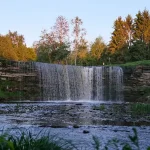
📷 Featured image by Marek Lumi on Unsplash.