On this page
- What the Viljandi Folk Music Festival Actually Is
- Dates, Venue, and How the Town Transforms
- The Music: What Genres and Styles You’ll Actually Hear
- Beyond the Stages: Workshops, Crafts, and Daytime Activity
- 2026 Budget Reality: Tickets, Food, and Getting There
- Where to Sleep When Every Bed in Viljandi Is Taken
- What to Wear, Eat, and Know Before You Go
- Frequently Asked Questions
If you’re planning a trip to Estonia in late July 2026 and you’ve done any research at all, you’ve probably seen the Viljandi Folk Music Festival mentioned everywhere. What you might not have found is a clear, honest picture of what showing up actually looks like — how crowded it gets, what the music sounds like, how much you’ll spend, and how to avoid the most common mistakes first-time visitors make. This guide covers all of it.
What the Viljandi Folk Music Festival Actually Is
The Viljandi Folk Music Festival, known in Estonian as Viljandi pärimusmuusika festival, has been running since 1994. That origin matters. It didn’t grow out of a tourism campaign or a government arts initiative — it started as a grassroots gathering of musicians who were determined to keep Estonian folk traditions alive after decades of Soviet cultural suppression. What survived underground, in living rooms and village halls, came back into the open here.
Thirty-plus years later, the festival is one of the most respected folk music events in northern Europe. It draws around 25,000 to 30,000 visitors over four days, which is remarkable when you consider that the town of Viljandi itself has a permanent population of roughly 16,000 people. The festival is bigger than the town that hosts it.
The cultural significance goes beyond nostalgia. Estonian regilaul — the ancient runic singing tradition with no fixed melody, sung in a call-and-response structure — gets serious stage time here. So does the kannel, a traditional Estonian plucked string instrument that looks a little like a lap harp. These aren’t curiosities wheeled out for tourists. They are living, evolving art forms, and Viljandi is one of the few places in the world where you can watch professional musicians treat them that way.
The festival is also deeply connected to the Viljandi Culture Academy, which is part of the University of Tartu and one of the only institutions in the world offering a university-level degree in Estonian folk music. Many of the performers you’ll see studied here. The festival and the academy feed each other in a way that keeps the whole ecosystem genuinely alive rather than preserved in amber.
Dates, Venue, and How the Town Transforms
In 2026, the festival runs from Thursday 23 July to Sunday 26 July. The main action concentrates on Friday and Saturday nights, but Thursday evening has its own energy — smaller stages, more intimate crowds, and a feeling that you’ve arrived before the rush.
The venue is the ancient Viljandi Castle ruins, set on a hillside overlooking Viljandi Lake. The castle dates to the 13th century and was largely destroyed by the end of the 17th century. What remains are stone walls, grassy terraces, and a natural amphitheatre quality to the landscape that no stage designer could improve on. The main open-air stage sits at the bottom of the hill, with the audience spreading up the slope on blankets and folding chairs.
Walking into the castle grounds on a warm July evening, with the smell of woodsmoke and grilled food drifting up from the stalls below and the low light catching the old stone walls, is one of those travel experiences that genuinely earns the word “atmosphere.” It doesn’t feel staged. The ruins were here long before the festival and they’ll be here long after.
Beyond the castle, stages are scattered across the old town. The cobblestone streets around the main square fill with impromptu sessions, street musicians, and people carrying instruments. By Friday afternoon, the whole of central Viljandi has essentially become the festival. Shops open late, cafés push tables onto pavements, and it becomes difficult to walk more than 100 metres without hearing something worth stopping for.
The Music: What Genres and Styles You’ll Actually Hear
The word “folk” covers a lot of ground at Viljandi — more than most people expect. The programming is genuinely eclectic, and understanding the range helps you plan which stages to prioritise.
Estonian Roots Music
This is the core. Regilaul performances, kannel ensembles, and groups working with Seto polyphony (from the Setomaa region in southeastern Estonia) appear throughout the programme. Seto leelo — a form of choral singing added to UNESCO’s Intangible Cultural Heritage list — has its own dedicated slot most years. These sets are often performed without amplification or with minimal sound reinforcement, which creates a completely different listening experience from the main stage shows.
Baltic and Nordic Folk
Latvian and Lithuanian folk ensembles appear every year, as do Finnish, Swedish, and occasionally Norwegian acts. This gives the festival a genuinely pan-Baltic identity. If you’ve heard Scandinavian folk on record but never seen it live, the Viljandi stage is a low-pressure, high-quality place to encounter it in context.
World Music and Fusion
By Saturday night, the main stage programming moves into territory that mixes Estonian folk elements with jazz, electronica, and West African rhythms. This is where the festival sometimes surprises people who arrived expecting something purely traditional. The fusion acts can be polarising among purists, but the quality is consistently high and the crowds are enormous. These headline sets are the ones that fill the castle hill to capacity.
Chamber and Acoustic Sets
Some of the best moments at Viljandi happen in the smaller tents and indoor venues around town, where you might find yourself two metres from a quartet playing 19th-century Estonian dance tunes in arrangements that somehow sound completely contemporary. Capacity at these venues is limited — typically 150 to 300 people — so arriving early matters.
Beyond the Stages: Workshops, Crafts, and Daytime Activity
The festival’s daytime programme is where it separates itself from a standard music event. From Thursday morning through Sunday afternoon, there are instrument-making workshops, folk dance lessons, singing workshops, and craft demonstrations running across multiple venues in town.
The singing workshops in particular are worth knowing about. They run in Estonian but the instructors at most sessions are experienced at working with non-speakers. Regilaul, because it’s based on repetition and vocal response rather than memorised lyrics, is surprisingly accessible to beginners. You don’t need to understand the words to participate in the structure. Several visitors who attend these workshops describe it as one of the more unexpectedly moving experiences of their trip — there’s something physical about singing in a very old tradition with a group of strangers.
The craft market along the castle park features Estonian artisans selling work that ranges from hand-woven textiles to carved wooden instruments. Prices reflect real craft rather than tourist-market economics — a hand-carved kannel can run to several hundred euros, while smaller items like embroidered pouches, ceramic pendants, and hand-dyed scarves sit in the €15–€60 range. The quality is generally excellent. These aren’t mass-produced souvenirs.
For families, there’s a dedicated children’s area with folk-themed activities, face painting, and age-appropriate music sessions. The festival has always been genuinely family-friendly — you’ll see grandparents, parents, and small children all at the same events, which is not something you can say about every music festival.
2026 Budget Reality: Tickets, Food, and Getting There
Tickets
- Day ticket (single day access): €28–€35 depending on the day (Saturday is highest)
- Full festival pass (all four days): €85–€95 — this is the best value if you’re staying the full run
- Evening-only ticket (after 6pm, main stage access): €20–€25
- Children under 12: Free with a paying adult
Tickets sell out. The full festival pass in particular has sold out before the end of May in recent years. Buy early through the official festival website. In 2026, there is no longer a physical box office queue for pre-purchased tickets — entry is via QR code scan only.
Food and Drink
Budget around €15–€25 per day on food if you eat at the festival stalls. The food village near the castle entrance runs a mix of Estonian staples — smoked fish, dark rye bread, pickled vegetables — alongside international options. A bowl of mulgikapsad (a slow-cooked pork and sauerkraut dish from the Viljandi region specifically) costs around €8–€10 and is exactly the right thing to eat in the rain if the weather turns. A beer from one of the Estonian craft breweries at the festival runs €5–€7.
- Budget per day (eating mostly at stalls, one drink): €15–€20
- Mid-range per day (stall food plus café lunch, two drinks): €30–€40
- Comfortable per day (restaurant dinner plus festival stalls): €55–€70
Getting There
Viljandi is roughly 160 kilometres south of Tallinn and about 90 kilometres from Tartu. Direct bus connections from both cities run frequently and take around 2.5 hours from Tallinn (€10–€15) and 1.5 hours from Tartu (€7–€10). During festival weekend, extra services are added. The Elron train from Tallinn to Viljandi takes about 2.5 hours and is a pleasant, comfortable option at around €12–€16 one way.
Rail Baltica, the major cross-Baltic rail project, does not yet directly serve Viljandi as of 2026 — the main Rail Baltica corridor runs through Tallinn and Pärnu heading south. Getting to Viljandi still means bus or train from Tallinn or Tartu, or driving.
Driving: parking fills completely by Friday noon. If you’re arriving by car, use the park-and-ride system operating from the Viljandi sports grounds on the edge of town. Free shuttle buses run every 15 minutes to the castle area from Thursday afternoon through Sunday evening.
Where to Sleep When Every Bed in Viljandi Is Taken
This is the part many first-time visitors underestimate. Accommodation in Viljandi during festival weekend is essentially fully booked by January. If you’re reading this in June or later for the same year, the realistic options shift.
Camping on Site
The festival operates a designated camping area about 800 metres from the main stage, with toilet and shower facilities. A camping spot costs €15–€20 per person per night. It fills up, but it tends to have more availability than hotel rooms because many visitors don’t know it exists. The atmosphere is good — people play instruments late into the night, which is either a feature or a bug depending on your sleep preferences.
Nearby Towns
Pärnu (about 90 kilometres west) has considerably more accommodation and is a reasonable base if you have a car or are willing to use the festival shuttle connections. Prices in Pärnu during this period are also elevated but less extreme than Viljandi itself. A mid-range hotel room in Pärnu during festival weekend runs €90–€140 per night compared to €150–€220 for equivalent rooms still available in Viljandi.
Tartu (90 kilometres east) is another option for those travelling by train, though the logistics of getting back after a late Saturday night show require planning ahead.
Private Rentals
Estonian homeowners in Viljandi and surrounding villages increasingly rent out rooms and apartments during festival week. Local Facebook groups and the festival’s own community board are the most reliable places to find these. Prices for a private room run €40–€70 per night, which is genuinely good value in this context. Some families rent out their entire homes and stay elsewhere.
What to Wear, Eat, and Know Before You Go
Weather and Clothing
Late July in Estonia averages 19–22°C during the day and can drop to 12–14°C after midnight. Rain is entirely possible — some of the most memorable Viljandi sets happen in light rain, with people pulling out ponchos and refusing to leave. Pack a light waterproof layer, comfortable walking shoes that can handle wet grass, and one warmer layer for evening. The castle grounds are on a slope and the grass gets slippery when wet.
Language
English is widely spoken among festival staff and most vendors. Stage announcements and MC introductions are typically in Estonian and English. Workshop sessions vary — most have at least one English-speaking facilitator available, but not all. If you speak Finnish, you’ll find it genuinely useful here more than anywhere else in Estonia.
Cash and Cards
Most stalls accept card payment in 2026, but a handful of smaller craft vendors and some of the village-style food stalls prefer cash. Carrying €30–€50 in cash as backup saves frustration. There are two ATMs near the festival entrance, but queues on Saturday afternoon can be long.
The Unwritten Rules
Viljandi has a specific culture that regulars understand implicitly. The audience at traditional music sets tends to listen in near-silence — this isn’t a festival where you talk over the music. At the smaller acoustic venues especially, arriving mid-set and pushing to the front is genuinely frowned upon. The evening main stage shows are different — they’re loud, social, and looser in feel. Reading the room matters.
Also: Estonians don’t generally queue-jump, and they notice when visitors do. The festival draws a substantial international crowd in 2026, but the local majority sets the tone. Patience and courtesy are the right approach.
Frequently Asked Questions
When exactly is the Viljandi Folk Music Festival in 2026?
The 2026 festival runs from Thursday 23 July to Sunday 26 July. The main evening programme on the castle stage runs from approximately 6pm to midnight each day. Daytime workshops and smaller stage performances begin around 10am. Thursday has the smallest crowds; Saturday is the busiest day by a significant margin.
Do you need to speak Estonian to enjoy the festival?
No. The music itself transcends language — much of the traditional singing is in archaic forms of Estonian that many native speakers don’t fully understand either. Workshop facilitators and most festival staff speak English. Stage introductions are bilingual. A basic grasp of a few Estonian words is appreciated but absolutely not required to have a full experience.
Is the Viljandi Folk Music Festival suitable for children?
Yes, genuinely. Children under 12 enter free with a paying adult. There’s a dedicated children’s programme running across all four days with folk music activities, storytelling, and craft sessions. The festival atmosphere is family-oriented rather than party-oriented, particularly during daylight hours. Evening main stage sets run late, but families typically use the afternoon programme and leave before midnight.
How far in advance should you book accommodation?
For any accommodation in Viljandi itself, booking six months ahead is the realistic minimum. Hotel rooms in Viljandi for festival weekend are often fully booked by February. The festival campsite has more flexibility but still fills up. Nearby cities like Pärnu and Tartu offer better late-availability options, though prices rise sharply in the final weeks before the festival.
What makes Viljandi different from other European folk festivals?
The combination of an exceptionally strong tradition in Estonian and Baltic roots music, a physically stunning venue in genuine medieval ruins, and a scale that remains manageable — around 25,000 to 30,000 visitors over four days — keeps the atmosphere intimate compared to major European festivals. The deep connection to the Viljandi Culture Academy also means the artistic standard is consistently high rather than commercially driven.
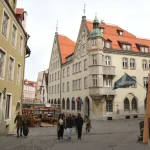
📷 Featured image by Margo Evardson on Unsplash.