On this page
- Lahemaa in 2026: What’s Changed Before You Lace Up
- Easy Trails for Beginners and Families
- Intermediate Trails Worth the Effort
- Challenging Hikes for Serious Walkers
- The Viru Bog Trail: Lahemaa’s Unmissable Walk
- Coastal and Seaside Trails
- Wildlife You’ll Actually See on the Trails
- Trail Conditions by Season
- Getting to the Trailheads from Tallinn
- What to Pack for Lahemaa Hiking
- Budget Breakdown for a Lahemaa Hiking Day
- Frequently Asked Questions
💰 Click here to see Estonia Budget Breakdown
💰 Prices updated: October, 2026. Budget figures are estimates — always verify before travel.
Exchange Rate: $1 USD = €0.88
Daily Budget (per person)
Shoestring: €40.00 – €70.00 ($45.45 – $79.55)
Mid-range: €120.00 – €250.00 ($136.36 – $284.09)
Comfortable: €300.00 – €900.00 ($340.91 – $1,022.73)
Accommodation (per night)
Hostel/guesthouse: €15.00 – €40.00 ($17.05 – $45.45)
Mid-range hotel: €60.00 – €150.00 ($68.18 – $170.45)
Food (per meal)
Budget meal: €15.00 ($17.05)
Mid-range meal: €35.00 ($39.77)
Upscale meal: €100.00 ($113.64)
Transport
Single metro/bus trip: €2.00 ($2.27)
Monthly transport pass: €30.00 ($34.09)
Lahemaa in 2026: What’s Changed Before You Lace Up
Lahemaa National Park sits roughly 70 kilometres east of Tallinn, and getting there in 2026 is both easier and slightly more complicated than it used to be. Rail Baltica construction has affected road traffic on the E20 corridor, particularly around Aegviidu and the southern park approaches, adding 20–30 minutes to drive times from Tallinn on busy weekends. Meanwhile, the RMK (State Forest Management Centre) has upgraded several trailhead facilities with new composting toilets, extended parking areas, and updated signage following a 2024–2025 maintenance cycle. If you’re planning a hike based on a blog post from 2022 or earlier, some of the access roads and trailhead coordinates have shifted. This guide reflects conditions as of mid-2026.
Easy Trails for Beginners and Families
Lahemaa doesn’t require serious fitness or expensive gear to enjoy. Several of its most rewarding trails are flat, well-marked, and genuinely accessible for children, older visitors, and first-time hikers.
Viru Bog Boardwalk (Viru raba)
The most visited trail in the park, the Viru Bog boardwalk suits all abilities — including pushchairs on the drier sections. It’s covered in full detail in its own section below.
Oandu–Beaver Trail (Kobras)
This 6-kilometre loop near Oandu starts at the Oandu Nature Centre and follows the Oandu River through alder forest. Beaver dams are visible at several points along the route, and the path is almost entirely flat. Children tend to find this trail captivating because the evidence of beaver activity — gnawed stumps, flooded clearings, collapsed dam sections — is impossible to miss. Allow 2 hours. The trailhead has toilets, a picnic area, and information boards in Estonian, English, and Finnish.
Altja Village Loop
The 4.8-kilometre walk around Altja fishing village combines coastal scenery with one of Estonia’s best-preserved traditional village streetscapes. The path skirts reed beds, passes an authentic net shed, and ends at Altja Kõrts, a reconstructed tavern where you can sit on a wooden bench and eat black bread with smoked fish. The ground is mostly level. This is an excellent half-day option if you’re travelling with children or anyone who tires quickly.
Intermediate Trails Worth the Effort
These routes involve longer distances, uneven forest terrain, or a combination of habitats that makes navigation slightly more demanding. A basic trail map from the RMK visitor centres is enough for all of them.
Oandu–Altja–Natturi Forest Trail
This linear trail runs 12 kilometres one-way through old-growth forest, connecting Oandu to the coast at Natturi. The path moves through several distinct forest types — mixed birch and pine on sandy ridges, dense spruce in the lower boggy sections — and crosses a couple of wooden footbridges over forest streams. The terrain isn’t steep, but the distance and the slightly rougher forest floor make it an intermediate route. Most walkers arrange a car shuttle or return on the same path. Allow 4–5 hours one-way.
Palmse Manor to Sagadi Manor Walk
Roughly 9 kilometres on marked forest trails between two of Lahemaa’s most impressive manor estates. Palmse Manor has a restored baroque garden and a visitor centre with café. Sagadi Manor houses the Forest Museum. The walk between them through beech and oak forest feels surprisingly remote for a route connecting two popular sites. Spring is the best time — the forest floor between the manors runs vivid with wood anemones in late April and early May. Allow 3 hours walking time.
Käsmu Peninsula Coastal Loop
The full loop around the Käsmu Peninsula is approximately 10 kilometres and combines forest interior with a dramatically varied coastline. Smooth glacier-polished granite boulders sit alongside tangled root systems right at the water’s edge. The village of Käsmu itself — known historically as the “captain’s village” — sits at the start and end of the loop. The path is well-marked but includes some scrambling over rocks near the northern tip. Allow 3.5–4 hours.
Challenging Hikes for Serious Walkers
Lahemaa isn’t mountainous — Estonia has no mountains — but its most demanding trails test endurance, navigation ability, and tolerance for genuinely difficult terrain including bogs, dense undergrowth, and unmarked sections.
The Lahemaa Long Trail
The RMK completed a significant expansion of the Lahemaa Long Trail in 2025, and it now stretches roughly 65 kilometres across the full width of the park from west to east. Most serious hikers tackle 2–3 day sections. The trail combines coastal paths, bog crossings, and forest routes and requires overnight stays at RMK shelters or camping zones. The eastern sections, between Võsu and the Koljala area, are the least visited and most demanding. Navigation requires the RMK app or a downloaded offline map — mobile signal is patchy in the interior.
Mohni Island Crossing (Seasonal)
In winter, when the sea freezes sufficiently, experienced hikers cross the ice to Mohni Island, a small uninhabited island roughly 3 kilometres off the Lahemaa coast. This is not a marked trail and should only be attempted with a local guide who checks ice thickness. The experience — complete silence, the pale grey light of the Baltic in January, the island’s deserted lighthouse — is extraordinary. Several Tallinn-based guiding companies offer organised crossings between December and February when conditions allow.
The Viru Bog Trail: Lahemaa’s Unmissable Walk
If you only have time for one trail in Lahemaa, the Viru Bog (Viru raba) is the one. The boardwalk trail begins 7 kilometres south of Käsmu village and 1.5 kilometres from the main Tallinn–Narva highway, making it the most accessible serious natural experience within an hour of the capital.
The trail crosses open bog landscape that formed over 10,000 years. The boardwalk keeps you above the saturated peat, but the surface sways slightly underfoot in the wetter sections — that gentle give underfoot is one of those small physical details that stays with you. In summer, the air above the bog pools smells faintly sweet and earthy, something between moss and cold water, nothing quite like it. In October, the low bog vegetation turns deep red and copper, and the reflection of those colours in the still black pools makes this one of Estonia’s genuinely photogenic natural landscapes.
Start early on summer weekends. By 10:00 on a July Saturday the main car park fills and the boardwalk gets crowded. The car park costs €5 per vehicle in 2026, payable by card at the barrier. There are no food options at the trailhead — bring water and snacks.
The lookout tower at the halfway point gives a 360-degree view across the bog. On a clear day you can see the forest edge in every direction, with the bog stretching flat and wide in between. The tower boards creak pleasingly under your weight as you climb, and the wind at the top is almost always stronger than at ground level. Allow 90 minutes for the loop at a relaxed pace.
Coastal and Seaside Trails
Lahemaa’s coastline is 86 kilometres long and largely undeveloped. The coastal trails here feel nothing like the manicured seafront paths of southern Europe — these are often rough, boulder-strewn, and salt-aired, with the Baltic Sea grey or brilliant blue depending on season and weather.
Käsmu to Võsu Coastal Walk
This 8-kilometre one-way trail connects two of the park’s most popular villages. The path follows the shoreline closely, moving over limestone pavement sections, through pine forest, and across open shingle beaches. You can arrange a return by local bus (the Võsu–Käsmu service runs twice daily in summer 2026) or simply walk back. The section between the two villages passes a WWII-era bunker and several boat-launch points used by local fishermen.
Juminda Peninsula Walk
The Juminda Peninsula forms the western tip of Lahemaa and has a distinct, quieter character than the main park area. The trail around the peninsula tip is about 6 kilometres and passes the Juminda lighthouse, which has operated since the 1920s. The water on the western side of the peninsula is calmer and shallower, favoured for swimming in summer. The eastern cliff sections are modest in height but give a good sense of the coastal geology — layers of pale limestone visible in the eroded cliff face.
Wildlife You’ll Actually See on the Trails
Lahemaa hosts brown bears, lynx, wolves, and elk, but sightings of large predators are genuinely rare on day hikes. What you will reliably encounter depends on the trail and time of year.
- Beavers: Almost certain on the Oandu Beaver Trail, especially at dawn and dusk. Their engineering work is visible all year.
- White-tailed eagles: Common over the coastal sections and bog areas. Wingspan is enormous — unmistakable in flight.
- Elk: Most likely at dawn in forest clearings. The Sagadi–Palmse route passes through prime elk habitat.
- Adders: Estonia’s only venomous snake is present in Lahemaa’s bog and heathland areas. They’re shy and will move away from footsteps, but watch where you put your hands on warm days when they sun on rocks and boardwalk edges.
- Whooper swans: In the coastal bays during spring and autumn migration, often in large groups.
Late May is the best window for bird diversity. The forest fills with warblers and flycatchers returning from Africa, and the dawn chorus in the mixed forest around Palmse is genuinely loud — layers of competing song from 04:00 onward.
Trail Conditions by Season
Lahemaa changes dramatically across the year and the “best time to hike” question has a genuinely complicated answer.
Spring (April–May)
Forest trails are muddy until mid-April. The boardwalk trails at Viru Bog are fine. By late May, conditions are excellent across all trails and the wildlife and wildflower activity is at its peak.
Summer (June–August)
Best overall conditions for trail surfaces, but mosquitoes and horseflies are a serious issue in the forest interior and bog areas from late June through early August. Bring insect repellent with at least 30% DEET and wear long sleeves on forest trails. The coastal and exposed bog trails are less buggy.
Autumn (September–October)
The sweet spot for serious hikers. Insects are gone by September, the forest is in full colour by early October, and the bog’s autumn palette is extraordinary. Trails are dry after the summer. Occasional rain from mid-October, but rarely enough to cause problems.
Winter (November–March)
Snow transforms the park into a cross-country skiing destination. Many summer trails become ski routes. The Viru Bog in snow and frost is genuinely beautiful — the ice-fringed pools and frost-covered pines feel remote in a way summer crowds don’t allow. Dress for -10°C minimum in January and check that facilities (toilets, parking barriers) are operating, as some trailheads reduce services in winter.
Getting to the Trailheads from Tallinn
Most trailheads in Lahemaa require your own transport to reach conveniently. Here’s the honest picture for 2026.
By Car
The standard route from Tallinn takes 60–80 minutes to Palmse or Viru Bog via the E20/A1 highway. Factor in the Rail Baltica construction delays near Kostivere if travelling on weekday mornings. Parking at major trailheads (Viru Bog, Oandu, Palmse) costs €5 per day, payable by card. Smaller coastal trailheads are free.
By Bus
Direct buses from Tallinn Bussijaam (bus station) run to Võsu and Käsmu several times daily in summer (reduced to 2–3 services in winter). The Võsu bus stops within walking distance of the Käsmu trail start. Journey time is approximately 1.5 hours. Check timetables on the Peatus.ee platform, which was updated with new 2026 regional routes in January.
Organised Day Trips
Several Tallinn-based operators run guided day trips to Lahemaa, typically combining Palmse Manor with the Viru Bog trail. Prices range from €40–€65 per person including transport and guiding. These are genuinely good value if you don’t have a car and want more than just the bus-accessible coastal villages.
What to Pack for Lahemaa Hiking
Lahemaa’s weather shifts faster than the forecast suggests, and the bog terrain demands a bit more preparation than a city walk.
- Footwear: Waterproof hiking boots for all forest and bog trails. Trail runners are fine on the boardwalk and coastal paths in dry weather. Do not hike off-boardwalk in the bogs in ordinary shoes — you will sink.
- Layers: Even in summer, coastal winds and sudden rain drops the temperature quickly. A packable waterproof jacket weighs nothing and earns its place every time.
- Insect repellent: Non-negotiable from June through August. DEET-based spray, not wristbands.
- Water: No reliable water sources on most trails. Carry at least 1.5 litres per person for half-day hikes. The Oandu Nature Centre has a tap.
- Navigation: The RMK app or downloaded offline map. Paper maps available at Palmse Visitor Centre for €3.
- Cash: Parking at major sites is card-only, but if you stop at Altja Kõrts or the Sagadi Manor café, cash is still preferred.
Budget Breakdown for a Lahemaa Hiking Day
Lahemaa is one of Estonia’s most affordable outdoor experiences, but costs add up depending on how you get there and whether you join a guided tour.
Budget Tier (under €25 per person)
- Bus from Tallinn return: €8–€12
- Trailhead parking (if driving and splitting with 3 others): €1.50
- Packed lunch from Tallinn: €5–€8
- Total: approximately €15–€22
Mid-Range Tier (€25–€60 per person)
- Car hire from Tallinn (shared between 2): €25–€35 each
- Parking: €5
- Lunch at Altja Kõrts or Sagadi Manor café: €12–€18
- Coffee and snacks: €5
- Total: approximately €47–€63
Comfortable Tier (€65–€120 per person)
- Guided day tour from Tallinn including transport: €55–€65
- Manor estate entry fees (Palmse, Sagadi): €8–€12 combined
- Dinner at a local guesthouse restaurant: €25–€35
- Total: approximately €88–€112
Overnight stays in Lahemaa guesthouses range from €45 (basic room, shared bathroom) to €140 (en-suite room in a renovated manor or seaside guesthouse). RMK forest shelters along the Long Trail are free to use on a first-come basis.
Frequently Asked Questions
Do I need to pay an entry fee to hike in Lahemaa National Park?
No entry fee exists for the park itself. You pay only for parking at major trailheads (€5 per vehicle per day in 2026). The Viru Bog car park uses a card-only barrier. Some individual attractions inside the park, like Palmse Manor, charge separate admission fees.
How difficult is the Viru Bog trail?
The Viru Bog boardwalk trail is easy for most people. It’s 3.5 kilometres on a flat raised wooden path with one lookout tower climb. Children, elderly visitors, and people with moderate fitness all complete it without difficulty. The boards can be slippery when wet, so shoes with grip are sensible.
Can I see the Northern Lights in Lahemaa?
Yes, and Lahemaa is one of the best spots in Estonia for aurora viewing because of its minimal light pollution. The Käsmu and Viru Bog areas face north with open horizons. Solar activity has been strong in 2025–2026. Check real-time KP index apps and aim for clear nights between October and March.
Is it safe to hike alone in Lahemaa?
The shorter marked trails are very safe to hike alone. The main risks are getting lost on longer unmarked sections and adder bites in bog and heathland terrain (serious but rare). Tell someone your route, carry the RMK app offline, and stay on marked paths. Bears and wolves are present but attacks on hikers are essentially unheard of.
What is the best trail in Lahemaa for first-time visitors?
The Viru Bog boardwalk is the most rewarding trail for a first visit — it’s accessible, visually spectacular in any season, and takes only 90 minutes. If you want more time and a coastal element, combine it with the Altja Village Loop, which adds another two hours and a very different landscape.
Explore more
Lahemaa National Park Day Trip from Tallinn: Your Ultimate Guide
How to Get to Lahemaa National Park from Tallinn: Your Transport Guide
Beyond the Trails: What to Do in Lahemaa After Dark
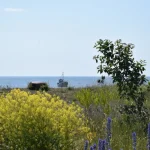
📷 Featured image by Jacques Bopp on Unsplash.