On this page
- What Makes Muhu Feel Different From Other Estonian Islands
- Getting to Muhu: Ferries, Bridges, and the Road From Tallinn
- Day Trip or Overnight? Making the Right Call
- The Highlights: What to Actually Do on Muhu
- Where to Eat on Muhu: Farm Tables and Smoked Fish
- 2026 Budget Reality: What Muhu Costs
- Practical Tips for Visiting Muhu in 2026
💰 Click here to see Estonia Budget Breakdown
💰 Prices updated: October, 2026. Budget figures are estimates — always verify before travel.
Exchange Rate: $1 USD = €0.88
Daily Budget (per person)
Shoestring: €40.00 – €70.00 ($45.45 – $79.55)
Mid-range: €120.00 – €250.00 ($136.36 – $284.09)
Comfortable: €300.00 – €900.00 ($340.91 – $1,022.73)
Accommodation (per night)
Hostel/guesthouse: €15.00 – €40.00 ($17.05 – $45.45)
Mid-range hotel: €60.00 – €150.00 ($68.18 – $170.45)
Food (per meal)
Budget meal: €15.00 ($17.05)
Mid-range meal: €35.00 ($39.77)
Upscale meal: €100.00 ($113.64)
Transport
Single metro/bus trip: €2.00 ($2.27)
Monthly transport pass: €30.00 ($34.09)
What Makes Muhu Feel Different From Other Estonian Islands
Most visitors to western Estonia treat Muhu as a stepping stone — the small island you cross by causeway to reach Saaremaa. That’s a mistake that’s becoming more common in 2026 as Saaremaa tourism continues to grow and Muhu quietly builds its own identity as a destination worth slowing down for. Muhu is Estonia’s third-largest island, but it carries itself like a village that has never been in a hurry.
The landscape is low and open — juniper-dotted meadows, limestone outcrops, and reed-fringed bays that catch the light differently every hour. There are no traffic jams, no cruise ship crowds, and no queues at the museum. The stone-walled farms and thatched-roof buildings here are among the best-preserved in the entire country. Walking through Koguva village feels less like visiting a heritage site and more like wandering into a place that simply never changed.
What sets Muhu apart is the combination of genuine rural character, a surprisingly strong local food scene, and the kind of silence that’s genuinely hard to find in 2026. The island has around 1,700 permanent residents, and that small-scale reality shapes everything from how people greet strangers on the road to how accommodation is run.
Getting to Muhu: Ferries, Bridges, and the Road From Tallinn
Muhu is connected to mainland Estonia by a regular car ferry that crosses the Väinameri strait between Virtsu (on the mainland) and Kuivastu (on Muhu’s eastern shore). This is the main route, operated by Praamid.ee. In 2026, the ferry runs year-round with roughly 10–14 crossings per day depending on the season, and the journey takes about 25 minutes on the water.
From Tallinn, the drive to Virtsu is approximately 120 kilometres and takes around 1.5 to 2 hours depending on traffic. From Pärnu it’s closer to 100 kilometres. The ferry booking system was updated in 2025 — you can now reserve a specific sailing online and pay in advance, which is strongly recommended in summer. Walk-on foot passengers and cyclists can board without a reservation, but car spaces fill quickly on weekends between June and August.
Once you’re on Muhu, a 2-kilometre causeway connects the island directly to Saaremaa. There’s no additional ferry or toll — you simply drive or cycle across. This means Muhu works well as either a destination in itself or as the quiet counterpart to a Saaremaa trip.

- By bus: Lux Express and regional bus services from Tallinn run to Kuressaare on Saaremaa, crossing through Muhu via the ferry. You can ask to be dropped at stops on Muhu, but having your own vehicle gives you far more flexibility.
- By bike: Cyclists cross the ferry for a reduced fee (around €3–4 per person with a bike in 2026) and can explore Muhu’s flat terrain very comfortably. The main road is quiet and well-surfaced.
- Ferry cost: A standard car with two passengers costs approximately €16–22 one way depending on the season. Check Praamid.ee for current pricing before you travel.
Day Trip or Overnight? Making the Right Call
Muhu is compact enough to cover the highlights in a single long day, but the island genuinely rewards staying at least one night. The difference between a day visit and an overnight stay is the difference between ticking boxes and actually feeling what the place is about.
A day trip from Tallinn is feasible — you leave early, catch a morning ferry, spend six to seven hours on the island, and return in the evening. That gives you enough time to walk Koguva village, visit the church, and have a proper lunch. It works well if you’re combining Muhu with a Saaremaa visit on consecutive days.
Staying overnight, however, unlocks the real rhythm of the island. Evening light on Muhu’s western shore is extraordinary — low sun across flat water, the smell of sea grass warming in the late afternoon. Breakfast at a farm guesthouse, a slow morning walk before anyone else is on the road, and the chance to eat dinner somewhere that doesn’t rush you — these are the things that make Muhu memorable rather than merely visited.
For families with young children or travellers who tire quickly of rural quiet, a day trip is probably the right call. For anyone who genuinely wants to decompress and experience old Estonian island life, two nights is the ideal minimum.
The Highlights: What to Actually Do on Muhu
Koguva Village
This is the centrepiece of Muhu and one of the most authentically preserved village ensembles in all of Estonia. The stone walls, thatched roofs, and farmstead layout date back centuries, and the whole village is protected as an open-air museum without the roped-off, velvet-barrier feeling of most heritage sites. You walk through working farmyards, past vegetable gardens and woodpiles, and the texture of the granite walls is rough and real under your hands. The village is free to walk through; the Muhu Museum inside Koguva charges a small entry fee (around €5 in 2026).

Muhu Church and the Village of Liiva
The Church of St. Catherine in Liiva is one of the oldest rural churches in Estonia, with origins in the 13th century. The frescoes inside are faded but still visible, and the whitewashed limestone exterior glows warmly on sunny afternoons. The churchyard contains carved limestone grave markers that are unique to Muhu — the folk art on these stones is unlike anything else in the region.
Cycling the Western Shore
The western edge of Muhu, around Võiküla and toward the tip of the Võiküla peninsula, offers flat cycling through meadows and along the coast. This area is quieter than the main road corridor and gives you the best sense of untouched island landscape. Bicycle rental is available from several guesthouses on the island; expect to pay around €10–15 per day.
The Causeway Walk at Dusk
The causeway between Muhu and Saaremaa is about 4 kilometres long. Walking or cycling it at dusk, with flat water on both sides and the sky going orange and pink, is one of those simple experiences that costs nothing and stays with you.
Where to Eat on Muhu: Farm Tables and Smoked Fish
Muhu’s food scene is small but genuinely good. The best eating here is rooted in local produce — lamb raised on the island’s meadows, smoked fish from the surrounding sea, dark rye bread, and dairy from farms you can see from the restaurant window.
Muhu Pood & Kohvik in Liiva is the island’s most reliable daytime option — a local shop and café combined, serving open sandwiches, soups, and the kind of unpretentious Estonian lunch that fills you up without drama. It’s the place to buy local jam, dried herbs, and handmade crafts to take home.
Padaste Manor on the southern part of the island is in a different category entirely. This boutique hotel and restaurant is one of the most respected dining addresses in all of western Estonia. The kitchen works closely with the island’s producers and the menu changes with the seasons. A dinner here runs €60–100 per person without wine — it’s a special-occasion meal, but the quality justifies it. The terrace in summer, overlooking the manor gardens toward the sea, has a particular stillness that makes the food taste better.

Several guesthouses on Muhu offer dinner for guests if arranged in advance — this is often the most honest, flavour-forward food on the island, cooked by people who grew up eating this way.
2026 Budget Reality: What Muhu Costs
Muhu is not an expensive island to visit, but costs have risen since 2024 across accommodation and dining, in line with broader Estonian tourism trends.
- Budget: Camping at designated sites costs €10–15 per person per night. Simple guesthouse rooms in shared facilities run €40–55 per night. A self-catered day with food from the local shop is very manageable at €15–25 per person.
- Mid-range: A private room in a farm guesthouse with breakfast included runs €70–110 per night for two people. Lunch at a local café costs €10–15 per person. Dinner at a mid-range guesthouse or restaurant is €20–35 per person.
- Comfortable: Padaste Manor rooms start at around €180–260 per night in peak season (July–August), dropping to €130–180 in shoulder months. Add dinner and you’re looking at €350–450 per couple per night all-in. For the experience and quality, this is fair value by Nordic coastal standards.
Ferry costs, bike rental, and museum entry are relatively minor additions — budget an extra €30–50 per person for the full transport and activity overhead of a two-day visit.
Practical Tips for Visiting Muhu in 2026
- Cash and connectivity: Mobile coverage on Muhu is decent on the main roads but patchy in more remote areas. Card payment is accepted at most businesses, but carry some cash for smaller farm stalls and market vendors.
- Best season: June to September is the comfortable visiting window. July is peak season — the warmest and busiest. May and October are quieter but weather is less predictable. Winter visits are possible and beautifully atmospheric, but many guesthouses and restaurants close from November to April.
- What to pack: Muhu’s terrain is flat and easy, but meadow paths and the causeway can be muddy after rain. Waterproof shoes are sensible year-round. Bring insect repellent in June and July — coastal meadow mosquitoes are real.
- Language: English is spoken at most guesthouses and tourist-facing businesses. In smaller local shops and among older residents, Estonian is the working language — a few basic phrases go a long way.
- Muhu in 2026: The island introduced a new cycling route map in 2025, available as a downloadable PDF from the Muhu local government website and in print at the ferry terminal in Kuivastu. It covers 12 marked routes ranging from 8 to 35 kilometres.
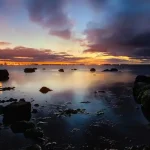
📷 Featured image by Sirje Sinisoo on Unsplash.