On this page
- What Makes Hiiumaa Different from Estonia’s Other Islands
- Getting to Hiiumaa in 2026
- The Landscapes: Where to Actually Go
- Wildlife and Birdwatching: A Serious Destination
- Day Trip or Overnight? Honest Advice
- Where to Eat and What to Try
- 2026 Budget Reality
- Practical Tips Before You Go
- Frequently Asked Questions
💰 Click here to see Estonia Budget Breakdown
💰 Prices updated: August, 2026. Budget figures are estimates — always verify before travel.
Exchange Rate: $1 USD = €0.86
Daily Budget (per person)
Shoestring: €45.00 – €70.00 ($52.33 – $81.40)
Mid-range: €120.00 – €170.00 ($139.53 – $197.67)
Comfortable: €250.00 – €420.00 ($290.70 – $488.37)
Accommodation (per night)
Hostel/guesthouse: €10.00 – €40.00 ($11.63 – $46.51)
Mid-range hotel: €50.00 – €140.00 ($58.14 – $162.79)
Food (per meal)
Budget meal: €10.00 ($11.63)
Mid-range meal: €25.00 ($29.07)
Upscale meal: €80.00 ($93.02)
Transport
Single metro/bus trip: €1.50 ($1.74)
Monthly transport pass: €30.00 ($34.88)
What Makes Hiiumaa Different from Estonia’s Other Islands
Most visitors who come to Estonia’s islands head straight for Saaremaa. It has the resort infrastructure, the spa hotels, the airport, and the name recognition. Hiiumaa, Estonia’s second-largest island, quietly sits to the northwest and gets roughly a fraction of those visitors — which is exactly the point. In 2026, with Saaremaa’s main town Kuressaare growing busier each summer, Hiiumaa has become genuinely valuable to anyone who wants the archipelago experience without the crowds.
What you actually find here is an island that has resisted the pressure to package itself. The population hovers around 10,000 people spread across 1,023 square kilometres of juniper meadows, ancient coastal forests, and shoreline that feels like it belongs to another century. The roads are quiet enough that locals wave at passing cars. The air carries salt and pine in roughly equal measure, and the pace is not a tourist affectation — it’s just how things are here.
Hiiumaa also has a distinct cultural identity. Islanders call themselves hiidlased and maintain a dry, self-deprecating humour about their remoteness. There’s a local saying that things happen on Hiiumaa “a little later” than the rest of Estonia. That slowness, paradoxically, is the draw.
Getting to Hiiumaa in 2026
The standard route is by ferry from Rohuküla harbour, which is about 90 kilometres west of Tallinn near Haapsalu. TS Laevad operates the crossing to Heltermaa on Hiiumaa’s eastern coast. The trip takes approximately 1 hour 45 minutes, and in 2026 the company runs between 4 and 6 daily crossings depending on season, with higher frequency from June through August.
Ferry tickets for a standard car with two passengers cost approximately 25–35 EUR one way in 2026. Foot passengers pay around 5–7 EUR. Booking ahead online is strongly recommended in July and August — the morning sailings fill with locals returning from mainland shopping trips, and the evening returns fill with campers and cyclists heading back. Showing up without a booking on a Friday afternoon in summer is a gamble you will probably lose.
If you’re coming by public transport, take a bus from Tallinn’s Ülemiste bus station to Haapsalu or directly to Rohuküla. From Heltermaa, local buses connect to Kärdla, the island’s main town, several times daily. The bus schedule is coordinated with ferry arrivals, so the connection works — just don’t miss the last departure.
There is also a smaller ferry connection from Sõru on Hiiumaa’s southern tip to Triigi on Saaremaa, which makes island-hopping possible. This route runs less frequently and is more weather-dependent, but it’s a genuinely rewarding way to link the two islands without backtracking to the mainland.
The Landscapes: Where to Actually Go
Hiiumaa’s western half is where the island earns its reputation. The Kõpu Peninsula is the most distinctive area — it’s covered in ancient raised bog and coastal heath, and it contains the Kõpu Lighthouse, one of the oldest continuously operating lighthouses in the world. Built in 1531, it stands 36 metres tall and you can climb it for views across the entire peninsula. On a clear day the Estonian mainland is visible to the northeast.
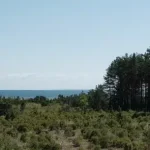
The juniper forests and meadows around Kõpu are protected as part of the West Estonian Archipelago Biosphere Reserve. Walking through them in late morning, when the sun is still low and the light comes sideways through the trees, the juniper berries give off a sharp, resinous scent that stays with you. These landscapes are not dramatic in the Scandinavian sense — they’re subtle and ancient-feeling, and they reward slow movement more than rushing.
Käina Bay, on the island’s southeastern coast, is a sheltered shallow lagoon that’s been a protected reserve since 1962. The bay is ringed with reeds and alder forest. There’s a well-maintained wooden boardwalk that lets you move through the wetland without disturbing it. Early morning here is quietly spectacular — mist over still water, herons standing motionless in the shallows.
Kassari island, connected to Hiiumaa by a causeway, is worth a separate half-day. It’s small and walkable, with a distinctive landscape of limestone meadows and a narrow spit of land called Sääretipp that juts into the sea. Walking to the tip and back takes about an hour and offers open-water views in three directions.
Wildlife and Birdwatching: A Serious Destination
Hiiumaa is not a casual birdwatching destination — it’s a legitimate one. The island sits on the East Atlantic Flyway, and during spring and autumn migration (April–May and August–October), it hosts enormous volumes of waders, wildfowl, and raptors passing through. Käina Bay alone has recorded over 200 bird species.
White-tailed eagles are resident year-round and regularly seen along the coast and over the bay. In May, you can watch common cranes staging in the agricultural fields near Kärdla. Eurasian otters are present in coastal areas though rarely seen without patience and an early start. The coastal forests shelter black storks, which are elusive but breed on the island.

The Käina Bay Bird Station, run by the Estonian Ornithological Society, conducts ringing operations during migration periods. In 2026, they continue to offer occasional guided observation sessions for visitors — contact them directly before your visit if this interests you. There are no formal wildlife tour operators based permanently on the island, so independent preparation matters here.
For mammals, grey seals haul out on the small skerries off the northwest coast. Boat trips to observe them operate from Kõrgessaare during summer, typically June through August, and cost around 25–35 EUR per person.
Day Trip or Overnight? Honest Advice
A day trip to Hiiumaa from Tallinn is technically possible but genuinely not worth the effort. The ferry crossing alone takes nearly two hours each way, and once you factor in the drive to Rohuküla (another 90 minutes from Tallinn), you’re spending five-plus hours in transit for a few hours on the island. You’ll see Kärdla’s main street and not much else.
Two nights is the realistic minimum to feel like you’ve actually been somewhere rather than passed through. Three nights lets you cover the Kõpu Peninsula, Käina Bay, Kassari, and still have time to sit somewhere without a plan. If wildlife is your main interest, four or five nights gives you the early mornings you need for the best sightings.
Hiiumaa works best as its own destination, not as a quick add-on to a Tallinn itinerary. Treat it as the main event of a trip, and it delivers. Treat it as a side trip, and you’ll leave feeling like you missed something — because you did.
Where to Eat and What to Try
Kärdla is the only town with reliable dining options year-round. Rannapaargu, located near the beach, is the island’s best-known restaurant and serves local fish — pike-perch and perch pulled from surrounding waters — alongside lamb from island farms. The menu shifts with availability, which is both its limitation and its honesty. The smoked fish is exceptional, with a deep, almost sweet oakwood flavour that you won’t replicate anywhere on the mainland.

Lest ja Lammas (the name translates roughly as Flounder and Lamb) in Kärdla leans into exactly what the island produces. It’s a smaller, more casual spot and closes during the off-season, so verify hours before making plans around it.
Outside Kärdla, eating options are scattered and seasonal. Several farm shops and roadside stalls operate in summer, selling honey, island cheese, smoked meats, and homemade preserves. These are worth stopping for. If you’re self-catering — which many visitors do — the Säästumarket in Kärdla is the main grocery option. Stock up before heading to the western peninsula; there are no shops out there.
2026 Budget Reality
- Budget (camping / self-catering): 40–60 EUR per person per day. Camping sites on the island charge 10–18 EUR per pitch. Ferry, food from farm shops and self-catering, basic transport. Hiiumaa is genuinely affordable if you travel this way.
- Mid-range (guesthouse / local restaurants): 90–130 EUR per person per day. Guesthouses typically charge 60–90 EUR per night for a double room. Add two meals out and local activities and you’re in this range comfortably.
- Comfortable (small hotels / full board): 150–200 EUR per person per day. The island’s better accommodation options, such as Padu Hotel near Kärdla, sit in the 120–160 EUR range for a double. Combined with meals and guided activities, expect to spend at the upper end.
Overall, Hiiumaa is noticeably cheaper than Saaremaa’s resort infrastructure and significantly cheaper than Tallinn for equivalent quality. It remains one of the more affordable island experiences in Northern Europe for what you actually get.
Practical Tips Before You Go
- Best season: Late May through September for nature and outdoor activity. May is excellent for birds and wildflowers with few other visitors. July and August are warmest (averaging 20–23°C) but the island’s most popular period. October visits are possible and atmospheric but services thin out quickly.
- Getting around: A car is strongly recommended. Bus connections exist between Kärdla and key points, but they run infrequently and don’t reach Kõpu Peninsula on a schedule useful for day exploration. Car hire is available in Kärdla through local operators — book well ahead for summer.
- Mobile coverage: Tele2 and Telia have good coverage in and around Kärdla and on main roads. Deep into the peninsula and coastal forests, signal drops. Download offline maps before leaving town.
- Cash: Card payment is accepted at most restaurants and accommodation, but farm stalls and smaller vendors often prefer cash. ATMs exist in Kärdla.
- Language: English is spoken by younger islanders and anyone working in tourism. Outside these contexts, Estonian and some Russian are more common. A few words of Estonian go a long way here — islanders notice and appreciate the effort.
Frequently Asked Questions
How long does the ferry take from the mainland to Hiiumaa?
The Rohuküla to Heltermaa ferry crossing takes approximately 1 hour 45 minutes. Rohuküla is about 90 kilometres from Tallinn, roughly a 1.5-hour drive. Total travel time from central Tallinn to Heltermaa is around 3.5 hours when connections work smoothly. Always check the TS Laevad schedule before travelling as crossing times can vary slightly by season.
Is Hiiumaa worth visiting in winter?
Hiiumaa in winter is isolated and atmospheric, but most restaurants, guesthouses, and attractions close from October to April. The landscape is beautiful under snow and the island is nearly empty, which some visitors actively seek. If you go in winter, plan entirely around self-sufficiency — accommodation options are very limited and need to be arranged well in advance.
Can you visit Hiiumaa without a car?
Yes, but with significant limitations. Buses connect Kärdla to Heltermaa and a few other points, and the town itself is walkable. However, key sites like the Kõpu Lighthouse, Kassari Spit, and Käina Bay are difficult to reach without a car. Cycling is a realistic alternative — you can bring a bike on the ferry and rent them locally in Kärdla for around 15–20 EUR per day.
What is the best time of year for birdwatching on Hiiumaa?
Spring migration in April and May brings the highest diversity and volume of species passing through Hiiumaa, including thousands of waders and wildfowl using Käina Bay. Autumn migration from late August through October is also excellent. Resident species including white-tailed eagles are visible year-round. May combines peak migration with mild weather and longer daylight hours.
How does Hiiumaa compare to Saaremaa for a nature-focused trip?
Hiiumaa has significantly fewer visitors, less developed tourism infrastructure, and landscapes that feel less managed. For serious wildlife and wilderness, Hiiumaa delivers more. Saaremaa offers more comfort, more dining options, and easier logistics. If your priority is nature immersion over convenience, Hiiumaa is the stronger choice of the two islands in 2026.
📷 Featured image by Kylli Kittus on Unsplash.