On this page
- What Makes Viljandi Different
- The Castle Ruins and Fortress Hill
- Viljandi Folk Music Festival — Estonia’s Biggest Summer Event
- The Lake, the Rope Bridge, and Getting Outdoors
- Where to Eat and Drink in Viljandi
- Day Trip or Overnight?
- Getting There from Tallinn and Tartu
- 2026 Budget Reality
- Frequently Asked Questions
💰 Click here to see Estonia Budget Breakdown
💰 Prices updated: October, 2026. Budget figures are estimates — always verify before travel.
Exchange Rate: $1 USD = €0.88
Daily Budget (per person)
Shoestring: €40.00 – €70.00 ($45.45 – $79.55)
Mid-range: €120.00 – €250.00 ($136.36 – $284.09)
Comfortable: €300.00 – €900.00 ($340.91 – $1,022.73)
Accommodation (per night)
Hostel/guesthouse: €15.00 – €40.00 ($17.05 – $45.45)
Mid-range hotel: €60.00 – €150.00 ($68.18 – $170.45)
Food (per meal)
Budget meal: €15.00 ($17.05)
Mid-range meal: €35.00 ($39.77)
Upscale meal: €100.00 ($113.64)
Transport
Single metro/bus trip: €2.00 ($2.27)
Monthly transport pass: €30.00 ($34.09)
Most visitors who venture beyond Tallinn and Tartu head straight for Pärnu or Saaremaa. Viljandi gets skipped — and that’s exactly why it rewards the people who do show up. In 2026, with Rail Baltica construction still dominating Tallinn’s transport conversation, more travellers are discovering that the quieter inland routes into southern Estonia offer something the coast can’t: a medieval market town with a genuine creative identity, a world-famous folk festival, and almost zero tourist crowds for 51 weeks of the year.
What Makes Viljandi Different
Viljandi sits in the Sakala Upland in central-southern Estonia, about 160 kilometres south of Tallinn. It has roughly 17,000 residents, which makes it Estonia’s fifth-largest town — but the word “town” understates its cultural weight. Viljandi is the country’s unofficial capital of traditional music and craft revival, home to the University of Tartu Viljandi Culture Academy, which trains folk musicians, theatre makers, and traditional craftspeople. That institution shapes everything: the cafés have hand-thrown pottery on the shelves, the murals on the walls are painted by design students, and on any given weekday evening you might hear fiddle practice drifting through an open window on Lossi tänav.
The atmosphere is unhurried without being sleepy. The old streets slope down toward Lake Viljandi, lined with wooden merchant houses painted in mustard yellow and pale green. Unlike Tallinn’s Old Town, nothing here feels preserved for tourists. People actually live and work in these buildings, and the town gets on with its life regardless of who visits.
The Castle Ruins and Fortress Hill
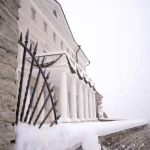
The centrepiece of Viljandi is the Order Castle ruins on the edge of Fortress Hill — the remains of what was once one of the largest medieval fortresses in the Baltic region. The Livonian Order built it in the 13th century, and by the 16th century it dominated the town entirely. Wars, fires, and centuries of stone-robbing reduced it to the dramatic red-sandstone fragments you see today.
Walking through the ruins feels genuinely ancient. The walls still stand several metres high in places, and you can climb up for a view over the lake and the surrounding landscape. In summer the grass between the towers is trimmed short and locals use it as a park — families with children, teenagers with guitars, older couples on evening walks. In winter, when frost settles into the cracks between the stones and the lake below sits grey and still, the place takes on a different quality entirely.
The ruins are freely accessible at all times. A small museum building nearby (the Viljandi Museum) provides context on the castle’s history and the broader story of medieval Viljandi. Entry to the museum is around €5 for adults in 2026.
Viljandi Folk Music Festival — Estonia’s Biggest Summer Event
Every year in late July, Viljandi hosts the Viljandi Folk Music Festival — four days that transform this quiet town into the folk music capital of Northern Europe. In 2026 the festival runs from 24–27 July and draws around 20,000 visitors from across Estonia and abroad. That number sounds large, but the festival spreads across multiple outdoor stages, the castle hill, the town park, and various courtyard venues, so it never feels crushed.
The lineup mixes Estonian traditional music with acts from Finland, Ireland, Scandinavia, West Africa, and Central Asia. It is not a niche event for ethnomusicology scholars — the main stages are loud, energetic, and draw crowds of all ages. Late-night sessions in the smaller venues, however, get genuinely deep into regional folk traditions, and those sets are where the festival earns its international reputation.
If you plan to visit Viljandi during the festival, book accommodation in November or December of the previous year. Hotels in town sell out completely. Airbnb options in the surrounding parishes fill almost as fast. The festival organization also maintains a list of approved homestay accommodation on their website — this is worth checking in early 2026 if July is your window.
Outside festival week, Viljandi Folk is still present in the town’s DNA year-round. The Culture Academy hosts public concerts and jam sessions throughout the academic year, often free or very low cost.
The Lake, the Rope Bridge, and Getting Outdoors
Lake Viljandi lies directly below Fortress Hill, connected to the town by a steep path that drops through old linden trees. The lake is small — about 1.6 kilometres long — but the setting is beautiful. A sandy beach on the northern shore has changing facilities, a café kiosk in summer, and clear enough water for swimming from June through August.
The real surprise for first-time visitors is the suspension footbridge that crosses the valley between Fortress Hill and the opposite slope. It sways slightly as you walk — enough to notice, not enough to worry about — and gives you a view down into the green bowl of the valley that no photograph quite captures. Children love it. Adults slow down involuntarily.

Beyond the lake, the Viljandi hiking area connects to a network of forest trails through the surrounding moraine hills. The terrain here is steeper than most of Estonia, which is mostly flat. You can walk a 5–8 kilometre loop from the town centre through mixed forest and return along the lake shore in two to three hours. The trails are well marked and free to use.
Where to Eat and Drink in Viljandi
The food scene in Viljandi is small but has real character. These are actual places worth seeking out, not a random sampling of whatever is open.
- Fellin (Tartu tänav 11) — the most reliable sit-down restaurant in town. Estonian seasonal cooking: pork with sauerkraut in winter, cold-smoked trout in summer, good local beer. Mains run €12–18. The interior smells of woodsmoke and the bread arrives warm.
- Kohvik Uku — a café beloved by Culture Academy students. Coffee is excellent, the cakes change daily, and the noise level means you can work or have a long conversation without feeling watched. Expect to pay €4–6 for coffee and something sweet.
- Viljandi Veinivilla — a wine bar and small bistro on the upper town, with a decent selection of natural and Georgian wines. It gets busy on Friday evenings. Arrive before 7pm if you want a table.
- The market on Tallinna tänav — open Saturday mornings. Local cheese, honey, rye bread, and pickled vegetables. Come between 9am and noon. The dark rye loaves are dense, faintly sour, and still warm if you get there early enough.
Day Trip or Overnight?
This question has an honest answer: Viljandi is better as an overnight stay, but a long day trip from Tartu is perfectly workable. From Tallinn, a day trip is tight — you lose too much of the day in transit and have to leave before the town reaches its evening rhythm.
If you come from Tartu, the 90-minute bus journey means you can arrive by 10am and have a full day before the last bus back. That is enough to walk the ruins, do the rope bridge loop, eat lunch at Fellin, and browse the town. You won’t feel rushed.

If you stay overnight — even one night — the town changes. The evening crowd in the cafés is local. The castle hill at 9pm is empty except for the occasional dog walker. You can walk to the lake before breakfast when the water is flat and quiet. One night is the minimum to actually feel what Viljandi is.
For festival week in July, plan for at least two to three nights. The programme runs until midnight most evenings and the atmosphere between stages is half the experience.
Getting There from Tallinn and Tartu
Viljandi has no train connection in 2026 — the local rail line closed years ago and Rail Baltica does not serve this route. The only practical public transport option is the bus.
- From Tallinn: Lux Express and Elron bus services run from Tallinn Bus Station (Tallinn Bussijaam) to Viljandi roughly every one to two hours. Journey time is approximately 2 hours 15 minutes. Tickets purchased online cost €7–12 one way depending on timing.
- From Tartu: Direct buses run frequently, journey time around 1 hour 30 minutes. Tickets cost €5–9 one way. This is the easier and more frequent connection.
- By car: From Tallinn, take Route 2 (Via Baltica) south and branch onto Route 57 near Türi. Total distance approximately 160 km, drive time around 1 hour 45 minutes. Parking in central Viljandi is easy and free on most streets.
Within Viljandi, everything worth seeing is within comfortable walking distance. The town is compact enough that you will not need local transport for sightseeing.
2026 Budget Reality
Viljandi is cheaper than Tallinn and Tartu for almost everything. These are realistic 2026 figures.
- Budget: €45–65 per person per day. Guesthouse accommodation €25–35 per night, meals from the market and café stops, no paid attractions beyond the museum.
- Mid-range: €80–110 per person per day. A two-star hotel or good Airbnb at €50–70 per night, one sit-down dinner at Fellin, coffee and cake stops, museum entry.
- Comfortable: €130–160 per person per day. The best accommodation in town (Villa Priisle or similar boutique guesthouse), dinner with wine, flexible transport choices. Note that Viljandi has no five-star properties — the comfortable ceiling is genuine four-star quality.
During Viljandi Folk Festival week, accommodation prices rise 30–50% across all tiers and availability is the bigger problem. Festival tickets in 2026 cost approximately €55–75 for a full four-day pass, with day passes around €20–25.
Frequently Asked Questions
Is Viljandi worth visiting outside of the folk festival?

Yes, strongly so. The castle ruins, lake, rope bridge, and town character exist year-round. Summer is most pleasant, but Viljandi in winter has a quiet charm that rewards travellers who want an authentic Estonian town without any tourist performance. The Culture Academy concert calendar also runs September through May.
How much time do I need in Viljandi?
One full day covers the main sights comfortably. An overnight stay adds the evening and morning, which significantly changes how the town feels. For the folk festival, plan two to three nights minimum.
Can I visit Viljandi without a car?
Easily. Buses from Tallinn and Tartu are frequent and reliable. Once in Viljandi, everything worth seeing is within walking distance of the town centre. A car gives you flexibility to explore the surrounding countryside but is not necessary for a standard Viljandi visit.
What is the Viljandi Folk Music Festival actually like?
Energetic, international, and spread across the whole town. Multiple outdoor stages run simultaneously from midday to midnight. The atmosphere is relaxed and family-friendly during the day, more intense in the evenings with late-night sets in smaller venues where the festival earns its international reputation.
Where should I stay in Viljandi?
The best options are small guesthouses and boutique Airbnbs in the old town area, within easy walking distance of the castle hill. Villa Priisle is consistently well-reviewed. Book well ahead for summer. Outside festival season, last-minute availability is usually fine and prices are reasonable by any Estonian standard.
📷 Featured image by Estonia Incorporated on Unsplash.