On this page
💰 Click here to see Estonia Budget Breakdown
💰 Prices updated: August, 2026. Budget figures are estimates — always verify before travel.
Exchange Rate: $1 USD = €0.86
Daily Budget (per person)
Shoestring: €45.00 – €70.00 ($52.33 – $81.40)
Mid-range: €120.00 – €170.00 ($139.53 – $197.67)
Comfortable: €250.00 – €420.00 ($290.70 – $488.37)
Accommodation (per night)
Hostel/guesthouse: €10.00 – €40.00 ($11.63 – $46.51)
Mid-range hotel: €50.00 – €140.00 ($58.14 – $162.79)
Food (per meal)
Budget meal: €10.00 ($11.63)
Mid-range meal: €25.00 ($29.07)
Upscale meal: €80.00 ($93.02)
Transport
Single metro/bus trip: €1.50 ($1.74)
Monthly transport pass: €30.00 ($34.88)
Tallinn’s Old Town is legitimately beautiful, but in 2026 it is also genuinely crowded. Summer queues outside Olde Hansa stretch down the alley, accommodation prices have risen sharply again, and a lot of visitors are quietly wondering whether there’s somewhere in Estonia that offers culture, history, and good food without the elbow-to-elbow streets. Viljandi is that place. Most international travelers have never heard of it, which is exactly why it’s worth going.
What Kind of Place Is Viljandi?
Viljandi sits in south-central Estonia, about 160 kilometres southeast of Tallinn. It’s a small city — roughly 16,000 people — but it punches well above its weight culturally. This is where you find one of Europe’s most respected folk music festivals, a Viljandi Culture Academy that trains musicians, craftspeople, and theater directors, and a historic landscape of castle ruins, wooded hillsides, and a calm lake that borders the town to the west.
The atmosphere here is unhurried without being sleepy. There’s a noticeable creative energy — young Estonians who studied traditional crafts or world music have stayed or returned, opening small studios, running independent cafés, and performing in low-key venues. Viljandi doesn’t perform its identity for tourists the way some old towns do. It just goes about its business, and visitors get to observe something more real for it.
The town center is compact and walkable, with a mix of wooden townhouses, cobblestone lanes, and a few larger civic buildings. It has the feel of a university town, even though the Culture Academy is relatively small. Come in July during the folk festival and the town transforms completely. Come in March and you’ll have the hill park almost entirely to yourself.
The Old Castle Ruins and Hill Park
The ruins of Viljandi Order Castle are the town’s most striking visual feature. Built by the Livonian Order in the 13th century, the castle was one of the largest in the Baltic region before it was largely destroyed during the Livonian War in the 16th century. What remains today are substantial stone walls rising from a forested hillside, with several towers partially intact and atmospheric enough to photograph in any season.
The surrounding Hill Park (Lossimäed) is where Viljandi residents actually spend their time. In summer, families bring picnics to the grassy slopes. In winter, children sled down the same hills. Walking the paths through the park takes you past the ruins at different angles, and the elevated position gives clear views over Lake Viljandi below. On a clear morning, the light off the water through the trees is genuinely striking — the kind of scene that makes you slow down without being prompted.
The ruins are freely accessible year-round. During the folk festival in late July, the castle grounds become one of the main performance stages, with bands playing against a backdrop of medieval stone walls and string lights. Outside the festival, the area is quiet and unhurried. Allow about an hour to walk the full loop through the park and ruins comfortably.
Viljandi Folk Music Festival
The Viljandi Folk Music Festival — known locally simply as “Folk” — takes place every year in late July, usually across four days from Thursday to Sunday. In 2026 the festival runs from July 23 to July 26. It is consistently ranked among the best folk and world music festivals in northern Europe, and it draws around 25,000 visitors to a town of 16,000, which tells you something about its reputation.
The lineup mixes Estonian traditional music with international folk, Balkan brass, Nordic folk, and experimental crossovers. Stages are set up throughout the old town and the castle grounds, with the largest concerts happening outdoors in the Hill Park. The atmosphere is relaxed and genuinely community-oriented — locals rent out rooms in their homes, restaurants extend their hours, and the streets fill with musicians carrying instruments between venues.
Tickets for the full festival pass in 2026 cost around €45 to €65 depending on how early you buy. Day tickets are available but sell out faster than you’d expect for a regional festival. Book accommodation in Viljandi itself at least three months ahead if you want to stay in town. Many visitors come from Tallinn or Tartu as a day trip during the festival, which is viable by bus or train.
The Local Food Scene
Viljandi’s food scene is small but genuinely good. A handful of spots are worth seeking out specifically.
Fellin is the most well-known restaurant in town, named after the old German name for Viljandi. The menu focuses on Estonian seasonal ingredients — expect dishes built around local pork, foraged mushrooms, and fermented vegetables. Mains run €14 to €22. The interior is warm and unpretentious, with wooden walls and candles on the tables in the evening. Reserve ahead on weekends.

Kohvik Uku is a casual café that opens early and serves some of the best coffee in town alongside proper breakfasts — dark rye bread with local cheese and cured fish, soft-boiled eggs, and house-made pastries. The rye bread here has the dense, slightly sour smell and texture that you notice immediately — nothing like the supermarket version. This is a working local café, not a tourist operation, so the prices reflect that: breakfast for two costs around €14 to €18.
Viljandi Pärimusmuusika Ait (the Folk Music Center) also has a café that operates during events and on weekends, with light food and local craft beer. The building itself — a converted granary — is worth stepping into even if you don’t eat there.
For groceries and picnic supplies, the central market on Tallinna Street has fresh produce and local dairy on weekend mornings.
Lake Viljandi and the Suspension Bridge
Lake Viljandi lies immediately west of the town center, and the path along its shore is how many locals start their mornings. The lake is about 6 kilometres long and well suited to swimming in summer — there are two designated beach areas with changing facilities, and the water temperature in July typically reaches 20 to 22°C.
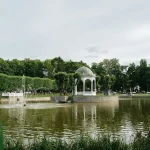
The most photographed feature here is the suspension bridge that crosses a narrow inlet of the lake near the town beach. It’s a modest wooden bridge, but its position — connecting the hillside park to the lake shore with the water visible below on both sides — makes it satisfying to cross. Early in the morning, when the lake is still and only a few people are out walking, the reflected trees and mist over the water give the whole scene a calm that’s difficult to replicate anywhere busier.
Kayak and canoe rentals are available near the main beach from May to September. Rental rates in 2026 are approximately €10 to €15 per hour. Cycling paths run along the lake shore and connect to trails outside town if you want to extend a ride into the surrounding countryside.
Museums and Cultural Spaces Worth Your Time
The Kondas Centre is the most distinctive museum in Viljandi. It’s dedicated to naïve art — self-taught artists working outside formal traditions — and it centers on the work of Paul Kondas, a local math teacher who painted secretly for decades and was only recognized as an artist late in life. The collection is small but genuinely affecting. The bright, flat colors and dreamlike domestic scenes feel completely original, and the context provided by the museum about Kondas’s life under Soviet rule adds depth to what you’re looking at. Entry is €4.

The Viljandi Museum on Kindral Laidoneri Square covers the town’s history from the medieval period through the 20th century with well-organized displays. It’s a good place to spend an hour if you want context for the castle ruins. The building itself, a former magistrate’s court, is worth a look. Entry is €5.
The Pärimusmuusika Ait (Traditional Music Center) is not just a performance venue — it runs workshops and hosts smaller exhibitions related to Estonian folk traditions throughout the year. Check their website before you visit for the current program. Even without an event on, the building and its small permanent display on Estonian folk instruments is interesting.
Day Trip or Overnight?
Viljandi works as a day trip from Tartu — the two cities are 60 kilometres apart, and a full day gives you time to cover the castle ruins, the lake, and a good lunch without rushing. From Tallinn the distance is greater (around 160 kilometres), and a day trip is possible but leaves less breathing room. If you’re coming from Tallinn, an overnight stay is genuinely worth it — especially since you’ll have the town to yourself in the evening when day visitors have left.
During the folk festival, two nights is the minimum to experience the event properly. The last evening concert on Saturday is typically the strongest, and if you leave before it you’ll feel like you missed the point.
Getting to Viljandi
The most convenient public transport option from Tallinn is the direct bus from Tallinn Bus Station (Tallinn Bussijaam), which takes approximately 2 hours and 15 minutes. Elron trains also serve Viljandi, with a change at Lelle; the total journey takes around 2 hours 30 minutes. As of 2026, direct train frequency has improved slightly with Elron’s updated schedule — check their website for current timetables before you travel.
From Tartu, buses run regularly and take about 1 hour 15 minutes. No train connection exists directly between Tartu and Viljandi without a significant detour, so the bus is the practical choice from that direction.

Driving gives you flexibility, especially if you want to explore the surrounding Sakala Upland countryside. Parking in central Viljandi is generally straightforward outside festival weekend. The drive from Tallinn via the Pärnu highway takes about 1 hour 40 minutes in normal traffic.
2026 Budget Reality
Viljandi is noticeably more affordable than Tallinn for equivalent quality. These are realistic 2026 figures:
- Budget accommodation: Hostel dorm beds at €18 to €25 per night. Basic guesthouses from €45 to €60 per room.
- Mid-range accommodation: Comfortable guesthouses and small hotels range from €70 to €100 per room per night, including breakfast in some cases.
- Comfortable/boutique: The best-rated guesthouses in town reach €110 to €135 per night, still well below Tallinn equivalents.
- Eating out (budget): Lunch at a café, soup and a main, around €10 to €14 per person.
- Eating out (mid-range): Dinner at Fellin or a similar restaurant, two courses with a drink, €22 to €35 per person.
- Museum entry: Most venues charge €4 to €6. A full day of sightseeing across two or three museums costs under €15 per person.
- Folk festival ticket: Full four-day pass €45 to €65, day ticket approximately €22 to €28.
During the folk festival, accommodation prices in Viljandi spike significantly — expect to pay 40 to 60 percent more than usual, and availability drops weeks in advance. Staying in Tartu and taking the bus for festival days is a practical alternative if you book late.
Frequently Asked Questions
When is the best time to visit Viljandi?
Late July during the folk festival is the most atmospheric time, but also the busiest. Early June offers warm weather, green hillsides, and almost no tourist crowds. Winter visits between December and February are quiet and cold, but the castle ruins in snow are striking, and accommodation prices are at their lowest.
How do I get from Tallinn to Viljandi without a car?
Direct buses from Tallinn Bus Station run several times daily and take around 2 hours 15 minutes. Elron trains require a change at Lelle and take slightly longer. The bus is generally more convenient and comparable in price. Tickets cost approximately €8 to €13 one way depending on booking time.
Is Viljandi worth visiting outside the folk festival?
Absolutely. The castle ruins, lake, Kondas Centre, and local café scene are all unrelated to the festival and accessible year-round. The town’s character — creative, calm, genuinely Estonian — is actually easier to appreciate when it’s not hosting 25,000 extra visitors. Many repeat visitors prefer the quieter seasons specifically.

Can I swim in Lake Viljandi?
Yes. The lake has two designated swimming areas with facilities, and the water quality is consistently good. Water temperatures in July typically reach 20 to 22°C. The beach areas are free to use and well maintained. Swimming is possible from June through August; outside those months the water is cold enough to deter most people.
Is Viljandi suitable for families with children?
It works well for families. The Hill Park and lake area give children space to move around freely. The castle ruins are accessible and genuinely interesting for older children. The folk festival has dedicated children’s program areas with workshops and performances. The town’s small scale also means nothing is far from anywhere, which simplifies logistics with younger kids.
📷 Featured image by Olena-Mariia Priamukhina on Unsplash.