On this page
- Why Haapsalu Works as a Day Trip Base
- Matsalu National Park — Wetlands, Birds, and Quiet Trails
- Haapsalu to Vormsi Island — Estonia’s Forgotten Fourth-Largest Island
- Lihula and the Castles of Lääne County
- Rohuküla and the Coastal Villages West of Haapsalu
- Virtsu and the Gateway to Muhu and Saaremaa
- Noarootsi Peninsula — Swedish Heritage on the Estonian Coast
- 2026 Budget Reality for Day Trips from Haapsalu
- Practical Logistics — Getting Around Without a Car
- Frequently Asked Questions
💰 Click here to see Estonia Budget Breakdown
💰 Prices updated: October, 2026. Budget figures are estimates — always verify before travel.
Exchange Rate: $1 USD = €0.88
Daily Budget (per person)
Shoestring: €40.00 – €70.00 ($45.45 – $79.55)
Mid-range: €120.00 – €250.00 ($136.36 – $284.09)
Comfortable: €300.00 – €900.00 ($340.91 – $1,022.73)
Accommodation (per night)
Hostel/guesthouse: €15.00 – €40.00 ($17.05 – $45.45)
Mid-range hotel: €60.00 – €150.00 ($68.18 – $170.45)
Food (per meal)
Budget meal: €15.00 ($17.05)
Mid-range meal: €35.00 ($39.77)
Upscale meal: €100.00 ($113.64)
Transport
Single metro/bus trip: €2.00 ($2.27)
Monthly transport pass: €30.00 ($34.09)
Most visitors to Haapsalu treat it as a single-day stop between Tallinn and the islands. That’s a shame, because the town sits at the centre of one of the most underexplored corners of Estonia — and in 2026, with improved ferry schedules to Vormsi, a resurfaced coastal road west of Haapsalu, and better signposting in Matsalu National Park, the surrounding region finally has the infrastructure to match its appeal. If you have two or three nights here, you can fill every day with something genuinely different without retracing a single kilometre.
Why Haapsalu Works as a Day Trip Base
Haapsalu is small — around 9,000 people — but its location is almost perfectly central for exploring western Estonia. The town sits on a peninsula surrounded by shallow bays, and within 60 kilometres in any direction you have national park wetlands, island ferries, medieval ruins, and a coastline that feels nothing like Tallinn’s. The train from Tallinn takes about two hours and runs daily, so you can arrive without a car and still reach most destinations by bus, ferry, or bicycle.
The town itself has enough good accommodation to use as a base without paying island prices. A decent guesthouse on the old town edge costs noticeably less than equivalent rooms in Kuressaare or Tallinn. You eat well here — the market hall on Karja Street stocks local fish, dark rye, and seasonal produce — and the pace is slow enough that coming back after a long day out actually feels like recovery rather than another obligation.
Matsalu National Park — Wetlands, Birds, and Quiet Trails
About 20 kilometres southeast of Haapsalu, Matsalu is one of Europe’s most important bird migration sites and one of Estonia’s least crowded national parks. The park covers roughly 480 square kilometres of reed beds, floodplain meadows, coastal grasslands, and shallow Matsalu Bay. Spring migration — April through mid-May — is the headline event, when hundreds of thousands of geese, swans, and waders move through. But the park rewards visits in every season.

In summer, the trails along the Kasari River delta are quiet and green, and the observation towers at Penijõe and Haeska give wide views over the bay without requiring any serious hiking. The tower at Haeska is the more dramatic of the two — climb it at dusk and you can watch marsh harriers quartering the reed beds below while the light turns everything amber. That stillness, the creak of the wooden steps and the distant call of a bittern somewhere in the reeds, is the kind of moment that doesn’t photograph well but stays with you.
The visitor centre at Penijõe has good English-language information and updated trail maps. In 2026, new boardwalk sections near Keemu have made the wetland trail accessible without rubber boots even after rain. Cycling from Haapsalu to the park boundary takes about 45 minutes on a flat road.
Haapsalu to Vormsi Island — Estonia’s Forgotten Fourth-Largest Island
Vormsi is Estonia’s fourth-largest island and, by a wide margin, its least visited major island. The ferry leaves from Rohuküla harbour, about 8 kilometres west of Haapsalu, and the crossing takes 45 minutes. In 2026, the schedule was expanded to five sailings a day in summer, which finally makes a comfortable day trip possible without needing to stay overnight.
The island has around 400 permanent residents and almost no tourist infrastructure in the commercial sense — no resort hotels, no souvenir shops, no guided bus tours. What it has is 93 square kilometres of forest, limestone-rich meadows, a 14th-century stone church at Hullo village, and a coastline that alternates between rocky shoreline and reed-fringed bays. The Swedish community that lived here for centuries left behind distinctive cross-shaped grave markers in the churchyard at Hullo — a design found nowhere else in Estonia.

Rent a bicycle at the Rohuküla terminal before boarding — there is one rental point on Vormsi itself near the ferry dock, but stock is limited. The island’s one main road loops around in roughly 30 kilometres, and most of the interesting sites sit off short gravel tracks. Allow a full day. Take food with you; the island’s small café at Hullo keeps irregular hours.
Lihula and the Castles of Lääne County
Lihula is a small town about 40 kilometres south of Haapsalu, and it tends to get skipped entirely by people focused on the coast. That’s understandable but wrong. The town has one of the better-preserved medieval castle sites in western Estonia — or rather, what’s left of the Bishop of Ösel-Wiek’s 13th-century stronghold, now reduced to a grassy mound and fragments of stone wall that give a better sense of scale than more heavily restored ruins.
The Lihula Museum on the main street is small but well-organised, covering the history of Lääne County from the first Estonian settlements through the Soviet period. English translations are available throughout following a 2025 renovation. The town also sits on the edge of Matsalu National Park’s southern zone, so combining a morning in Lihula with an afternoon at the park’s Haeska observation area makes a logical day.
The bus from Haapsalu to Lihula runs several times daily and takes about 50 minutes. The journey itself passes through flat agricultural land and small villages that look largely unchanged since the 1970s — the kind of Estonian countryside that doesn’t appear in any brochure but is completely typical of the region.

Rohuküla and the Coastal Villages West of Haapsalu
Most people drive through Rohuküla to catch the Vormsi ferry and never stop to look at the harbour itself. That’s worth reconsidering. The harbour area has a relaxed working character — fishing boats, nets drying on wooden racks, a small fish smoker that operates on weekend mornings and sells smoked bream and perch directly from a shed near the water. The fish is salted, slightly sweet from applewood smoke, and falls apart at the touch. It’s the kind of thing you eat standing up at the quayside without a plate.
West of Rohuküla, the coastal road passes through a sequence of small villages — Palivere, Riguldi, Nõva — each with its own personality. Nõva is the furthest at about 55 kilometres from Haapsalu, but the drive or cycle through coastal pine forest to get there is most of the point. Nõva Nature Centre sits at the edge of a protected coastal reserve and has trails down to a wild beach where the limestone bedrock breaks the shoreline into flat shelves. Swimming here in July and August is genuinely good — the water warms in the shallow bay and there are almost never crowds.
Virtsu and the Gateway to Muhu and Saaremaa
Virtsu is 50 kilometres south of Haapsalu and serves as the mainland ferry terminal for Muhu Island and, from there, Saaremaa. In practical terms, combining a trip to Virtsu with a day on Muhu — without going all the way to Kuressaare — gives you a genuinely different experience at a manageable distance.

The Virtsu-Kuivastu ferry crossing to Muhu takes 25 minutes and runs roughly every hour. Muhu itself is small and connected to Saaremaa by a causeway, but treating Muhu as the destination rather than just a transit point changes the day. The village of Koguva on Muhu’s western coast is one of the best-preserved traditional Estonian fishing villages in the country — stone walls, thatched roofs, original farmsteads still in family ownership. The Koguva Open-Air Museum is free to walk around and fully accessible without any entrance fee.
Getting to Virtsu from Haapsalu without a car requires a bus to Lihula and a connecting service to Virtsu, which adds time. With a car the round trip is straightforward. Budget about 90 minutes driving time from Haapsalu to the Virtsu ferry terminal.
Noarootsi Peninsula — Swedish Heritage on the Estonian Coast
The Noarootsi Peninsula extends into Haapsalu Bay about 15 kilometres north of the town, and it represents one of the more historically unusual corners of western Estonia. The villages here — Birkas, Rickul, Österby — were settled by Estonian Swedes for centuries, and the community maintained its language and customs through the medieval period and into the early 20th century. Most of the Swedish population fled to Sweden in 1944; the empty farmsteads and overgrown orchards they left behind took decades to recover.
Today the peninsula is quiet farmland and forest with a scattering of restored homesteads. The wooden church at Noarootsi — properly called Nuckö Church — dates from the 17th century and is one of the oldest preserved wooden churches in Estonia. It’s usually unlocked during summer daylight hours. Inside, the carved wooden gallery and old Swedish-language memorial plaques create an atmosphere that feels genuinely different from any other Estonian church.
The peninsula road loops around in about 35 kilometres from Haapsalu. Cycling is the best way to see it — the terrain is flat, the road is quiet, and there are several spots along the coast where you can pull off and look back across the bay toward Haapsalu’s cathedral tower on the horizon. There is no public bus service to the peninsula, so without a bike or car, it’s not accessible.

2026 Budget Reality for Day Trips from Haapsalu
Western Estonia is still among the more affordable parts of the country for travellers, though prices have risen noticeably since 2023. Here’s what to expect for day trip costs from Haapsalu in 2026:
Transport
- Bus Haapsalu–Lihula (one way): €3–4
- Rohuküla–Vormsi ferry (foot passenger, return): €8–10
- Virtsu–Kuivastu ferry (foot passenger, return): €6–8
- Bicycle rental in Haapsalu (full day): €15–20
- Car rental from Haapsalu (basic, per day): €55–75
Food and Drink
- Budget: Self-catered lunch from Haapsalu market, €5–8 per person
- Mid-range: Lunch at a café in Lihula or at Matsalu visitor centre, €12–18 per person
- Comfortable: Full sit-down lunch with local fish at a coastal restaurant near Rohuküla or Noarootsi, €25–35 per person including drinks
Entry and Activities
- Matsalu National Park trails and towers: Free
- Matsalu guided birding walk (spring): €20–30 per person
- Lihula Museum: €4 adult admission
- Koguva Open-Air Museum, Muhu: Free
- Nuckö Church, Noarootsi: Free
A realistic full-day trip budget — including transport, lunch, and any entry fees — runs between €25 and €50 per person depending on choices. Bringing your own food from the Haapsalu market cuts costs significantly on longer days.
Practical Logistics — Getting Around Without a Car
Western Estonia has thin public transport outside of Haapsalu itself, and it’s honest to say that a car makes a significant difference here. That said, several destinations are fully workable without one.
By bicycle: Haapsalu has a flat landscape and good cycling infrastructure within about 20 kilometres of town. Matsalu’s northern zone, Rohuküla, the Noarootsi Peninsula, and the coastal villages west toward Nõva are all reachable on a standard bike in reasonable conditions. E-bikes, available for rent in Haapsalu’s town centre, extend that range considerably.

By bus: Regular buses connect Haapsalu to Lihula, Virtsu, and Tallinn. The regional bus network in Lääne County was reorganised in 2025, and some routes now have better Sunday frequency than before. Check the Peatus.ee journey planner for current timetables — it’s the most reliable source and has an English interface.
By ferry: The Rohuküla–Vormsi route is foot-passenger friendly and the terminal is reachable by local bus from Haapsalu. Taxi from Haapsalu town centre to Rohuküla costs around €10–12 in 2026.
Car sharing and rental: Several Haapsalu guesthouses can arrange car rental or connect guests with local drivers for half-day trips. This is worth asking about at check-in, especially for the Noarootsi Peninsula or a full Virtsu–Muhu day, where the bus connections add significant time.
One practical note: Estonian fuel stations thin out west of Haapsalu. Fill up in town before heading toward Nõva or the Noarootsi Peninsula rather than counting on finding a station en route.
Frequently Asked Questions
How far is Haapsalu from Tallinn, and how do I get there?
Haapsalu is about 100 kilometres southwest of Tallinn. The train journey takes roughly two hours and runs daily from Tallinn’s Balti jaam. Buses are also available and slightly faster on some services, taking around 90 minutes. In 2026, direct train departures from Tallinn run in the morning and afternoon, with return services matching.
Is a car necessary for day trips from Haapsalu?
Not for every destination, but it helps significantly. Matsalu’s northern trails, Rohuküla, and the Noarootsi Peninsula are all manageable by bicycle. Buses reach Lihula and Virtsu. For Nõva beach or a flexible Muhu day, a car saves considerable time and opens more options during the same day.

When is the best time of year to visit western Estonia for day trips?
Late May through September offers the best combination of weather, ferry frequency, and trail accessibility. Spring migration at Matsalu peaks in April and early May — cold but exceptional for birdwatchers. July and August bring the warmest coastal swimming conditions. Winter is quiet, some ferry services reduce frequency, and several smaller cafés close entirely.
Can I visit Vormsi Island and return to Haapsalu the same day?
Yes, comfortably. The 2026 expanded summer timetable on the Rohuküla–Vormsi route allows an early crossing, a full day on the island, and an evening return. Foot passengers don’t need to book in advance for most sailings, though the first morning ferry in peak July and August can fill with cyclists. Check schedules at tuulelaevad.ee.
Are the day trip destinations from Haapsalu suitable for children?
Most of them, yes. Matsalu’s observation towers and boardwalk trails are manageable for children old enough to walk a few kilometres. The Vormsi island cycling loop is flat and relaxed. Koguva village on Muhu is open-air and easy to explore. The main limitation is bus-heavy days with long wait times — those suit adults more than restless kids.
Explore more
Where to Go Out in Haapsalu? Your Guide to the Best Bars & Nightlife
The Best Day Trips from Haapsalu: Explore Western Estonia’s Hidden Gems
Your Essential Guide to Shopping in Haapsalu, Estonia
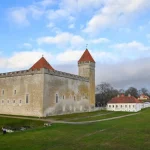
📷 Featured image by Margo Evardson on Unsplash.