On this page
- Why Saaremaa Works So Well for Cyclists
- The Best Cycling Routes on Saaremaa
- Renting a Bike on Saaremaa
- What to Pack and How to Prepare
- Cycling to Saaremaa’s Top Landmarks
- Where to Eat and Refuel Along the Routes
- Wildlife and Nature You’ll Encounter While Riding
- Accommodation for Cyclists
- Getting to Saaremaa with Your Bike
- Budget Breakdown for a Cycling Trip
- Best Time to Cycle Saaremaa
- Frequently Asked Questions
💰 Click here to see Estonia Budget Breakdown
💰 Prices updated: October, 2026. Budget figures are estimates — always verify before travel.
Exchange Rate: $1 USD = €0.88
Daily Budget (per person)
Shoestring: €40.00 – €70.00 ($45.45 – $79.55)
Mid-range: €120.00 – €250.00 ($136.36 – $284.09)
Comfortable: €300.00 – €900.00 ($340.91 – $1,022.73)
Accommodation (per night)
Hostel/guesthouse: €15.00 – €40.00 ($17.05 – $45.45)
Mid-range hotel: €60.00 – €150.00 ($68.18 – $170.45)
Food (per meal)
Budget meal: €15.00 ($17.05)
Mid-range meal: €35.00 ($39.77)
Upscale meal: €100.00 ($113.64)
Transport
Single metro/bus trip: €2.00 ($2.27)
Monthly transport pass: €30.00 ($34.09)
Most visitors to Saaremaa arrive by car and miss the island entirely — they drive from landmark to landmark along the main road and wonder why everyone keeps saying it’s special. The people who actually understand Saaremaa are the ones on bicycles. In 2026, the island has continued investing in its cycling network, and a growing number of travelers are ditching the rental car in favour of two wheels. If you’re planning a trip and wondering whether cycling Saaremaa is realistic, the short answer is yes — and it’s one of the best decisions you can make on this island.
Why Saaremaa Works So Well for Cyclists
Saaremaa is Estonia’s largest island, covering about 2,670 square kilometres, and it was built — unintentionally — for cycling. The terrain is mostly flat to gently rolling, with almost no significant hills. Roads outside Kuressaare (the island’s only proper town) carry very little traffic. The air smells of juniper and sea salt. And the distances between interesting places are manageable — most of the island’s key sites sit within 20 to 60 kilometres of each other.
Unlike mainland Estonia, where cycling between destinations often means sharing busy highways, Saaremaa’s secondary roads are quiet enough that you can ride side by side and hold a conversation. In 2026, the Saaremaa municipality completed phase two of its dedicated cycling path expansion, adding new signposted lanes along the western peninsula and improving connections between Kuressaare and the Sõrve Peninsula in the south. These aren’t just painted lines on a road shoulder — several stretches are fully separated paths through forest and coastal heath.
The island is also compact enough that you don’t need to be a serious cyclist. A comfortable pace of 15–20 km/h gets you across significant chunks of Saaremaa in a day without exhausting yourself. Families with children ride here. Older travellers ride here. You don’t need lycra or a carbon frame — a decent hybrid bike and a light pack will carry you everywhere.
The Best Cycling Routes on Saaremaa
Saaremaa has several established cycling routes, and local tourism offices publish updated maps each spring. Here are the routes worth knowing:
The Kuressaare Loop (35 km)
This is the entry-level route and a great first day on the island. Starting from Kuressaare centre, you ride out past Kuressaare Castle, north along the coast, loop through the small village of Nasva, and return via inland forest roads. Flat, well-signposted, and suitable for all fitness levels. Budget around 2.5 to 3 hours of riding time.

The Sõrve Peninsula (60–80 km return)
The Sõrve Peninsula is Saaremaa’s southernmost finger of land, and cycling it feels like riding to the edge of the world. The road narrows as you go south, the forest gets denser, and eventually the trees open up to wide views of the Baltic Sea on both sides simultaneously. The lighthouse at the tip — Sõrve Tuletorn — is worth every kilometre. This is a full-day ride. Bring more food than you think you need because cafés are sparse after the village of Torgu.
The Angla–Kaali Meteorite Loop (50 km)
This central island loop connects two of Saaremaa’s most photographed landmarks. You start from Kuressaare, ride northeast to the Angla Windmill Hill (five traditional trestle windmills on a ridge), then loop west to the Kaali Meteorite Crater before returning south. The roads here pass through quiet farmland and spruce forest with almost no traffic.
The Western Coast and Harilaid Peninsula (45 km from Kihelkonna)
This northwestern route is the most remote feeling of all. You base yourself near Kihelkonna village and ride out to Harilaid, a narrow spit of land reaching into the sea that’s part of the West Estonian Archipelago Biosphere Reserve. The path is unpaved in sections — bring a gravel or hybrid bike, not a road racer. The coastal scenery here is unlike anywhere else on the island.
Renting a Bike on Saaremaa
You don’t need to bring your own bike. Rental options on Saaremaa have grown noticeably since 2024, with better quality fleets and online booking now standard at most operators.
Kuressaare has the most rental options. Several shops near the town centre and along the harbour front rent hybrid bikes, e-bikes, and children’s bikes. In 2026, the Kuressaare Bike Hub (which opened in late 2024) operates as a dedicated cycling centre with repairs, guided tours, luggage storage, and a proper fleet of maintained bikes. Prices run from roughly €12–15 per day for a standard hybrid to €30–40 per day for an e-bike.
Smaller guesthouses across the island frequently offer bike rental to guests — often cheaper than town operators and sometimes included in the room rate. If you’re planning multiple cycling days, ask your accommodation before booking whether bikes are available.

What to Pack and How to Prepare
Saaremaa’s weather is unpredictable at any time of year. The island sits exposed in the Baltic, and conditions can shift from warm sunshine to cold rain within an hour — especially on coastal routes. Pack with this in mind:
- Waterproof jacket: Non-negotiable. Even in July. Lightweight packable options work well.
- Wind layer: Coastal riding into a headwind at 15°C feels much colder than it sounds.
- Panniers or a handlebar bag: Backpacks make you sweat and shift your centre of gravity. If your rental bike doesn’t come with a rack, bring a small daypack and keep it light.
- Navigation: Download Komoot or Maps.me offline before you arrive. Mobile signal is good in most of Saaremaa but drops on the Harilaid and Sõrve tips. The Estonian Land Board’s cycling map (available free at the Kuressaare Tourist Information Centre) is still the most detailed printed option in 2026.
- Snacks and water: On the quieter routes, you can go 20+ km without passing anything open. A 1.5L water bottle and some food is smart.
- Basic repair kit: Tyre levers, a spare tube, and a mini pump. Punctures happen on the gravel tracks.
Cycling to Saaremaa’s Top Landmarks
One of the pleasures of cycling Saaremaa is that you arrive at its landmarks the right way — slowly enough to notice the surroundings rather than stepping out of a car park and back in again.
Kuressaare Episcopal Castle
This 14th-century fortress is one of the best-preserved medieval castles in the entire Baltic region, and it sits right in the centre of Kuressaare. Cycling there takes minutes from any rental shop in town. The stone walls rise directly from a moat, and on a clear morning the reflection in the water is sharp enough to look painted. Entry costs €8 for adults in 2026.
Kaali Meteorite Crater
About 18 km northeast of Kuressaare, this crater was formed by a meteorite strike roughly 3,500 years ago. It’s now a circular lake surrounded by a low limestone rim, and the scale surprises most people — the crater is larger than it looks in photos. Cyclists reach it via quiet agricultural roads that cut through fields of barley and rye.
Angla Windmill Hill
Coming at it by bike from the south means you crest a small rise and the windmills appear against the sky without warning. The effect is dramatically better than pulling into the car park from the main road.

Vilsandi National Park
Accessing Vilsandi properly requires a boat, but cyclists can ride to the park’s mainland section on the western coast and take in the protected coastal meadows and lighthouse area near Loona Manor. The manor itself now operates as a guesthouse and café — a logical rest stop on the western route.
Where to Eat and Refuel Along the Routes
Food on Saaremaa is tied closely to what the island produces: lamb, fish, rye bread, and dairy. Cycling routes naturally pass through villages and farm areas where you can pick up supplies or sit down for a proper meal.
In Kuressaare, the Old Market area near the castle has a cluster of cafés and a small food market operating on weekend mornings through the summer. For an early start breakfast, the bakery on Tallinna tänav has fresh rye bread and pastries from around 7am — the smell of dark bread and butter in a small warm room is worth waking up early for.
Along the Angla route, the Tõrve farm shop near Kaarma stocks local cheese, smoked fish, and cold drinks. Hours vary, but it’s usually open 10am–5pm in summer. Cash only.
On the Sõrve Peninsula, the café at Mõntu harbour (about 40 km south of Kuressaare) does simple hot food — fish soup, open sandwiches — and is a natural halfway stop. After Mõntu, options become very thin, so stock up here.
The village of Kihelkonna on the west side has a small shop and a seasonal café attached to the guesthouse near the church. The guesthouse garden is shaded and quiet — a good place to spread out a map and plan the afternoon.
Wildlife and Nature You’ll Encounter While Riding
Saaremaa has one of the most distinctive natural environments in the Baltic region, and a lot of it is only visible when you’re moving slowly enough to notice. Juniper thickets line the coastal roads in the north and west — some of the junipers are several hundred years old and have twisted into sculptural shapes. The smell when the sun warms the bushes on a still afternoon is sharp and resinous.
The island sits on the East Atlantic Flyway, which means spring and autumn bring enormous numbers of migratory birds through the wetlands and coastal meadows. White-tailed eagles are common year-round — you’ll likely spot one hunting over a field or perched in a dead tree along the Sõrve road. Elk cross the roads early in the morning, particularly in forested areas near the centre of the island. Ride quietly and you’ll see more.

The limestone alvar meadows in the north — particularly around Tagamõisa Peninsula — are among the rarest habitats in Europe, supporting orchids and wildflowers that bloom in June and July. Cycling across them feels almost surreal: flat open grassland stretching to the sea, no buildings in sight.
Accommodation for Cyclists
Saaremaa has a strong guesthouse culture, and most accommodation outside Kuressaare is specifically built around the idea of guests arriving by bike or on foot. Many properties have secure bike storage, drying rooms for wet gear, and packed-lunch arrangements if you ask the evening before.
In Kuressaare: The town has the full range — budget hostels, mid-range guesthouses, and the Spa Hotels for which the town is famous. Cyclists on a tighter budget do well at the smaller family-run guesthouses on the residential streets north of the castle. Prices from €35–55 per person per night including breakfast.
Along the routes: Farm guesthouses (in Estonian: talu) are the best option for multi-day cycling trips. They’re scattered across the island with enough regularity that you can plan a 3 or 4-day loop without covering the same ground twice. Expect to pay €45–80 for a double room, usually including dinner and breakfast — which matters a lot when there’s no restaurant within cycling distance.
Camping: Saaremaa has several designated camping areas, many positioned directly on the coast. The camping ground at Järve beach on the south coast is popular and has good facilities. Wild camping is legally tolerated in Estonia but requires basic common sense — no fires outside designated spots, leave no trace. In 2026, the island has added two new designated cyclist camping spots with water points along the western route.
Getting to Saaremaa with Your Bike
Saaremaa has no bridge — you reach it by ferry, and the main crossing is the Virtsu–Kuivastu route, which takes about 25 minutes and runs frequently throughout the day. In 2026, Praamiliinid (the Estonian state ferry operator) has increased capacity on this crossing during summer weekends following significant demand in 2025. Bikes travel free on all Praamiliinid ferries — you simply wheel your bike on board alongside the cars.

From Tallinn, the most practical route is to take a bus to Virtsu (approximately 2.5 hours) and catch the ferry. Lux Express and several regional operators run this connection. Bikes are accepted on most buses with advance booking — confirm when you buy your ticket.
If you’re flying into Tallinn airport from elsewhere in Europe and want to bring your own bike, factor in airline bike fees and packing requirements. Most cyclists find it easier and cheaper to rent on the island rather than transport their own bike, especially with the improved rental fleet available in 2026.
There’s also a secondary ferry from Rohuküla to Heltermaa, landing on the eastern side of Saaremaa near Hiiumaa island. This crossing is less frequent but useful if you’re combining a visit to both islands.
Budget Breakdown for a Cycling Trip
Saaremaa is one of the more affordable cycling destinations in northern Europe, particularly outside Kuressaare and the spa hotel scene.
Budget Tier (€50–70 per day)
- Hostel dorm or basic guesthouse room: €20–35
- Standard hybrid bike rental: €12–15
- Meals from farm shops, village cafés, supermarkets: €15–20
- Ferry crossing (bike free, foot passenger): €5–7 each way
Mid-Range Tier (€100–140 per day)
- Private room in a farm guesthouse with breakfast and dinner: €60–80
- E-bike rental: €30–40
- Café lunches and a restaurant dinner: €30–40
- Entry fees and incidentals: €10–15
Comfortable Tier (€180–250 per day)
- Spa hotel in Kuressaare or premium guesthouse: €120–160
- Guided cycling day with gear included: €60–80
- Full restaurant meals and local craft beer: €40–60
Best Time to Cycle Saaremaa
June and July are the most popular months — the days are extraordinarily long (light until nearly 11pm in June), temperatures are comfortable at 18–24°C, and the island’s meadows and coastal areas are at their most vivid. The downside is that Saaremaa gets busy in July, accommodation books out early, and the ferry can feel crowded on Friday evenings.
May and August are the sweet spot for cyclists. May brings cool, clear days and almost no tourists — you’ll have entire routes to yourself. The juniper meadows are green and fresh, and accommodation is easier to book at short notice. August stays warm but tourist numbers drop after midsummer, and the evening light over the western coast in late August has a golden quality that’s hard to describe without sounding overdramatic.
September is increasingly popular with experienced cyclists. Temperatures dip to 12–16°C, the island’s deciduous areas turn orange and red, and migratory birds are moving through in large numbers. Pack for rain and wind, but the riding is often beautiful.

Winter cycling is possible for a small number of dedicated riders — the roads stay mostly clear, and the island has a stark, empty quality that some people find genuinely compelling. But services are limited, and many guesthouses close from October to April. Check ahead carefully if you’re considering a winter visit.
In terms of festivals, the Kuressaare Chamber Music Festival in August and the Saaremaa Opera Festival in July both draw significant visitors — book accommodation earlier than usual if your dates overlap with either.
Frequently Asked Questions
Is Saaremaa suitable for beginner cyclists?
Yes. The terrain is flat, traffic is minimal on most roads outside Kuressaare, and routes can be easily shortened or adjusted. The 35 km Kuressaare Loop is an ideal first day for riders of any experience level. E-bike rentals also make longer distances accessible for those who want to cover more ground with less effort.
Can I bring my own bike on the ferry to Saaremaa?
Yes. Bikes travel free on all Praamiliinid ferries on the Virtsu–Kuivastu and Rohuküla–Heltermaa crossings. You wheel your bike on as a foot passenger. No booking is required for bikes, though during peak summer weekends it’s worth taking an earlier crossing to avoid long car queues at the terminal.
How many days do I need to cycle Saaremaa properly?
Three to four days covers the main routes at a comfortable pace. Two days gives you the Kuressaare area and one longer route like the Angla–Kaali loop. Five to seven days allows you to explore the entire island including the more remote western coast and Sõrve Peninsula without rushing.
Are there guided cycling tours available on Saaremaa?
Yes. In 2026, several operators run guided day tours from Kuressaare covering the main landmarks. The Kuressaare Bike Hub offers guided half-day and full-day rides with English-speaking guides. Prices typically run €50–80 per person including bike hire. Advance booking is recommended in July and August.
Is it safe to cycle on Saaremaa roads?
Generally very safe. Secondary roads carry minimal traffic, drivers on the island are accustomed to cyclists, and the speed limits outside main roads are low. The main hazard is sand drifting onto coastal roads in windy conditions, which can cause slipping. Stick to the right, use a rear light in low-light conditions, and be cautious on any unpaved gravel sections after rain.
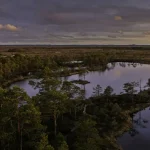
📷 Featured image by Yanhao Fang on Unsplash.