On this page
- The Core Rules Every Driver Must Follow
- Licences and Documents: EU/EEA vs. Everyone Else
- Winter Driving: Tyre Dates, Tread Depth and Black Ice
- What the Roads Are Really Like
- Parking in Tallinn and Tartu
- Renting a Car Step by Step
- Rental Insurance, Fuel and Cross-Border Rules
- 2026 Budget Reality: What Getting Around Costs
- When Not to Drive: Trains, Buses, Trams and Bolt
- What Has Changed Since 2024
- Common Mistakes to Avoid
- Frequently Asked Questions
Estonia looks easy to drive: no toll gates, short distances and good main roads. Then you meet the details. Headlights must be on in July. Winter tyre dates depend on the authorities. A parking app you have never heard of decides whether you get a fine. And a rental desk wants a deposit on a credit card in your name. This guide covers the rules, the roads and the rental process for 2026, so you can decide if a car suits your trip and drive with confidence if it does.
The Core Rules Every Driver Must Follow
Estonians drive on the right-hand side of the road. Your low-beam headlights must be on at all times, day and night, all year round. This rule has been enforced for many years and is unchanged for 2026. Switch them on before you leave the rental car park and you will not think about it again.
Speed limits are simple:
- Urban areas: 50 km/h, unless signposted otherwise.
- Rural roads: 90 km/h, unless signposted otherwise.
- Some major highway sections: the limit can be temporarily raised to 110 km/h, typically from May 1 to September 30. These sections are clearly marked, so follow the signs and not your guess.
Alcohol is the rule where there is no room for error. Estonia has a zero-tolerance policy, and the legal blood alcohol limit is 0.00%. Any measurable amount can lead to heavy fines, licence suspension and even imprisonment. Treat one glass of wine at dinner as the end of your driving for that day. This has not changed since 2024.
Other basics:
- All occupants, front and rear, must wear seatbelts.
- Children must use a child seat or booster suited to their age, height and weight.
- Handheld phone use while driving is prohibited. Hands-free devices are allowed.
- There are no toll roads for private passenger cars. You do not need a vignette or an electronic toll account. Only heavy goods vehicles over 3.5 tonnes pay a road usage fee. This is unchanged for 2026.
Licences and Documents: EU/EEA vs. Everyone Else
If you hold a valid national licence from an EU or EEA country, that is enough. Drivers from outside the EU/EEA need a valid national licence together with an International Driving Permit (IDP). You must show the IDP with your original licence, and the IDP must be valid for your whole stay. Get it in your home country before you fly, because you cannot sort it out at the rental desk.

Winter Driving: Tyre Dates, Tread Depth and Black Ice
Winter is where most visitors get caught out. The rules are:
- Winter tyres are mandatory from December 1 to March 1. The Transport Administration (Transpordiamet) can extend this period if the weather requires it.
- Studded tyres are allowed from October 15 to March 31. This can also be extended in harsh weather. Outside these dates, studded tyres are prohibited.
- Minimum tread depth: 3.0 mm for winter tyres and 1.6 mm for summer tyres.
Check the dates again before your trip, since extensions depend on conditions.
On the road, main routes are regularly ploughed and salted or sanded. Side roads and rural routes take longer to clear. Black ice is the real danger, especially in the early morning and evening. On a clear January dawn in Lahemaa, frost crunches underfoot and the tarmac can look dry while it is glazed. Drive slower than the limit, brake early and leave a big gap.
What the Roads Are Really Like
Main highways linking Tallinn with Tartu, Pärnu and Narva are generally well maintained, paved and in good condition. They are mostly single carriageway, with occasional dual carriageway sections. That means overtaking happens on two-way roads, so be patient behind trucks.
Rural roads vary. Many are paved but narrower and less well kept. Unpaved gravel roads are common in remote areas, in the countryside and on the smaller islands. Gravel throws up stones and turns slick after rain or in winter, so slow down. On a summer evening with the windows open, you will smell pine and dust as you crawl along one of these tracks towards a farm guesthouse.
Road signs follow international standards and are clear. Place names are in Estonian, so download an offline map and check spellings before you set off.
For any emergency, accident or breakdown, call 112 for police, ambulance or fire services. Your car must carry a reflective vest and a warning triangle. Confirm both are in the boot before you drive away from the rental lot.
Parking in Tallinn and Tartu
Parking is where a car costs you money, because the roads themselves are free. Tallinn and Tartu both have paid zones. You can pay at parking machines (cash or card), by SMS, or through mobile apps.

The two most common apps are Pargi.ee and Barking. You register your vehicle and payment details, then start and stop each session in the app. Stopping when you leave means you pay only for the minutes you use.
In Tallinn city centre (Südalinn zone), the rate is approximately €6.00 per hour, or €0.10 per minute, with daily rates also available. Rates differ by zone, so read the sign at your parking spot for the exact price. Vehicles with a valid EU disabled parking permit can use designated disabled spaces.
If your hotel is in the Old Town or city centre, ask about parking before you book. A car left in the centre for a day adds up fast.
Renting a Car Step by Step
Both international brands (Avis, Hertz, Europcar, Sixt, Enterprise) and local companies (Prime Car Rent, Easy Rent) operate in Estonia. Book ahead, especially in summer.
- Compare. Check prices and vehicle types on aggregators and on company websites.
- Choose locations. Tallinn Airport is the common pick-up and drop-off point.
- Select insurance and extras. Add GPS or child seats if you need them.
- Enter your details. Provide driver information and a credit card for the booking and deposit.
- Pick up the car. Show your driving licence, your IDP if applicable, and the credit card used for booking. Walk around the car and make sure every existing mark is written on the rental agreement.
Most companies require drivers to be at least 21. Some charge a young driver fee under 25. You typically need to have held your licence for at least 1–2 years. The credit card must be in the main driver’s name, because the deposit goes on that card.
Most rental companies have desks inside Tallinn Airport or offer shuttles to nearby lots. Follow the “Car Rental” signs after arrivals. The airport is about 4 km from the city centre, so you can be on the road within minutes.
Rental Insurance, Fuel and Cross-Border Rules
Rental insurance comes in layers:
- Third-Party Liability (TPL): mandatory and usually included. It covers damage to other vehicles or property and injury to third parties.
- Collision Damage Waiver (CDW): reduces your financial liability for damage to the rental car, usually with an excess (deductible).
- Theft Protection (TP): reduces liability if the car is stolen, also usually with an excess.
- Excess Reduction / Super CDW: optional extras that reduce or remove the excess. Check what your travel insurance already covers before you buy them.

For fuel, most cars use petrol (bensiin 95 or 98) or diesel (diisel). Check the label inside the fuel flap before you fill up, because a wrong fill is an expensive mistake. Stations are widely available along major roads and in towns. The main chains are Circle K, Olerex and Alexela. Self-service pumps are common and accept Visa, Mastercard and Maestro bank cards.
If you plan to drive to Latvia or Lithuania, you must tell the rental company in advance. Extra fees and specific insurance coverage may apply. Taking a rental car into Russia is generally not permitted and is highly discouraged because of insurance and border complications.
2026 Budget Reality: What Getting Around Costs
Estonia uses the euro, and all figures below are projected 2026 prices. They can shift slightly with demand and fuel costs. Daily car rental prices depend heavily on season, company and car type, so get a quote for your dates. The figures below show what you pay for the alternatives and for parking, so you can compare.
Budget
- Tallinn tram or bus single ticket: approx. €2.00
- Tallinn 24-hour ticket: approx. €6.00
- Lux Express promotional fares Tallinn–Tartu, booked well ahead: from €7.00–€9.00
- Ühiskaart deposit: approx. €2.00 (refundable)
Mid-range
- Elron Tallinn–Tartu express, Standard Class: approx. €10.50–€12.00
- Elron Tallinn–Narva: approx. €11.00–€12.50
- Bus Tallinn–Tartu, standard fare: €10.00–€15.00
- Bus Tallinn–Pärnu: €9.00–€13.00
- Tallinn city centre parking: approx. €6.00 per hour
Comfortable
- Elron First Class (I klass) Tallinn–Tartu: approx. €14.50–€16.00
- Bolt short ride in Tallinn (3–4 km): €5.00–€8.00 without surge
- Bolt from the airport to the centre: €8.00–€15.00
- Regular taxi from the airport: €10.00–€20.00
A day parked in central Tallinn at €6 per hour costs far more than a day of tram rides. This is why many visitors rent a car only for the days they leave the city.
When Not to Drive: Trains, Buses, Trams and Bolt
Elron trains link Tallinn with Tartu, Narva, Viljandi and Rakvere, plus commuter routes around the capital. Buy tickets at elron.ee or in the Elron app (iOS and Android), up to 60 days ahead. Tickets are also sold at station machines at larger stations, and on board with card payment. Trains have free Wi-Fi and power outlets. Tallinn–Tartu takes about 2 hours, and Tallinn–Narva about 2 hours 15 minutes.

Intercity buses cover almost every town and village. The main operators are Lux Express, GoBus and Simple Express. Book at luxexpress.eu, gobus.ee or tpilet.ee. Tallinn–Tartu takes about 2 hours 30 minutes, and Tallinn–Pärnu about 2 hours. Buying onboard from the driver is possible but usually costs more.
Tallinn trams serve the centre, Kadriorg, Kopli and Tondi. Tram Line 4 runs from the airport to Hobujaama and Viru Keskus in about 15–20 minutes, every 5–10 minutes, for approx. €2.00. The stop is right outside the terminal. You can pay by tapping a contactless Visa or Mastercard on the validator, by Ühiskaart, or with a QR ticket from pilet.ee. Bus Route 2 also connects the airport to the centre and the port.
Bolt is the dominant ride-hailing app, with Uber far behind. It works in Tallinn, Tartu, Pärnu and other larger towns. Ride types include standard Bolt, Premium, XL and Green, plus scooters and bikes. The app shows any surge multiplier before you confirm. If you want to reach the islands quickly, NyxAir flies from Tallinn Airport to Kuressaare (Saaremaa) and Kärdla (Hiiumaa).
What Has Changed Since 2024
- Alcohol, headlight and toll rules: all unchanged.
- Tram payments: since 2024 you can tap a contactless Visa or Mastercard on the validator inside the tram, so you no longer need a separate card.
- Elron ticketing: more emphasis on digital tickets through the app and website, with small changes to onboard surcharge rules to encourage buying ahead.
- Bolt: more electric options (Bolt Green) and scooter and bike rentals in more cities. Pricing adjusts with demand and fuel costs.
Common Mistakes to Avoid
- Having one drink and driving. The limit is 0.00%.
- Forgetting the IDP. Non-EU/EEA drivers need it with the original licence, and rental desks check.
- Arriving without a credit card in the driver’s name. The deposit usually requires it.
- Skipping the pick-up inspection. Make sure all existing damage is written on the rental agreement.
- Not telling the rental company about a Latvia or Lithuania trip. Fees and insurance may apply.
- Using studded tyres outside the legal dates. They are prohibited outside October 15 to March 31 unless extended.
- Driving the car into central Tallinn for sightseeing. Parking at about €6.00 per hour makes it costly. Use trams and Bolt in the city, and keep the car for the countryside.
- Trusting gravel roads in the rain. Slow down on rural and island tracks.

Frequently Asked Questions
Do I need an International Driving Permit to drive in Estonia?
Drivers with a valid EU or EEA licence do not. Drivers from outside the EU/EEA need their valid national licence plus an International Driving Permit, shown together with the original licence. The IDP must cover your entire stay. Rental companies will ask for both documents at pick-up.
Do I have to drive with headlights on during the day in Estonia?
Yes. Low-beam headlights must be on at all times, day and night, throughout the year. This rule has been enforced for many years and is unchanged for 2026. Before you leave the rental car park, check that your lights are on, even on a bright summer afternoon.
When are winter tyres mandatory in Estonia?
Winter tyres are mandatory from December 1 to March 1, and Transpordiamet can extend this depending on weather. Studded tyres are allowed from October 15 to March 31. Minimum tread depth is 3.0 mm for winter tyres and 1.6 mm for summer tyres.
Are there toll roads in Estonia?
No, not for private passenger cars. There are no vignettes and no electronic toll systems for standard vehicles. Only heavy goods vehicles over 3.5 tonnes pay a road usage fee. This policy is unchanged for 2026. Your main driving costs are fuel and parking.
Can I take a rental car from Estonia to Latvia or Lithuania?
Yes, but you must tell the rental company in advance. Extra fees and specific insurance coverage may apply. Crossing into Russia with a rental car is generally not permitted and is highly discouraged because of insurance and border complications. Confirm your route with the company before booking.
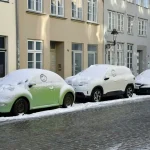
📷 Featured image by Jeton Bajrami on Unsplash.