On this page
- What Makes Estonia’s Co-working Scene Different in 2026
- Understanding the Visa and Legal Setup Before You Book a Desk
- 2026 Budget Reality: What Co-working Actually Costs in Estonia
- How to Choose the Right Space for Your Work Style
- Internet, Power, and Tech Infrastructure: What to Expect
- The Social Side: Communities, Events, and Networking
- Practical Logistics: Booking, Contracts, and What to Ask Before You Sign
- Frequently Asked Questions
Estonia‘s co-working market has matured fast. In 2026, the country has moved well beyond the early days of a few desks in a converted Soviet-era building. The problem most nomads now face is the opposite: too many options, not enough clarity on which type of space suits their situation — especially once visa status, tax implications, and varying internet quality enter the picture. This guide cuts through that noise and focuses on the practical decisions you actually need to make before booking a desk.
What Makes Estonia’s Co-working Scene Different in 2026
Estonia is not just digitally advanced on paper. The government’s X-Road data infrastructure, which connects nearly every public service digitally, means that dealing with administrative tasks — registering a business, filing taxes, accessing health records — takes minutes rather than days. For someone working remotely, this is a real operational advantage, not a marketing tagline.
The country’s co-working culture reflects this mindset. Spaces here tend to integrate practical services that you would not find bundled into a typical desk rental in, say, Portugal or Thailand. Some operators offer direct connections to local accountants, business registration support, and even introductions to the local e-residency ecosystem. This is especially relevant in 2026, as Estonia has continued expanding its e-residency programme with updated digital identity tools that allow non-resident business owners to manage EU-based companies entirely online.
The scale is also human. Tallinn’s co-working spaces sit inside a city of around 450,000 people. Tartu, Estonia’s university city, runs on a population closer to 95,000. That means you are never dealing with the anonymity of a megacity. You recognise faces within a week. Conversations happen naturally. The working culture is direct and low on small talk — Estonians are not unfriendly, but they will not waste your time with pleasantries when you are clearly in focus mode. For people who get work done with headphones off, this quiet professionalism is a genuine asset.
Understanding the Visa and Legal Setup Before You Book a Desk
Before you commit to any co-working arrangement in Estonia, you need to be clear on your legal right to work from the country. This is not a formality — it directly affects the type of agreement you can enter into and what services a co-working space can formally offer you.
EU and EEA Citizens
If you hold an EU or EEA passport, you have the right to live and work in Estonia without any additional visa or permit. You can register your address with the local municipality, open a bank account, and work freely. For stays longer than three months, registration of residence is required by law.

The Digital Nomad Visa
Estonia introduced one of the world’s first digital nomad visas in 2020, and the programme has been updated several times since. As of 2026, the visa allows non-EU nationals to stay for up to 12 months and work remotely for a foreign employer or clients outside Estonia. The key requirement is proving a minimum monthly income of approximately €3,504 — this threshold has been adjusted upward slightly from earlier years to reflect inflation. The application fee is around €100, and processing typically takes 15–30 days through an Estonian embassy or consulate.
One critical point: the digital nomad visa does not permit you to work for Estonian clients or operate as a locally registered freelancer. If you want to bill Estonian companies or register a business in Estonia itself, you need a different legal structure.
E-Residency and the Freelancer Route
E-residency is not a visa and does not give you the right to physically live in Estonia. What it does is allow you to register and manage an EU-based company (typically an OÜ, the Estonian equivalent of a private limited company) entirely online. In 2026, the e-residency application fee is €120–€150 depending on processing speed, and the digital ID card is mailed to your chosen Estonian embassy worldwide. Combined with a digital nomad visa or EU residency, e-residency makes Estonia one of the most operationally efficient places to run a location-independent business.
2026 Budget Reality: What Co-working Actually Costs in Estonia
Estonia is not cheap by Eastern European standards anymore, but it remains noticeably more affordable than Helsinki, Stockholm, or Amsterdam. Here is what you can realistically expect to pay in 2026.
Co-working Desk Costs
- Budget (hot desk, no storage, basic amenities): €80–€130 per month in Tartu or Pärnu; €100–€160 per month in Tallinn
- Mid-range (dedicated desk, locker, fast internet, meeting room hours included): €160–€250 per month across most cities
- Comfortable (private office for one or two people, premium building, full amenities): €350–€600 per month in Tallinn; €250–€400 in Tartu

Day Passes
Most spaces offer day passes ranging from €10–€20. If you are testing a city before committing, a few day passes before signing a monthly contract is entirely normal and operators expect it.
Accommodation
- Budget (room in shared apartment): €350–€500 per month in Tallinn; €250–€380 in Tartu
- Mid-range (studio apartment): €600–€900 per month in Tallinn; €450–€650 in Tartu; €400–€600 in Pärnu
- Comfortable (one-bedroom apartment, central location): €900–€1,400 per month in Tallinn’s city centre
General Monthly Cost of Living
A realistic all-in monthly budget for a single remote worker — including accommodation, food, transport, co-working, and occasional leisure — sits at:
- Budget: €1,400–€1,800
- Mid-range: €2,000–€2,800
- Comfortable: €3,000–€4,000
Health insurance is a separate consideration. If you are on a digital nomad visa, Estonian public health insurance does not automatically cover you. Private international health cover from providers like Cigna or AXA typically runs €60–€150 per month depending on your age and coverage level. Some co-working spaces have negotiated group rates with local insurers — ask directly before you assume this is available.
How to Choose the Right Space for Your Work Style
The most common mistake nomads make is choosing a co-working space based on photos. The aesthetic of exposed brick and hanging plants tells you nothing about whether the space fits your actual work pattern.
Deep Focus Workers
If your work demands four to six hours of uninterrupted concentration — writing, coding, legal review, financial modelling — you need a space with clearly separated quiet zones, not just an informal “no loud calls” rule that nobody enforces. Ask operators directly: is there a phone-free room? What are the actual noise levels between 10:00 and 15:00 on a Tuesday? Visit in the middle of the week, not on a Monday morning when everything is artificially quiet.
Collaborative and Call-Heavy Workers
Designers, consultants, and account managers who spend large portions of the day on video calls need spaces with well-soundproofed phone booths or call pods. In 2026, the better-equipped Estonian spaces have moved toward booking these pods through an app rather than a paper sign-up sheet — a small detail that signals how seriously a space manages its capacity.
Those Running a Business Locally
If you have registered an OÜ through e-residency and are actively building connections in Estonia, choose a space with a strong member community and active event programming. The transient hot-desk floor is not where those relationships form. A dedicated desk with a fixed spot, where people see your face every day, is worth the extra €50–€80 per month for the social capital it builds.

Internet, Power, and Tech Infrastructure: What to Expect
Estonia consistently ranks among the top five countries in the world for internet infrastructure, and the practical reality backs that up. Fixed broadband speeds in Tallinn and Tartu regularly hit 300–1,000 Mbps in well-maintained buildings. Even in smaller towns like Haapsalu or Rakvere, 100 Mbps connections are standard rather than exceptional.
Co-working spaces universally offer gigabit fibre in 2026. The question is not whether the internet is fast — it almost always is — but whether the space has managed its bandwidth properly. A 1 Gbps line shared across 80 simultaneous video calls from the same building is a different experience from one shared across 20. Ask operators for their average concurrent user count, not just the headline speed.
Power infrastructure is reliable. Estonia has no meaningful history of rolling blackouts, and the country’s integration into the European energy grid (it fully desynchronised from the Russian BRELL grid in February 2025, a significant infrastructure milestone) has strengthened long-term energy security. Backup generator systems are common in purpose-built co-working buildings.
Estonian power sockets use the standard European two-pin Type F plug. The voltage is 230V, 50Hz — identical to the rest of continental Europe. If you are arriving from North America, a universal adapter handles the physical fit, but verify that your devices support dual voltage (most modern laptops do).
One sensory note worth mentioning: in winter, Estonian buildings run warm — sometimes very warm. Older converted buildings in particular can reach 23–25°C indoors while it is -10°C outside. If you run hot and need to concentrate, check whether the building has individual thermostat control or whether you will be peeling off layers by midday.
The Social Side: Communities, Events, and Networking
Estonia’s nomad and entrepreneur community is small enough that meaningful connections happen quickly, but organised enough that you do not have to rely entirely on chance. Several structures make this easier in 2026.
Startup Estonia’s Nomad Programme
Startup Estonia, the government body supporting the country’s entrepreneurship ecosystem, runs regular onboarding events for new digital nomad visa holders and e-residents. These are genuinely useful — not just orientation talks, but structured sessions where you meet local lawyers, accountants, and other nomads in the same legal situation. Attendance is free and sessions are held monthly in Tallinn, with quarterly versions in Tartu.

The E-Residency Community
With over 110,000 e-residents globally as of early 2026, Estonia’s digital identity programme has developed a substantial alumni network. The e-Residency Marketplace — a platform where service providers and e-residents connect — has an active forum layer where people ask logistical questions and share real experience. It is a more reliable source of current information than most travel blogs, because the people answering questions are doing so for professional reasons, not engagement metrics.
Language and Culture
The working language in almost every Tallinn co-working space is English. In Tartu, English is equally universal in the tech and academic sectors. Outside these environments, Estonian is the official language, with Russian spoken widely in Tallinn’s eastern districts. You do not need to speak Estonian to function comfortably, but learning five or ten words — aitäh (thank you), palun (please), tere (hello) — lands well and costs nothing.
The social pace here is worth calibrating for. Estonians rarely do small talk as an icebreaker. The warmth of a shared meal or a post-work sauna session — the sauna culture is genuine and pervasive, not a tourist performance — creates connection more effectively than any forced networking event. If a colleague invites you to a sauna evening, treat it as the significant social gesture it is.
Practical Logistics: Booking, Contracts, and What to Ask Before You Sign
Most Estonian co-working spaces allow month-to-month contracts with a 30-day notice period. This flexibility suits nomads well. A minority of premium private offices require a three-month minimum — this is standard for dedicated office suites, not hot desks or dedicated desks.
What to Ask Every Operator Before Committing
- What is the average occupancy rate on a typical Wednesday afternoon? This tells you more about the real working environment than any sales pitch.
- Is the internet connection dedicated to this building, or shared with other tenants in the wider complex? In some converted office parks, bandwidth is split across multiple companies.
- What is the guest policy? If you do client calls or meet collaborators, know in advance whether you can bring someone in without paying a day rate.
- Are there storage options for equipment? A lockable drawer or locker matters if you carry a second monitor or specialist hardware.
- What is included in the monthly fee? Printing, coffee, meeting room hours, and postal address services vary widely — some are bundled, others are extra.

Using a Co-working Address for Your Business
Many spaces in Tallinn offer a registered business address service as an add-on, typically €20–€50 per month. This is useful for OÜ owners who need a physical Estonian address for their company registration without committing to a long-term lease. The service usually includes mail scanning and forwarding. Confirm with your accountant that the address meets the requirements of the Estonian Business Register before signing up — not all virtual address providers are accepted.
Paying for Your Desk
Almost all Estonian co-working spaces accept bank transfer and major credit cards. Estonian banking infrastructure is extremely advanced — Wise, Revolut, and local bank IBAN transfers all process without issue. Cash payment for a co-working desk is unusual and some operators will not accept it. If you are operating through an OÜ, get an invoice issued correctly with your company registration number to ensure VAT can be reclaimed.
The smell of fresh coffee from a shared kitchen and the low hum of a well-occupied open-plan floor at 10:00 on a weekday morning — these are the sensory markers of a space that is actually working. If a space feels empty or performative during prime hours, trust that instinct. The community is the product, more than any amenity on the feature list.
Frequently Asked Questions
Can I use a co-working space in Estonia on a tourist visa?
Yes, if you are from a visa-exempt country (most Western nations), you can stay for up to 90 days within any 180-day period in the Schengen Area and work remotely from a co-working space. However, you cannot legally work for Estonian clients or register a local business on tourist status. For stays beyond 90 days, you need the digital nomad visa or a residence permit.
Is it possible to get a co-working space that also provides a legal business address for my Estonian OÜ?
Yes, many Tallinn co-working operators offer registered address services for €20–€50 per month as an add-on. These are widely used by e-residents running OÜ companies. Confirm with the Estonian Business Register beforehand that the specific address is accepted for official registration — most commercial co-working addresses are, but verify it directly before paying.
How does Estonia’s co-working infrastructure compare outside Tallinn?
Tartu has a strong and growing co-working scene driven by its university and tech startup community, with prices roughly 20–30% lower than Tallinn. Pärnu is popular for summer-based remote work given its coastal setting, with a smaller but functional selection of spaces. Smaller towns like Narva or Haapsalu have limited dedicated co-working but often have serviced office spaces or libraries with reliable high-speed internet.

Do Estonian co-working spaces offer short-term options for people just passing through?
Almost universally, yes. Day passes ranging from €10–€20 are standard across most spaces in Tallinn and Tartu. Some spaces also offer weekly passes at €50–€90, which bridges the gap between a day pass and a monthly contract. Booking in advance is recommended for Monday mornings and during major tech or startup events when spaces fill up quickly.
What health insurance do I need to work from Estonia as a non-EU digital nomad?
The digital nomad visa requires proof of health insurance as part of the application. Estonia’s public health system (Haigekassa) does not cover digital nomad visa holders automatically. You need private international health insurance valid in Estonia and across the Schengen Area. Budget €60–€150 per month depending on your age and coverage scope. Some larger co-working operators have negotiated group health insurance rates — worth asking about directly when you enquire about a membership.
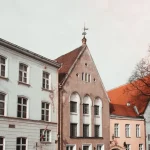
📷 Featured image by Beau Swierstra on Unsplash.