On this page
- Day 1 Morning: The Castle, the River, and the Border That Defines Everything
- Day 1 Afternoon: Soviet Layers and the Old Town Fragments
- Day 1 Evening: Where to Eat and Drink in Narva Tonight
- Day 2 Morning: The Baroque Ghost Town — Architecture Nobody Talks About
- Day 2 Afternoon: Narva-Jõesuu and the Pine Forest Coastline
- Getting to Narva and Moving Around Once You’re There
- Where to Stay in Narva by Budget
- 2026 Budget Breakdown — What a Day in Narva Actually Costs
- Practical Tips Specific to Narva
- Frequently Asked Questions
💰 Click here to see Estonia Budget Breakdown
💰 Prices updated: October, 2026. Budget figures are estimates — always verify before travel.
Exchange Rate: $1 USD = €0.88
Daily Budget (per person)
Shoestring: €40.00 – €70.00 ($45.45 – $79.55)
Mid-range: €120.00 – €250.00 ($136.36 – $284.09)
Comfortable: €300.00 – €900.00 ($340.91 – $1,022.73)
Accommodation (per night)
Hostel/guesthouse: €15.00 – €40.00 ($17.05 – $45.45)
Mid-range hotel: €60.00 – €150.00 ($68.18 – $170.45)
Food (per meal)
Budget meal: €15.00 ($17.05)
Mid-range meal: €35.00 ($39.77)
Upscale meal: €100.00 ($113.64)
Transport
Single metro/bus trip: €2.00 ($2.27)
Monthly transport pass: €30.00 ($34.09)
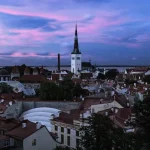
Most travelers still scroll past Narva when planning an Estonia trip. In 2026, that hesitation usually comes down to one thing: the Russian border sitting 300 metres across the river. The war in Ukraine changed how people think about eastern Estonia, and frankly, some of that caution is understandable. But Narva itself is Estonian territory, fully part of the EU and NATO, and it remains one of the most historically layered cities in the entire Baltic region. If you have two days and a genuine interest in history, this place will deliver more per hour than almost anywhere else in the country.
Day 1 Morning: The Castle, the River, and the Border That Defines Everything
Start early. Narva Castle opens at 10:00 and the light on the river before the crowds arrive is genuinely striking — the grey stone walls catch the morning sun while mist sits on the Narva River below. This is one of those rare places where you feel the full weight of geography. On the Estonian bank: Narva’s Hermann Castle, a 14th-century Livonian Order fortress. On the Russian bank: Ivangorod Fortress, built by Ivan III in 1492 as a direct response. Two massive fortresses staring at each other across 300 metres of dark water. In 2026, the Russian side remains off-limits for EU passport holders, which makes the view from the Estonian battlements even more loaded with meaning.
The Narva Castle and Museum (Narva muuseum) inside Hermann Castle is worth at least two hours. The permanent collection covers everything from the medieval Livonian Order through Swedish rule — Narva was a major Baltic trading port under Sweden in the 17th century — to the catastrophic Soviet-era industrialisation that hollowed out much of the old city. The top of the Tall Hermann tower gives you the best panoramic view in eastern Estonia. Admission in 2026 is around €8 for adults.
After the castle, walk along the riverbank promenade heading north. The silence here is unusual. You can hear the water, occasional birds, and sometimes, faintly, traffic from the Russian side. The border crossing point — the Narva Bridge — is visible from the promenade. In 2026, the bridge handles freight and specific visa-category crossings but remains closed to standard tourist movement between Russia and the EU.
Day 1 Afternoon: Soviet Layers and the Old Town Fragments
Narva’s old town was almost completely destroyed in World War II — Soviet and German forces fought over it in 1944 and the bombing left almost nothing standing. What you walk through now is a strange mix: a handful of surviving Baroque and Renaissance buildings, wide Soviet-era streets designed for a working-class industrial city, and more recently, some thoughtful renovation work that started accelerating around 2022–2024 as EU structural funds came through.
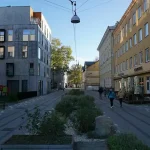
Head to Raekoja plats — Narva’s Town Hall Square. The Town Hall itself is one of the few pre-war buildings that survived, a Dutch Baroque structure from the 1660s that looks almost disoriented sitting among the blocky Soviet architecture around it. The contrast is not subtle. It is, however, completely honest about what happened here.
A short walk away, the Narva Bastion Passages (Bastionid) offer something genuinely unusual: an underground tunnel network built into the old Swedish-era city fortifications. The passages run beneath the park behind the castle and were used for various purposes over the centuries, including as air-raid shelters. Guided tours run in Estonian, Russian, and English. Budget about 45 minutes and €5 for the experience. The air inside smells of old stone and earth — cool even in summer, damp in a way that makes the centuries feel close.

Spend the rest of the afternoon in the Kreenholm area, about 1.5 kilometres from the centre. This is the site of the enormous Kreenholm Manufacturing Company — once one of the largest textile factories in the entire Russian Empire, built on an island in the Narva River in the 1850s. The factory complex is partially abandoned, partially being redeveloped. In 2025–2026, parts of Kreenholm have been converted into creative spaces, a small café, and an arts venue. It is genuinely one of the most atmospheric post-industrial sites in Estonia, all red-brick Victorian factory buildings with weeds pushing through the cobblestones and the river rushing past on both sides.
Day 1 Evening: Where to Eat and Drink in Narva Tonight
Narva’s food scene is small but more interesting than its reputation suggests, and it reflects the city’s majority Russian-speaking population in real ways. You will find Georgian food, Russian-style pelmeni, and solid Estonian staples all within a few blocks of each other.
For dinner, Rondeel, located right beside the castle, is the most atmospheric option in the city — stone walls, candlelight, and a menu that leans into Estonian and European dishes. Mains run €14–€22. It is a reliable choice but book ahead on weekends.
If you want something more local and less tourist-facing, walk to Päikesekivi on Puškini tänav, a no-frills spot popular with locals that does solid pelmeni and grilled meats at very reasonable prices (mains €7–€11). The dining room is warm and unpretentious, the kind of place where the television is on in the corner and nobody is performing for visitors.
For evening drinks, the area around Peetri plats has a few bars. Café vs Bar has a relaxed atmosphere and decent Estonian craft beer selection. Narva is not a nightlife city in the Tallinn sense — it winds down earlier and the vibe is quieter — but that suits a two-day history itinerary well. You want to be rested for Day 2.

Day 2 Morning: The Baroque Ghost Town — Architecture Nobody Talks About
This is the part of Narva that most travel guides skip entirely, which is baffling. Before World War II, Narva was considered one of the finest Baroque cities in northern Europe — a Swedish-era jewel with grand merchant houses, churches, and public buildings. Nearly all of it was destroyed. But the street grid survived, and if you walk it with that knowledge, the scale of the loss becomes architectural.
Start at the Alexander Lutheran Church on Kiriku tänav. Built in 1884, it survived the war and stands as one of the few intact historical church buildings in the city. The interior is modest but moving. Services still run here in Estonian.
From there, walk to the Dark Garden (Tume aed), a park on the former site of dense Baroque merchant housing. The park itself is ordinary, but the surviving sections of old city wall along its edge are not. Stand there for a moment and you’re looking at 17th-century Swedish fortification stonework in a city that is otherwise a product of Soviet urban planning. The cognitive dissonance is part of what makes Narva worth taking seriously as a destination.
The Narva College of the University of Tartu building, opened in 2012, is worth a quick look from the outside — a rare piece of contemporary architecture in Narva that doesn’t apologize for being new. It sits near the riverside and is one of the more optimistic physical statements in the city: that Narva has an educational future, not just a complicated past. In 2026, the college continues to run Estonian-language and bilingual programs aimed at strengthening Estonian identity in the city’s predominantly Russian-speaking community.

Day 2 Afternoon: Narva-Jõesuu and the Pine Forest Coastline
About 14 kilometres north of Narva, at the point where the Narva River meets the Gulf of Finland, sits Narva-Jõesuu — a small resort town with a genuinely beautiful wide-sand beach backed by tall Scots pine trees. In the late 19th and early 20th century, this was a fashionable destination for St. Petersburg’s upper classes. Some of the old wooden villa architecture from that era still survives, giving the town an elegant, faintly melancholy feel.
The beach itself is long, clean, and usually uncrowded except in July. In June and August the water temperature in the Gulf of Finland reaches around 18–20°C — cold by Mediterranean standards, perfectly swimmable by Baltic ones. The scent of pine resin in the afternoon heat is overwhelming in the best way, mixing with the salt air off the water.
Getting there from Narva: local buses run regularly (around €2 one way, 25–30 minutes). You can also take a taxi for about €12–€15 each way. Spend 2–3 hours here, walk the beach, look at the wooden villas on Aia tänav and Mere tänav, have a coffee at one of the small café kiosks along the beachfront, and return to Narva in the late afternoon in time for dinner.
If you prefer to stay inland on Day 2 afternoon, the Narva Reservoir (Narva veehoidla), formed by the Narva hydroelectric dam, offers quiet walking paths along the water and birdwatching in the reed beds. Less dramatic than Narva-Jõesuu but peaceful in a way that suits the reflective mood a day in this city tends to produce.

Getting to Narva and Moving Around Once You’re There
From Tallinn, the most practical option in 2026 is the train. Direct trains run several times daily from Tallinn’s Baltic Station (Balti jaam) to Narva, with a journey time of around 2.5–3 hours. Ticket prices range from €9–€18 depending on booking timing and class. Elron, the state rail operator, runs comfortable modern trains on this route.
Lux Express and FlixBus also run coach services on the Tallinn–Narva route. Coaches take slightly longer (3–3.5 hours) but can be cheaper if booked in advance, sometimes as low as €6.
From Tartu, there are direct trains to Narva (around 2 hours) and bus connections via Jõhvi.
Rail Baltica, the major infrastructure project connecting the Baltic states to central Europe by rail, does not directly affect the Narva route — that line runs through Pärnu and Latvia. But by 2026, the improved Tallinn rail connections have made onward travel from Narva to Tallinn and then southward considerably easier to plan as a multi-city trip.
Within Narva, the city is compact enough that most Day 1 sights are walkable from the centre. The castle is a 15-minute walk from the train station. Local buses cover Kreenholm and the wider city for €1 per trip. Taxis are inexpensive — most city journeys cost €4–€8. The Bolt app works here.
Where to Stay in Narva by Budget
Narva has limited accommodation by Estonian standards, but what exists covers the key price points reasonably well.
Budget (under €45/night): Hostel Lux near the town centre offers basic but clean dormitory and private rooms. No frills, functional, and the staff speak Estonian and Russian. Several guesthouses (kodumajutus) in residential areas offer private rooms in the €35–€45 range — check Booking.com filters for “guesthouse” specifically.
Mid-range (€55–€90/night): Hotel Inger on Pushkini tänav is the most reliable mid-range option in Narva — well-maintained rooms, a decent breakfast, and a location that puts you within 10 minutes’ walk of the castle. King Hotel on Koidula tänav is a similar standard and price point.

Comfortable (€95–€140/night): For the most atmospheric stay, the small boutique guesthouses that have opened in the Kreenholm development since 2024 offer converted brick rooms inside the old factory complex. They are not luxurious by international standards, but the setting is extraordinary.
2026 Budget Breakdown — What a Day in Narva Actually Costs
Narva is one of the most affordable destinations in Estonia. The city has not been discovered by high-volume tourism, which keeps prices realistic.
- Budget traveller (€45–€60/day): Hostel bed (€15–€20), breakfast from a bakery (€3–€4), museum entries (€8–€13 total), lunch at a local café (€6–€8), dinner at a mid-price restaurant (€10–€12), a couple of beers (€6), local buses (€2–€3). Doable with modest choices.
- Mid-range traveller (€80–€110/day): Private hotel room (€60–€75), sit-down meals at better restaurants (€14–€22 for dinner), full entry to all attractions, taxi to Narva-Jõesuu and back (€25–€30 round trip). This is the sweet spot for comfort without overspending.
- Comfortable traveller (€130–€180/day): Boutique accommodation, private guided tour of the castle and bastion passages (available from €40/person), all meals at the better restaurants in town, comfortable transport. Note that “comfortable” in Narva still means far less than the same tier in Tallinn.
Practical Tips Specific to Narva
Language: Narva is around 95% Russian-speaking in daily life. Estonian is used in official contexts, and English is understood among younger residents and hospitality staff, but do not assume English-first service everywhere. A few basic Russian phrases (hello, thank you, please) will be genuinely appreciated, not just tolerated.
The border situation in 2026: The Narva–Ivangorod border crossing remains operational for specific categories — commercial freight and certain visa holders — but is not open for general tourist crossings from the EU side. Do not attempt to photograph military or border infrastructure closely. The rules around this are enforced. Photographing the fortress from the castle grounds and riverside promenade is completely fine.

Safety: Narva is a safe city for tourists. The Russian-speaking majority does not translate to any hostility toward Western visitors — most people are Estonian citizens going about their lives. The city has a slightly rundown feel in some areas from decades of post-Soviet economic difficulty, but this is not a dangerous place. Exercise the same common sense you would anywhere.
SIM cards and connectivity: Estonian mobile operators (Tele2, Elisa, Telia) all provide full 4G/5G coverage in Narva. You do not need a Russian SIM and should not attempt to use one — your phone may auto-connect to Russian networks near the river, which will result in expensive roaming charges. Turn off automatic network selection and manually select an Estonian carrier if this happens.
Tipping: Standard Estonian practice — rounding up or leaving 10% at sit-down restaurants is appreciated but not obligatory. Cafés and fast-casual spots: no expectation of a tip.
Water: Tap water is safe to drink throughout Estonia, including Narva.
Best time to visit: May–September for pleasant weather and the ability to combine the city with Narva-Jõesuu beach. July is the warmest month (average 20–22°C). December and January are atmospheric in a bleak, heavy way that suits the city’s character — but short daylight hours limit what you can fit in two days.
Frequently Asked Questions
Is Narva safe to visit in 2026?
Yes. Narva is Estonian territory and a full EU and NATO member state city. There is no conflict or direct security threat to visitors. The Russian border is nearby, but the city itself is calm and normal daily life continues as usual. Take standard travel precautions and avoid photographing border infrastructure at close range.

Can you cross from Narva into Russia in 2026?
Not as a standard tourist from an EU country. The Narva–Ivangorod border crossing operates for freight and specific visa categories, but EU passport holders cannot make tourist crossings into Russia under current 2026 travel restrictions. The Russian fortress is visible from the Estonian side but not accessible.
How do you get from Tallinn to Narva?
The easiest option is the Elron train from Tallinn Balti jaam, which takes 2.5–3 hours and costs €9–€18 depending on booking time. Coach services (Lux Express, FlixBus) also run the route and can be cheaper if booked in advance. Direct trains also connect Tartu to Narva in around 2 hours.
What language is spoken in Narva?
Russian is the dominant everyday language — around 95% of Narva’s population is Russian-speaking. Estonian is the official state language and used in government and education. English is understood in hotels and tourist-facing businesses. A few words of Russian will help in local cafés and markets.
Is two days enough time in Narva?
Two days is the ideal length for most visitors. It allows time for the castle and museum, the Soviet-era urban landscape, Kreenholm, and a half-day trip to Narva-Jõesuu. History enthusiasts could easily fill a third day with deeper exploration of the fortifications and surrounding area, but two days covers the essential experience thoroughly.
Explore more
The Ultimate Guide to Narva Nightlife: Bars, Clubs & More
📷 Featured image by Vladislav Smigelski on Unsplash.