On this page
- A Region That Plays by Its Own Rules
- Who the Seto People Are
- The Kingdom of Seto: An Annual Monarchy You Can Witness
- Leelo: The Sound That Belongs on a UNESCO List
- What to Eat in Setomaa — and Where
- Key Villages and Sites Worth Your Time
- Getting to Setomaa in 2026
- Day Trip or Overnight?
- 2026 Budget Reality
- Frequently Asked Questions
💰 Click here to see Estonia Budget Breakdown
💰 Prices updated: October, 2026. Budget figures are estimates — always verify before travel.
Exchange Rate: $1 USD = €0.88
Daily Budget (per person)
Shoestring: €40.00 – €70.00 ($45.45 – $79.55)
Mid-range: €120.00 – €250.00 ($136.36 – $284.09)
Comfortable: €300.00 – €900.00 ($340.91 – $1,022.73)
Accommodation (per night)
Hostel/guesthouse: €15.00 – €40.00 ($17.05 – $45.45)
Mid-range hotel: €60.00 – €150.00 ($68.18 – $170.45)
Food (per meal)
Budget meal: €15.00 ($17.05)
Mid-range meal: €35.00 ($39.77)
Upscale meal: €100.00 ($113.64)
Transport
Single metro/bus trip: €2.00 ($2.27)
Monthly transport pass: €30.00 ($34.09)
A Region That Plays by Its Own Rules
Most travellers who come to Estonia spend their time in Tallinn or Tartu and never make it to the country’s southeastern corner. In 2026, Setomaa remains genuinely off the radar for international visitors — which is exactly what makes it so worth the effort. This isn’t a destination where you tick off a few sights and leave. Setomaa has its own language, its own ancient faith, its own monarchy, and a singing tradition on the UNESCO Intangible Cultural Heritage list. If you’ve been wondering whether there’s more to Estonia beyond the medieval old towns and spa hotels, this is your answer.
Who the Seto People Are
The Seto (or Setu) are a Finno-Ugric people who have lived in the border region between southeastern Estonia and northwestern Russia for centuries. They speak Võro-Seto, a language distinct enough from standard Estonian that most Estonians cannot understand it without prior exposure. Their Orthodox Christian faith — absorbed from Russian neighbours over generations — blends with pre-Christian animist traditions in a way that has no real parallel elsewhere in the Baltic states.
The Estonian-Russian border cuts through the historical Seto homeland. The 1991 restoration of Estonian independence left a significant portion of the old Seto territory, including the town of Pechory (Petseri in Estonian), on the Russian side. This division is still felt. In 2026, the border remains closed to casual crossing, so visiting Setomaa means staying on the Estonian side — the parishes of Värska, Mikitamäe, Meremäe, and Misso, now collectively forming Setomaa Parish.
The population is small and ageing, but there is a genuine cultural revival underway. Younger Seto artists, musicians, and food producers are actively working to keep the culture alive on their own terms — not as a museum exhibit, but as something living.
The Kingdom of Seto: An Annual Monarchy You Can Witness
Every year in August, the Seto people elect their king — Peko, named after their mythological patron deity. The event, called Seto Kingdom Day (Seto Kuningriik), takes place in a different village each year and draws thousands of visitors. It is the largest Seto cultural gathering of the year.
The king is not a figurehead in the European royal sense. The role carries genuine community responsibility: the elected Peko is expected to advocate for Seto culture and language at regional and national levels throughout the year. The day itself involves traditional costumes, music, food stalls, political speeches entirely in Võro-Seto, and an atmosphere that sits somewhere between a village festival and a parliament.
In 2026, Kingdom Day falls in mid-August — check the official Setomaa tourism site for the exact location as it rotates annually. If your travel dates align, this is the single best way to experience Seto culture in one afternoon.
Leelo: The Sound That Belongs on a UNESCO List
Seto leelo is a form of polyphonic group singing with a lead vocalist (the torrõ) and a choir responding in tight, overlapping harmonies. It was inscribed on UNESCO’s Representative List of the Intangible Cultural Heritage of Humanity in 2009, but hearing it described is nothing like hearing it in person.
The sound is raw and close-harmony in a way that feels almost physical — not theatrical, not performed for show, but functional. Leelo was historically sung at weddings, harvests, and funerals. The melodies are ancient, and the texts are often improvised to fit the moment.
In 2026, the best places to hear live leelo are:
- Obinitsa Song Grounds (Obinitsa lauluväljakul) — open-air concerts happen here throughout summer, particularly around Midsummer and Kingdom Day.
- Seto Farm Museum (Seto Talumuuseum) in Värska — the museum occasionally hosts leelo demonstrations as part of guided visits. Worth calling ahead to confirm.
- Local Orthodox church services — Seto religious singing shares DNA with leelo. Services at small village churches near Obinitsa are open to respectful visitors.
If you happen to arrive outside festival season, the Seto Instituut in Värska can usually point you toward community singing groups that meet regularly.
What to Eat in Setomaa — and Where
Seto food is heavier and earthier than what you find in Tallinn’s restaurants. Think pork fat, rye bread, sour cream, and freshwater fish from Lake Peipus. The flavours are direct and filling — this is farming food, built for cold weather and long days.
Specific dishes to try:
- Hanevere — a thick porridge made from barley or oat flour, often served with butter and sour milk. The smell of it cooking is almost caramel-sweet.
- Smoked vendace (suitsukukelane) — small fish from Lake Peipus, smoked until the skin crisps. You’ll find these sold by the road near Värska during summer.
- Seto dark bread — denser and more sour than standard Estonian rye, baked in wood-fired ovens. The crust has a slight char that perfumes the whole room.
- Mulgipuder with Seto twist — potato-barley mash served with pork. Common at festival food stalls.

For sit-down meals, Saagri Talu near Obinitsa is a farmstead guesthouse that serves home-cooked Seto food on request — call ahead. In Värska, the Värska Resort and Camping restaurant is the most reliable year-round option, serving regional dishes alongside Estonian standards. Don’t expect fine dining; expect honest portions and local produce.
Key Villages and Sites Worth Your Time
Obinitsa
Obinitsa is the cultural heartbeat of Setomaa. The song grounds here hosted some of the earliest organised leelo gatherings, and the village feels maintained rather than touristified — there are real people living here, not just heritage displays. The Obinitsa Museum is small but thoughtfully curated, with exhibits on Seto costume, jewellery, and the divided homeland.
Värska
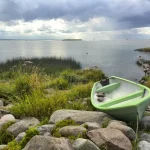
Värska sits on the shore of Lämmijärv, a northern arm of Lake Peipus. It’s the largest settlement in Setomaa and the most practical base for visitors. The Seto Farm Museum here is the region’s main heritage attraction — an open-air collection of traditional farm buildings with costumed guides during summer. Värska is also known for its natural mineral water, bottled locally and sold across Estonia.
Mikitamäe and the Border Landscape
Driving or cycling through Mikitamäe and toward the Russian border gives you a sense of the region’s geography — rolling hills, scattered Orthodox crosses, farmsteads with carved wooden decorations. There’s a poignant quality to this landscape when you realise the horizon you’re looking at was once the same community’s farmland, now in another country.
Getting to Setomaa in 2026
Setomaa has no train station and no direct bus from Tallinn. The realistic gateway cities are Tartu and Võru.
- From Tartu: Regular buses run to Värska (approximately 1 hour 45 minutes, around EUR 8–10 one way). Frequency increases in summer. Check tpilet.ee for current schedules.
- From Võru: Võru is the nearest town with good bus connections, roughly 40 kilometres from Värska. Some services connect Võru to villages within Setomaa.
- From Tallinn: Take a bus or train to Tartu (2 hours), then connect to Setomaa. Rail Baltica construction in 2026 has not yet changed this route — Tartu remains the hub for southeastern Estonia.
- By car: The most practical option if you want to reach multiple villages. Road 7 (Via Baltica) south from Tartu, then southeast toward Räpina and Värska. Roads in the region are paved but narrow — drive at a sensible speed.

Day Trip or Overnight?
If you’re based in Tartu and want a taste of Setomaa, a day trip to Värska and Obinitsa is doable — but only barely satisfying. You’ll spend three to four hours in transit and have perhaps five hours on the ground. That’s enough to visit the Farm Museum and walk around Obinitsa, but not enough to absorb the pace of the place.
An overnight stay changes the experience significantly. Setomaa in the early morning — mist off the lake, the smell of wood smoke from farmhouse chimneys, the silence that comes with genuinely low population density — is worth building your schedule around. Two nights gives you time to visit multiple villages, catch a leelo event if timing allows, and eat properly at a farmstead.
If your time is tight and you only have one day, focus on Värska. If you have flexibility, spend Saturday night locally and explore the surrounding villages on Sunday morning before returning to Tartu.
2026 Budget Reality
Setomaa is one of the most affordable destinations in Estonia. There are no luxury hotels, no resort pricing, and no tourist surcharges. What you spend depends almost entirely on how much you drive and whether you eat at farmsteads or cook your own food.
- Budget (EUR 40–60/day): Camping at Värska Resort and Camping (around EUR 15–20 per pitch), roadside smoked fish, Seto bread from a local bakery, self-catered meals.
- Mid-range (EUR 80–120/day): Guesthouse room (EUR 45–70 per night for a double), meals at the Värska resort restaurant or Saagri Talu, museum entry fees (typically EUR 3–6 per site), and fuel or bus tickets.
- Comfortable (EUR 130–180/day): Private farmhouse rental (some properties available through Maaturism.ee), booked farm dinners, guided cultural tours arranged through the Seto Instituut (typically EUR 30–50 per person for a half-day).
Museum entry in Setomaa remains significantly cheaper than Tallinn equivalents. There is no theme park infrastructure here — you’re paying for access to real places, not manufactured experiences.
Frequently Asked Questions
Is Setomaa safe to visit near the Russian border?
Yes. The Estonian side of the border is normal civilian territory. There are no active restrictions on visiting border-area villages as a tourist. The border itself is closed to crossing in 2026, but travelling and staying in Setomaa Parish carries no specific safety concern. Follow standard Estonian travel guidelines as you would anywhere in the country.

Do I need to speak Estonian to visit Setomaa?
Basic English is understood at guesthouses, the resort, and museum staff in Värska. In smaller villages and at farmsteads, Estonian or Russian may be more useful. That said, Seto hospitality is genuine even without shared language — pointing, smiling, and some preparation go a long way. A few words of Estonian will be warmly received.
When is the best time of year to visit Setomaa?
June through August offers the best combination of weather, open facilities, and cultural events — including Kingdom Day in August. September is quieter but beautiful, with harvest colours and fewer visitors. Winter visits are possible but facilities thin out significantly; check ahead before visiting between November and March.
📷 Featured image by Geio Tischler on Unsplash.