On this page
- Why Lahemaa’s Quiet Corners Reward the Curious
- Forgotten Manors Beyond Palmse
- Secret Coastline: Coves, Cliffs, and Boulder Fields Few Tourists Find
- Deep Forest Trails and Bog Walks That Don’t Appear on Tourist Maps
- Fishing Villages the Tour Buses Skip
- Hidden Soviet Secrets — Cold War Infrastructure in the Trees
- Wildlife Watching Beyond the Obvious
- Local Food and Drink Worth Hunting Down
- Getting There and Around Without a Tour Group
- Best Time to Visit for Off-Season Solitude
- Budget Breakdown for Exploring Lahemaa’s Hidden Side
- Frequently Asked Questions
💰 Click here to see Estonia Budget Breakdown
💰 Prices updated: October, 2026. Budget figures are estimates — always verify before travel.
Exchange Rate: $1 USD = €0.88
Daily Budget (per person)
Shoestring: €40.00 – €70.00 ($45.45 – $79.55)
Mid-range: €120.00 – €250.00 ($136.36 – $284.09)
Comfortable: €300.00 – €900.00 ($340.91 – $1,022.73)
Accommodation (per night)
Hostel/guesthouse: €15.00 – €40.00 ($17.05 – $45.45)
Mid-range hotel: €60.00 – €150.00 ($68.18 – $170.45)
Food (per meal)
Budget meal: €15.00 ($17.05)
Mid-range meal: €35.00 ($39.77)
Upscale meal: €100.00 ($113.64)
Transport
Single metro/bus trip: €2.00 ($2.27)
Monthly transport pass: €30.00 ($34.09)
Why Lahemaa’s Quiet Corners Reward the Curious
By 2026, Palmse Manor and Viru Bog have firmly landed on the Estonian tourist trail. On a warm Saturday in July, Viru Bog’s boardwalk can feel more like a queue than a nature walk. Palmse fills its car park before noon. That’s not a reason to skip Lahemaa — it’s a reason to go deeper. Estonia’s largest national park stretches across 725 square kilometres of coastline, ancient forest, river valleys, and crumbling estate walls. The parts that don’t appear on the first page of search results are often the most rewarding. This guide is built entirely around those places — the bogs without boardwalks, the manors without gift shops, the fishing villages where the only sound is rigging tapping against old wooden masts.
Forgotten Manors Beyond Palmse
Palmse Manor gets the visitors. Sagadi gets a few. But Lahemaa has several more manor complexes that most people drive straight past, and that’s exactly what makes them worth stopping for.
Kolga Manor
Kolga sits on the western edge of the park and has been partially restored but never fully opened to mass tourism. The main building — a grand Baltic baroque structure — still carries that particular atmosphere of faded grandeur, where plaster peels in elegant patterns and the courtyard grass grows long between the cobblestones. The surrounding estate land includes an old granary, an ice cellar dug into a hillside, and a small chapel that locals still use. There are almost no signs explaining what you’re looking at, which is part of its appeal. You’re exploring, not being guided.
Vihula Manor
Vihula operates as a spa and hotel now, but the estate grounds are publicly accessible. Walk past the main buildings toward the millpond and river valley and you’ll find a working watermill area and trails that descend into a narrow river gorge most visitors never discover. In autumn, the gorge fills with the smell of wet leaves and damp stone, and the light filtering through the birch canopy turns the whole valley gold. It’s genuinely beautiful and almost always empty.
Ilumäe and Muuksi Estate Ruins
Further off the road network, the ruins at Muuksi and the smaller estate remnants near Ilumäe are for those who don’t mind rough tracks and a bit of overgrowth. These sites have no facilities, no parking signs, and no interpretation boards — bring a good map or download offline GPS tracks before you go.
Secret Coastline: Coves, Cliffs, and Boulder Fields Few Tourists Find
Lahemaa’s coastline runs for roughly 86 kilometres along the Gulf of Finland. Most visitors see Käsmu and maybe Altja. The stretches between and beyond those villages are almost entirely unvisited on weekdays, and on weekends, a short walk from the road puts you in complete isolation.
The Boulder Fields at Oandu and Eru Bay
The shoreline near Eru Bay is one of the most geologically strange places in Estonia. During the last ice age, glaciers deposited enormous erratic boulders directly on the beach and into the shallow water. At low tide you can walk between boulders the size of small cars, some streaked orange with lichen, others covered in dark green seaweed at the waterline. The sound here is particular — water moving between boulders has a hollow, resonant knock that you don’t hear on sandy beaches. There’s no car park, no trail marker, and the path from the road is unmarked. That’s the point.
Pärispea Peninsula
The Pärispea peninsula juts north into the Gulf and is the closest Lahemaa gets to a dramatic headland. The tip, near the village of Pärispea, offers open views across to Finland on clear days. The limestone cliffs along the eastern side of the peninsula are modest by international standards but striking in the Estonian coastal context. Bring binoculars — the offshore rocks host common eiders and long-tailed ducks for much of the year.
Juminda Peninsula’s Eastern Shore
On the park’s western boundary, the Juminda Peninsula’s eastern shore is a gravel-and-cobble coastline with almost no infrastructure. A narrow road ends at a small lighthouse, and from there it’s a walk along the shore. In early morning, the water is often mirror-flat and the silence is total except for the occasional cry of a white-tailed eagle working the shoreline.
Deep Forest Trails and Bog Walks That Don’t Appear on Tourist Maps
Viru Bog gets the visitors. Lahemaa has at least six other significant bog systems, and several old-growth forest sections that have never had formal trails cut through them.
Oandu Old-Growth Forest Loop
The Oandu nature trail starts near the Oandu visitors’ shelter and is listed in official park materials, but it sees a fraction of Viru’s traffic. The old-growth section passes through genuinely ancient pine and spruce forest where fallen trunks are left to decay naturally. Moss grows ankle-deep on the forest floor. In damp weather, the whole forest floor smells of earth and pine resin in a way that’s almost overwhelming — thick and green and cold. Look for woodpecker cavities in the dead standing trees, and in winter, tracks of lynx and elk are common in the snow between the trunks.
Nõmmeveski Waterfall and River Canyon
Estonia isn’t known for waterfalls, so finding one inside Lahemaa surprises most people. The Nõmmeveski waterfall on the Valgejõgi River is small by any international measure — roughly four metres — but the river canyon it sits in is disproportionately dramatic. The trail descends steeply through dense forest to reach it. In spring snowmelt the falls run white and loud; by August they’re a quiet trickle, but the canyon walls and river pools are worth the walk in any season.
Selisoo Bog
Selisoo, in the park’s southern section, has no boardwalk and no maintained trail. Accessing it requires rubber boots and a willingness to navigate by compass or GPS through forest before the treeline opens into open bog. The reward is a raised bog landscape with small bog lakes that look like mirrors dropped in the heather, and the kind of absolute silence that’s rare even in Estonia. This is not a walk for beginners — go with someone who knows bog terrain, or use the RMK trail planning service updated in 2026.
Fishing Villages the Tour Buses Skip
Käsmu and Altja are on the itinerary. These villages are not.
Vergi
Vergi sits on the eastern edge of the park and has a small fishing harbour that still operates as a working port rather than a heritage attraction. There’s a boat repair yard, stacks of lobster pots and eel traps, and old wooden fishing boats in various states of maintenance. No café, no interpretive signs, no visitor centre. A few of the fishermen sell smoked fish directly from their yards on summer mornings — eel and pike-perch wrapped in paper, still warm from the smokehouse.
Tapurla and Tsitre
These two tiny settlements between Vergi and the Pärispea peninsula are barely villages in the conventional sense — a handful of farmsteads each, old limestone outbuildings, and apple orchards that have been there since the manor estate era. In September, windfall apples cover the unpaved road between the properties. Nobody comes here. That’s not hyperbole — the road sees perhaps three or four cars on a weekday.
Lohja Village, Hara Bay
On Hara Bay’s southern shore, Lohja is a quiet hamlet with direct access to the bay’s calm, shallow water. The bay itself is more interesting for what’s at its head — the Hara submarine base, covered in the next section.
Hidden Soviet Secrets — Cold War Infrastructure in the Trees
Lahemaa’s coastline and forests were heavily militarised during the Soviet period. Access was restricted, which paradoxically preserved much of the natural environment. When the Soviet military withdrew in the early 1990s, they left behind infrastructure that Estonia’s forests have been slowly reclaiming ever since.
Hara Submarine Base
The demagnetisation station at Hara Bay is the most photogenic of Lahemaa’s Soviet ruins. Long concrete piers extend into the bay, built to degauss submarine hulls — a process that reduced their magnetic signature and made them harder for NATO detection equipment to find. The piers are now broken and overgrown, with rusted ironwork and birch trees growing through the cracked concrete. The whole site has a quality of slow, patient ruin that photographers find irresistible. Access is straightforward via a marked track from the Hara village road.
Coastal Observation Posts
Scattered along the coastline, several concrete bunkers and observation towers remain from the Soviet coastal defence network. Most are unmarked and unmanaged. Near Juminda and along the Pärispea shore, you can find bunker openings half-buried in sand dunes, their interiors smell of cold concrete and old water — not unpleasant, just very particular. These are structurally sound enough to enter, but go carefully and never alone.
Abandoned Military Roads
A network of military access roads, some now barely distinguishable from forest tracks, connects the former defence installations. These make excellent cycling routes — firm enough for gravel bikes, scenic, and completely off the tourist radar. The 2026 RMK cycling route updates have started incorporating some of these tracks into official networks, but most remain informal.
Wildlife Watching Beyond the Obvious
Lahemaa’s official wildlife highlights — elk, white-tailed eagle, osprey — are real and worth seeing. But the park’s biodiversity goes much further, and knowing where and when to look makes the difference.
- Flying squirrels — Estonia has a significant flying squirrel population, and Lahemaa’s old-growth forests are prime habitat. They’re nocturnal and secretive, but look for their gnaw marks on aspen bark and their distinctive droppings near nest holes in old trees. The Oandu forest area is reliable.
- Lesser spotted eagle — Nests in the park’s river valley woodlands. Visible on thermal soaring flights from late April through August, particularly above the Valgejõgi and Loobu river valleys.
- Grey seals — Haul out on the offshore skerries near Pärispea and Käsmu peninsula. A boat trip with one of Käsmu’s local operators gives the best views; several offer wildlife-focused trips in 2026.
- Black storks — Nest in the undisturbed forest interior. Far shyer than their white relatives. If you see one flying over a forest clearing, it’s a genuine sighting worth noting.
- Beaver activity — The rivers and drainage ditches throughout the park show extensive beaver modification. Eru River and its tributaries are particularly active. Look for felled aspens, mud lodges, and the distinctive wet-wood smell near standing water at dusk.
Local Food and Drink Worth Hunting Down
There are no restaurant rows here. Finding good food in Lahemaa’s hidden corners requires either knowing where to stop or asking at your accommodation. Here’s what to look for and where.
Farmstead Smoked Fish
Several farms and fishing households around Vergi, Altja, and the Käsmu peninsula smoke fish on-site and sell it directly, usually from a roadside board or a handwritten sign at the gate. Pike-perch, eel, and Baltic herring are the most common. The fish comes wrapped in brown paper, the skin still tacky from the smoke. It’s best eaten the same day with dark rye bread — the combination of cold smoked fish and the slight sourness of Estonian rye is one of those simple food experiences that sticks with you.
Kolga Area Farm Shops
The farms around Kolga village sell seasonal produce directly — berries in summer, preserves and root vegetables in autumn. Several have added small honesty-box setups since 2024, where you leave payment in a tin and take what you need. It’s an efficient system that relies entirely on trust, and it works.
Sagadi Manor Restaurant
Sagadi’s manor restaurant is the most formal dining option inside the park. The menu uses Estonian produce — venison, game birds, foraged mushrooms, local dairy — prepared in a way that respects the ingredients without overworking them. Lunch service runs reliably through the summer season and into October. Book ahead for weekends.
Roadside Berry Sellers
In July and August, local pickers set up on the roadsides near Palmse and along the Võsu road selling blueberries, lingonberries, and chanterelles by the litre. Prices are low, quality is high, and buying from them supports the local economy directly. A litre of wild blueberries for 3–5 EUR is still possible here in 2026.
Getting There and Around Without a Tour Group
Lahemaa sits roughly 70 kilometres east of Tallinn, and in 2026 there’s still no direct public transport that penetrates the park’s interior meaningfully. The Tallinn–Rakvere bus stops at a handful of points on the park’s edge, including Võsu and Palmse junction, but these are departure points rather than destinations.
The honest answer is that a car gives you access to everything in this guide. Rental from Tallinn costs 35–60 EUR per day for a standard vehicle in 2026. A high-clearance vehicle or light SUV is worth it if you plan to use forest tracks.
Cycling is genuinely viable from Loksa or Võsu for the coastal sections. Käsmu peninsula and the Pärispea area are excellent by bike. The terrain is flat enough that no specialist fitness is required, and the 2026 RMK cycling map updates have improved route signage throughout the park.
Several Tallinn-based operators run small-group, off-the-beaten-path Lahemaa tours in 2026 that specifically avoid the Palmse–Viru bog circuit. These are worth considering if you want a guide who knows the hidden access points — particularly for the bog areas and Soviet ruins where local knowledge matters.
Best Time to Visit for Off-Season Solitude
Summer (June–August) is beautiful but increasingly busy on the main routes. The hidden spots described in this guide remain quiet even in peak season, but if total solitude is the goal, the shoulder seasons are exceptional.
May is arguably the best month in Lahemaa. The forest floor is green with new growth, migratory birds have arrived in force, and the air smells of birch leaf and wet earth after spring rain. Temperatures range from 8–18°C — cool enough to walk hard without overheating. Almost no visitors.
September and October bring the autumn colour, which in Lahemaa’s mixed forest is genuinely spectacular — birch yellow, aspen orange, rowan red against dark spruce. Chanterelle and porcini mushroom season peaks in September. Rain increases but the forest atmosphere in damp weather is worth the trade-off.
Winter (December–February) transforms the park completely. Snow covers the bog, wolf and lynx tracks appear on forest paths, and the frozen coastline takes on an otherworldly quality. The Soviet-era ruins, frost-covered and silent, are particularly atmospheric. Daylight is short — roughly six to seven hours — so plan accordingly.
Budget Breakdown for Exploring Lahemaa’s Hidden Side
One of Lahemaa’s genuine advantages is that its best experiences cost very little. The park entrance is free. Most of the sites in this guide have no admission fee.
- Budget (under 50 EUR/day): Camping at RMK campsites (free or 5 EUR/night for shelters with facilities), self-catering with farmstead produce and smoked fish, cycling or hiking as the primary activity. Entirely realistic and arguably the best way to experience the park.
- Mid-range (50–120 EUR/day): Guesthouse or small hotel accommodation in Võsu, Käsmu, or near Palmse (40–80 EUR/night for a double), meals at Sagadi restaurant or local cafés, car rental shared between two people. This covers everything comfortably.
- Comfortable (120–200 EUR/day): Vihula Manor hotel rooms (starting around 120 EUR/night in 2026), private guide for a day (80–120 EUR), full meals and wine, guided boat trip for seal or bird watching (25–40 EUR per person).
Fuel for a day of driving within the park typically costs 10–18 EUR depending on the vehicle. Parking is free throughout the national park.
Frequently Asked Questions
Is Lahemaa National Park worth visiting beyond Palmse Manor and Viru Bog?
Absolutely. Palmse and Viru are the entry points, not the full story. The park’s coastline, old-growth forests, lesser-known manors, Soviet ruins, and fishing villages offer experiences that are often more rewarding precisely because they involve fewer other visitors and more genuine exploration.
Do I need a car to reach Lahemaa’s hidden spots?
For most sites in this guide, yes. Public transport reaches the park’s edge but not its interior or coastline. Car rental from Tallinn is straightforward. A standard car handles all paved routes; a high-clearance vehicle opens up the forest track network. Cycling works well for the coastal peninsula areas.
Are Lahemaa’s Soviet-era ruins safe to visit?
The main accessible sites — particularly Hara submarine base and the coastal bunkers — are structurally stable for careful visitors. Go with at least one other person, wear solid footwear, and avoid unstable flooring in enclosed structures. None of these sites are officially managed, so personal responsibility applies.
What wildlife is most likely to be seen in Lahemaa in 2026?
Elk are common and frequently spotted near forest edges at dawn and dusk. White-tailed eagles patrol the coastline year-round. In spring and summer, osprey, black stork, and lesser spotted eagle are realistic sightings. Grey seals require a boat trip to the offshore skerries. Lynx and wolf are present but rarely seen — their tracks in winter snow are the most common evidence.
When is the quietest time to visit Lahemaa for avoiding crowds?
May, September, and October offer the best balance of good weather and minimal visitors. Winter is the quietest of all but requires preparation for cold and short daylight hours. Even in July and August, moving even 2–3 kilometres from the main tourist sites puts you into genuine solitude — the park is simply large enough to absorb its visitors if you’re willing to walk.
Explore more
Top Restaurants in Lahemaa: Your Essential Guide to Dining in the National Park
Driving in Lahemaa: Essential Tips for Road Trippers in Estonia
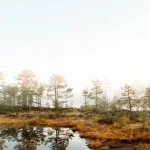
📷 Featured image by Maksim Shutov on Unsplash.