On this page
- Why Tallinn Nights Hit Different
- The Old Town After Dark — Atmosphere and Reality
- Telliskivi Creative City & Kalamaja — Where Tallinn Actually Parties
- Ülemiste & Ülejõe — The Emerging Corridor
- Live Music Venues — Jazz, Rock, and Estonian Acts
- Club Scene & Late-Night Dancing
- Rooftop Bars & Views Worth the Price
- Craft Beer & Natural Wine — Tallinn’s Strongest Suit
- Nightlife Budget Breakdown
- Getting Around Tallinn at Night
- Practical Nightlife Tips for 2026
- Frequently Asked Questions
💰 Click here to see Estonia Budget Breakdown
💰 Prices updated: October, 2026. Budget figures are estimates — always verify before travel.
Exchange Rate: $1 USD = €0.88
Daily Budget (per person)
Shoestring: €40.00 – €70.00 ($45.45 – $79.55)
Mid-range: €120.00 – €250.00 ($136.36 – $284.09)
Comfortable: €300.00 – €900.00 ($340.91 – $1,022.73)
Accommodation (per night)
Hostel/guesthouse: €15.00 – €40.00 ($17.05 – $45.45)
Mid-range hotel: €60.00 – €150.00 ($68.18 – $170.45)
Food (per meal)
Budget meal: €15.00 ($17.05)
Mid-range meal: €35.00 ($39.77)
Upscale meal: €100.00 ($113.64)
Transport
Single metro/bus trip: €2.00 ($2.27)
Monthly transport pass: €30.00 ($34.09)
Tallinn has a reputation problem. Visitors who came here a decade ago for cheap stag weekends left a certain image behind. That image is outdated. In 2026, Tallinn’s nightlife is genuinely one of the most interesting in Northern Europe — not because of volume or excess, but because of quality, variety, and the fact that locals have taken it back. The challenge now is knowing where to go, because the best places are rarely on the first page of a Google search.
Why Tallinn Nights Hit Different
Tallinn operates on a different rhythm from most European capitals. Nights start late — locals rarely leave home before 10pm on weekends — but the city is compact enough that you can walk between very different atmospheres in under 20 minutes. A medieval vaulted cellar bar, a converted factory hosting a techno night, and a quiet natural wine spot are all within easy reach of each other.
What makes 2026 Tallinn particularly interesting is the maturing of the Kalamaja and Telliskivi districts. These neighbourhoods have consolidated over the past two years into a genuine creative quarter with a stable roster of independent venues. At the same time, a wave of Estonian winemakers and craft brewers has supplied the city’s bars with local product that can genuinely compete with anything imported.
Tallinn is also safer than its budget-party reputation suggested. The city’s CCTV network was expanded in 2024–2025, and late-night transport options improved significantly. Solo travellers, including women travelling alone, regularly report feeling comfortable walking the Old Town and Kalamaja at night.
The Old Town After Dark — Atmosphere and Reality
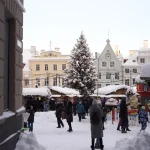
The Old Town is where most visitors start, and it delivers on atmosphere in a way few city centres in Europe can. Cobblestone streets lit by warm lamp posts, the silhouette of Alexander Nevsky Cathedral against a dark sky, and the smell of candle wax drifting out of cellar bars — it is genuinely atmospheric, even in 2026 when you’ve seen it in a hundred Instagram posts.
The honest truth is that Old Town bars cater heavily to tourists. Prices are higher, the beer selection is often limited to Saku or A. Le Coq on tap, and the atmosphere peaks early — many spots are quiet by midnight even on weekends. That said, there are specific addresses worth your time.
Hell Hunt on Pikk Street is Estonia’s oldest pub (opened 1993) and still holds up. It’s unpretentious, stocks a reasonable range of Estonian craft beers, and attracts a mixed crowd of locals and visitors who’ve done their research. Clazz near Viru Gate does live jazz most evenings from around 9pm — the low brick ceiling amplifies the acoustics in a way that feels almost engineered for it. Drink Bar & Grill on Väike-Karja has a rooftop element worth visiting in summer.
For the Old Town, plan your evening to start here — arrive around 9pm, soak in the setting, then move toward Telliskivi or Kalamaja by 11pm if you want to be where Tallinn’s own crowd goes.
Telliskivi Creative City & Kalamaja — Where Tallinn Actually Parties
If you visit Tallinn and never leave the Old Town at night, you miss the real thing. Telliskivi Creative City — a cluster of repurposed factory buildings about 1.5 kilometres northwest of the Old Town — is the beating heart of Tallinn’s independent nightlife scene. On weekends, the courtyard fills with people moving between venues, and the energy is relaxed but genuinely alive.
Pudel (sometimes listed as Pudel Baar) sits inside Telliskivi and is the flagship craft beer bar of the complex. Around 20 taps rotate constantly, with a strong focus on Estonian producers like Põhjala, Tanker, and Lehe. The industrial interior — bare concrete, mismatched furniture, hanging bulbs — sounds like a cliché but works in practice. On a cold November night, the warmth and noise from inside hit you as you push open the door.
Nearby, Sveta Bar pulls a creative, slightly older crowd. It’s part bar, part cultural space, and regularly hosts film screenings, art openings, and DJ nights without committing hard to any single identity. The menu leans Soviet-nostalgic in the best possible way — think cheap Georgian wine and dishes your Estonian grandmother might have made.
Kalamaja, the residential neighbourhood surrounding Telliskivi, has its own quieter bar culture. Frank on Kotzebue Street is a neighbourhood bar that locals fiercely protect from over-promotion. It does exactly what a good bar should: pours well, plays the right music at the right volume, and doesn’t try to be anything else.
Ülemiste & Ülejõe — The Emerging Corridor
The area around Ülemiste and Ülejõe, east of the city centre near the railway district, has developed faster than most guides have tracked. With Rail Baltica construction progressing through 2025 and 2026 and the area around Ülemiste City becoming a genuine hub, several new hospitality venues have opened to serve the tech workers, expats, and younger Estonians who live and work in this corridor.

Patarei Sadam — the former sea fortress and prison — opened as a mixed cultural and hospitality space in stages through 2024 and 2025. By 2026, it hosts occasional large-scale events and club nights in its maritime industrial spaces. These are irregular but worth watching their schedule if your dates align.
The area isn’t a traditional nightlife strip, but it represents where Tallinn is growing, and the venues here tend to be less crowded and more adventurous than their Old Town equivalents.
Live Music Venues — Jazz, Rock, and Estonian Acts
Tallinn punches above its size for live music. The city has a conservatory culture and a small but active indie scene that produces acts who regularly tour Europe. Catching them at home costs a fraction of what you’d pay in Berlin or Amsterdam.
Von Krahl Theatre Bar on Rataskaevu Street is one of Tallinn’s most enduring live music and performance spaces. It sits in a vaulted cellar and books everything from jazz quartets to experimental electronic acts. The calendar is consistent, tickets rarely exceed 15 EUR, and the bar programme is strong. This is where you go if you want something more than a DJ playing from a laptop.
Rockefeller on Roosikrantsi Street is the city’s main rock and metal venue — unpretentious, slightly sticky floors, good sound system, loyal crowd. Local Estonian bands play here regularly alongside touring acts from Latvia, Lithuania, and Scandinavia.
Jazz Club Tallinn in the Old Town holds intimate sessions several nights a week. The room fits around 80 people, which means every seat feels close to the stage. Book ahead for weekend sessions — it genuinely sells out.
Club Scene & Late-Night Dancing
Tallinn’s club scene has contracted slightly since the mid-2010s peak but what remains is more focused and interesting. The city no longer has the sprawling tourist-trap mega-clubs that defined its bad reputation — what’s left serves people who actually want to dance.
Philly Joe’s is the closest Tallinn has to a jazz-funk club — live bands, dancing, and a crowd that includes a lot of Tallinn’s creative professional set. Club Hollywood near the Old Town remains the largest commercial club, with multiple floors and mainstream EDM programming. If that’s what you’re after, it delivers — but expect queues after midnight on Fridays and Saturdays and cover charges around 10–15 EUR.

HALL is the name to know for serious electronic music in 2026. Operating out of a large industrial space in the Kalamaja fringe, it books genuine international techno and house acts and has developed a following among Tallinn’s electronic music community. Doors open at midnight, the room fills by 1am, and the music runs until 5–6am on weekends. Dress code is minimal but the door staff are selective — arrive in groups of more than six and you may have to wait longer.
Door policy across Tallinn clubs: arrive before 12:30am to avoid queues, carry your passport or EU ID (driving licences from non-EU countries are not always accepted), and don’t be visibly drunk at the door.
Rooftop Bars & Views Worth the Price
Tallinn’s rooftop bar scene is small but well-curated. The city’s medieval skyline means that height gives you extraordinary returns — even four floors up, the view over terracotta rooftops and church spires is worth the price of an overpriced cocktail.
Kiek in de Kök’s Tower Bar isn’t a traditional rooftop but offers elevated views of the lower city from the medieval defensive tower on Komandandi tee. It operates as a bar on weekend evenings in summer and is one of Tallinn’s best-kept viewing secrets — most visitors only come here as a daytime museum.
Sky Bar at the Radisson Blu Hotel Olümpia on Liivalaia Street sits on the 26th floor and gives you a panoramic view of both the Old Town and the modern city. Drinks are priced accordingly — cocktails run 14–18 EUR — but the 360-degree perspective is unmatched and the bar is open year-round.
In summer, the rooftop terrace at Tops in Telliskivi fills with locals from early evening. It’s informal, cheaper than the hotel option, and the view over the Kalamaja district with the Old Town towers visible in the distance has its own quiet charm.
Craft Beer & Natural Wine — Tallinn’s Strongest Suit
If you care about what’s in your glass, Tallinn will not disappoint. The Estonian craft beer scene has reached a confident maturity. Põhjala’s brewery and taproom on Betooni Street in the Ülemiste area is the flagship — you can tour the production facility and drink directly from tanks that were filled that week. The porter they produce in winter has a chocolate and roasted grain depth that sits with you long after you’ve left.

Õllenaut on Ahtri Street near Viru Centre is a strong craft beer bar with around 40 taps and a knowledgeable staff who can guide you without being patronising about it. It attracts a mixed crowd — locals on work nights, visitors who’ve done their research on weekends.
For natural wine, Veinivilla on Telliskivi’s fringe has built a following since opening in 2023. The list focuses on Georgian, Slovenian, and Estonian producers — yes, Estonia has wine in 2026, produced in small quantities from cold-hardy varietals. The Estonian bottles are conversation starters more than serious competition to Georgian amber wines, but they’re worth trying on principle.
Nightlife Budget Breakdown
Tallinn is not as cheap as it was five years ago, but it remains significantly more affordable than Helsinki, Stockholm, or Copenhagen. Here’s what a realistic night out costs in 2026:
- Budget night out (30–50 EUR per person): Craft beer at Pudel or Õllenaut (3.50–5.00 EUR per pint), a couple of drinks at a Telliskivi bar, no club entry. Skip the Old Town markup and you can have a full evening for under 40 EUR including a late snack.
- Mid-range night out (60–100 EUR per person): Cocktails at a rooftop or wine bar (10–14 EUR each), entry to a live music venue (10–15 EUR), club entry (10–15 EUR), and a taxi home (8–14 EUR depending on distance and time).
- Comfortable/splurge night out (120+ EUR per person): Sky Bar cocktails, dinner at a restaurant before heading out, private booth at a club or table service, late-night taxi. Tallinn’s ceiling for a night out is lower than most Western European capitals — it’s difficult to spend 200 EUR per person without trying very hard.
Getting Around Tallinn at Night
Getting home from a night out in Tallinn is genuinely easy. Bolt dominates the rideshare market and operates reliably 24 hours — this is the app to have installed before you arrive. Surge pricing kicks in between 2am and 4am on weekends, but even then a cross-city ride rarely exceeds 14–18 EUR.
Tallinn’s tram network expanded through 2024–2025, and by 2026 there are night tram services running on the main lines (1, 2, and 4) until around 1am on Fridays and Saturdays. After that, night buses cover the main corridors. The N2 night bus connects the Old Town and Telliskivi area with Kadriorg and eastern districts; the N1 covers the main Pärnu maantee corridor south.

The Old Town is entirely walkable within itself. The walk from Old Town to Telliskivi takes about 15 minutes on foot and is well-lit and safe. The Balti jaam area you walk through is not glamorous but is not dangerous — it’s simply a train station forecourt.
Taxis hailed from the street are legal but unregulated for pricing — always use Bolt or the official Tallinn Takso (recognisable by the city logo) to avoid overcharging. In 2026, this is a solved problem if you use the app.
Practical Nightlife Tips for 2026
Best nights: Thursday is increasingly popular among locals for bar-hopping — venues are less crowded than Friday and the atmosphere is more relaxed. Friday and Saturday nights are busiest. Sunday through Wednesday, the Old Town is quiet and Telliskivi venues run reduced hours.
Dress code: Tallinn is not a dressy city. Smart casual works everywhere except the Sky Bar, where the hotel clientele sets a slightly higher standard. Trainers are fine in every club. Heavy winter coats require cloakroom deposit (usually 2 EUR) — plan for this in winter months.
Language: Estonian bar staff almost universally speak English. You will not encounter a language barrier in any mainstream nightlife venue. Estonian, Russian, and English menus are common; Estonian and English are sufficient everywhere.
Smoking: Estonia banned indoor smoking in public establishments years ago. All venues have designated outdoor areas. In winter, these are often heated tent structures — not glamorous, but functional. Don’t ignore the no-smoking signs; the fines are enforced.
Tipping: Not mandatory but increasingly common. Rounding up or adding 10% at the bar is appreciated and becoming standard in 2026, particularly in cocktail bars where preparation time is significant. At a club where you’re ordering beer, nobody expects a tip.
Water: Tallinn tap water is safe and clean. Any bar will give you tap water if you ask — it’s not a culturally odd request. Staying hydrated in the very dry air of heated Estonian bars in winter is genuinely worth prioritising.
Frequently Asked Questions
Is Tallinn still a stag party destination in 2026?
Less so than a decade ago. The city has actively moved away from that market, and the cheap venue culture that supported it has largely closed. You’ll still see occasional groups, mainly in the Old Town, but they’re not the dominant force they once were. Most of Tallinn’s nightlife in 2026 is attended by a mixed, local-heavy crowd.

What time do bars and clubs close in Tallinn?
Bars typically close between 1am and 3am on weeknights, and between 3am and 6am on weekends. Clubs like HALL run until 5–6am on Friday and Saturday nights. The Old Town bars tend to close earlier — often by 2am — than the Telliskivi and Kalamaja venues.
Is Tallinn nightlife safe for solo travellers?
Yes, by European standards. The Old Town and Telliskivi areas are well-lit, have consistent foot traffic on weekends, and the expanded CCTV network introduced through 2024–2025 is visible. Solo female travellers report feeling comfortable. Use Bolt rather than hailing taxis, and the main risks reduce significantly.
Do Tallinn clubs have strict dress codes?
Most do not. Smart casual is sufficient for virtually every venue in the city. HALL applies a door policy based on crowd feel rather than dress — arrive sober, not in a large group, and you’ll generally get in. The Sky Bar at Olümpia maintains a slightly smarter standard given its hotel setting.
What is the legal drinking age in Estonia and is ID checked?
The legal drinking age in Estonia is 18. ID is checked consistently at club doors and frequently at bars. Bring your passport or EU national ID card — foreign driving licences are not always accepted as proof of age. This applies to all visitors regardless of how old they look.
Explore more
Is Tallinn Expensive? A Budget Traveler’s Guide to Saving Money
Tallinn’s Top Nightclubs: Dance the Night Away
📷 Featured image by Peeter Marvet on Unsplash.