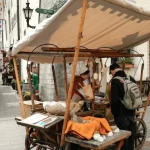
You land in Tallinn in 2026, smile at the passport officer, and get a nod in return. Nobody chats on the tram. A stranger stands one full arm’s length away in the queue. Many first-time visitors read this as coldness, and it can spoil the first days of a trip. It isn’t coldness. It’s a different set of Social rules, and once you know them, Estonia feels calm, honest and welcoming in its own way.
Quiet Is Not Cold: Silence and Personal Space
Estonians value silence the way other cultures value conversation. A pause in talk is not awkward. It shows that people are thinking before they speak. Estonians often say that words should carry meaning, so they use fewer of them.
Personal space matters just as much. On a bus, people pick an empty double seat before sharing one. In a queue, they leave a clear gap. In a lift, they look at the floor numbers. Do not take this personally, and do not step into someone’s space to be friendly.
Practical rules for visitors:
- Keep your voice low on public transport, in cafés and in shops. Loud phone calls get silent stares.
- Do not touch strangers, even lightly, when you speak to them.
- Do not expect smiles from shop assistants. Smiling is saved for real reasons, not politeness.
- Do not interrupt. Wait until the other person has fully finished.
On a wet November morning in Tartu, you may sit in a warm café where ten people share a room and nobody speaks. The hum of the coffee machine and the smell of cinnamon buns are the only sounds. That is not unfriendliness. It is comfort.
Greetings and Small Talk
The standard greeting is Tere (TEH-reh), which works for hello at any time of day. A short handshake is normal when meeting someone for the first time, firm and brief, with eye contact. Hugs and cheek kisses are for close friends only. A casual “hi” among younger people is Tšau (chow), and you may hear Moi (moy) in Tartu and Võru.
Two more words go a long way: Aitäh (EYE-tah, thank you) and Palun (PAH-loon, please or you’re welcome).
Small talk works differently here. Asking “How are you?” as a greeting can surprise people, because an Estonian may actually answer honestly. Weather chat is fine, but long talk about nothing feels strange. Better topics are travel, nature, food, technology and music. Estonians love to talk about their digital society, their forests and their song tradition. If you ask a real question, you get a real, thoughtful answer.

Estonians also tend to be modest. Boasting about your job, your salary or your achievements lands badly. Understatement earns respect.
Sauna: The Real Social Club
The sauna (saun) is the heart of Estonian life. Families have a weekly sauna night. Business deals and friendships are often built there. In Võru and Setomaa, the smoke sauna tradition is on UNESCO’s intangible heritage list, and the smell of birch smoke and warm wood stays with you for days.
Basic etiquette:
- Shower first. Always wash before you enter.
- Do not wear shoes or street clothes inside. Use a towel or a sheet to sit on.
- Do not wear a wet swimsuit if the host advises against it. Ask what is normal.
- Keep conversation low and slow. Heat is not the place for loud jokes.
- Throwing water (leil) on the stones is a group decision. Ask before you add steam.
- Leave when you feel dizzy. Nobody judges you for stepping out early.
Nudity in a family or friend sauna is not sexual. It is simply practical. Public saunas that welcome tourists usually require swimsuits in mixed groups, and the rules are posted at the door. Follow them.
In an Estonian Home and at the Table
If you are invited to a home, take off your shoes at the door. Always. Winter streets are wet and salty, and indoor floors are kept clean. Many hosts offer slippers, but clean socks without holes are a wise choice.
Bring a small gift. Flowers are popular, but give an odd number. Even numbers are for funerals. Chocolate, a local sweet or a drink from your home country works well too. Do not bring anything extremely expensive, because it can make the host uncomfortable.
At the table, Estonians love dark rye bread (leib). It is treated with respect: you do not throw it away and you do not drop it. Older generations kiss a fallen piece before eating it. Few people do that today, but the feeling remains. The earthy, sour smell of fresh rye on a wooden board is the smell of an Estonian kitchen.

Other table habits:
- Wait for the host to say Head isu (hehd EE-soo, enjoy your meal) or begin eating first.
- Toasts use Terviseks (TEHR-vee-sehks, to health). Make eye contact when glasses touch.
- Finish what is on your plate. Leaving food can signal that you did not like it.
Nature as a Shared Space
Estonians are deeply tied to forests, bogs and the sea. About half the country is covered in forest, and many people have a summer cottage (suvila) or a family plot nearby. Nature is not an activity here. It is part of identity.
The right of public access, known as everyman’s right, lets you walk, pick berries and mushrooms, and camp briefly on most land. In return, you must leave no trace. Take your rubbish with you, keep dogs on a lead and respect private yards. Standing on a frosty trail in Lahemaa at dawn, with ice crunching under your boots and no sound but wind in pine needles, you will understand why people protect it.
The seasons shape social life as well. Jaanipäev (Midsummer, 23–24 June) is the biggest night of the year, with bonfires, wreaths and few hours of real darkness. Offices empty, and cities go quiet as people head to the countryside. Winter brings the opposite mood: candles, warm drinks and long evenings indoors. Plan your trip knowing that some services slow down around these dates.
History, Language and Sensitive Topics
Estonian is a Finno-Ugric language, closely related to Finnish and not to Russian or other Slavic languages. Mixing these up is one of the fastest ways to offend someone. Estonia is not “post-Soviet” in the way many outsiders imagine. It sees itself as a Nordic, Baltic and European country that was forcibly occupied from 1940 to 1991.
Be careful with these topics:
- Soviet era: Do not joke about it. Listen if locals share family stories.
- Russia and the war in Ukraine: Estonians hold strong views. Ask questions respectfully instead of arguing.
- Russian-speaking residents: Roughly a quarter of the population speaks Russian at home. Many were born in Estonia. Start in English, not Russian, and do not assume anyone’s background.
- The Singing Revolution: The song festival tradition helped win independence peacefully. Show interest and respect.

Since 2024, public debate on language policy, security and defence has grown louder, and Rail Baltica construction continues to bring the Baltic region closer to western Europe. Locals are proud of this progress, but they speak about it calmly and factually.
2026 Budget Reality: What Cultural Experiences Cost
Estonia raised VAT to 24% in mid-2025, so prices for meals, tours and sauna visits sit slightly higher in 2026 than they did two years ago. Card and phone payments are accepted almost everywhere, even in small saunas and village shops.
- Budget: Public sauna entry €10–20; a bakery lunch with rye bread and soup €6–9; a bunch of flowers for a host €8–12; local bus ride around €2.
- Mid-range: Private sauna rental for a group €40–80 per hour; a sit-down restaurant meal €18–30 plus a 5–10% tip; a guided cultural walking tour €15–30 per person.
- Comfortable: A traditional smoke sauna experience in Setomaa or Võru €70–150 for a small group; multi-course tasting menu €60–110 per person; private cultural or craft workshop €50–100 per person.
Frequently Asked Questions
Is Estonia a friendly country for tourists?
Yes, but friendliness shows differently here. Estonians are reserved with strangers, rarely smile or chat in public, yet they are helpful when you ask directly. Expect quiet politeness, not warmth. Once you build trust, people become generous, loyal and honest. Many visitors say one real conversation changes their whole impression.
Should I tip in Estonia?
Tipping is appreciated, not required. Rounding up or leaving 5–10% in restaurants is normal for good service. Card terminals may suggest higher amounts, but you can choose your own. Tipping taxi drivers, hotel staff or sauna attendants is optional, and rounding up the fare is usually enough.
Do I take my shoes off in an Estonian home?
Yes, always. Remove your shoes at the door, even if the host says it is fine. Many hosts offer slippers, but clean socks are a good idea. Shoes indoors are seen as unclean, especially in winter, when streets are wet and covered in salt or mud.
Are saunas in Estonia mixed and nude?
It depends. Family and friends often sauna together, sometimes mixed with towels or nude. Public saunas for tourists usually require swimsuits in mixed groups, and many offer separate hours for men and women. Ask first and follow the posted rules. Nudity is not sexual in Estonian sauna culture.
Do Estonians speak English?
Yes, widely, especially people under 40 and in Tallinn and Tartu. Older people in rural areas may speak Russian, German or Finnish instead. Start with a polite “Tere” and then ask if they speak English. Trying a few Estonian words, like “aitäh,” is noticed and appreciated.
📷 Featured image by Norbu GYACHUNG on Unsplash.