On this page
- What the Estonia Digital Nomad Visa Actually Gives You
- The Application Process Step by Step
- 2026 Budget Reality: What It Costs to Live and Work Here
- The Honest Pros: Why Estonia Works Well for Remote Workers
- The Honest Cons: What Nobody Tells You Before You Arrive
- Health Insurance and Tax: The Two Things That Trip People Up
- Frequently Asked Questions
Since Estonia launched its digital Nomad visa in 2020, the country has quietly become one of the most practical remote-work destinations in Europe. But in 2026, the landscape has shifted. Estonia is no longer a hidden gem — waitlists for popular apartments are longer, visa processing has tightened, and the cost of living in Tallinn has crept up enough to matter. If you are planning to spend one to six months working from Estonia, you need current numbers and honest context, not a glossy overview written two years ago.
What the Estonia Digital Nomad Visa Actually Gives You
Estonia’s digital nomad visa (formally the D-type visa for remote work) allows non-EU nationals to live and work legally in Estonia for up to 365 days. This is not a tourist visa with a wink — it is a proper legal status that lets you work for foreign employers or run your own foreign-registered business from Estonian territory.
A few things the visa does not do that people often assume:
- It does not grant the right to work for an Estonian employer. Your income must come from outside Estonia.
- It does not give you access to the Estonian public health system. You must hold private health insurance for the full duration of your stay.
- It does not count toward permanent residency. It is a visa, not a residence permit.
- It does not automatically allow you to bring dependants on the same visa category. Family members need separate applications.
If you are an EU citizen, you do not need this visa at all. EU nationals can live and work remotely in Estonia under standard EU freedom of movement rules. The digital nomad visa is specifically for nationals from outside the EU, EEA, and Switzerland.
The visa covers the entire Schengen Area for short stays (up to 90 days in any 180-day period in other Schengen countries), but Estonia is your primary country of residence under this arrangement.
The Application Process Step by Step
Applications go through the Estonian Police and Border Guard Board (PPA), either directly or via an Estonian embassy or consulate in your home country. As of 2026, the online portal has been improved but the document requirements remain strict. Incomplete applications are the single biggest reason for rejections.
- Prove your income. You must demonstrate a monthly income of at least €4,500 gross (this threshold was raised in 2025 from the original €3,504). Bank statements for the past six months, employment contracts, or client invoices all work. The PPA wants consistency — one big month does not substitute for steady income.
- Show your employment or business status. A letter from your employer confirming remote work is permitted, or business registration documents if you are self-employed. Freelancers often include multiple client contracts.
- Health insurance documentation. A policy that covers Estonia and is valid for the full intended stay, with minimum coverage of €30,000. More on this below.
- Proof of accommodation. A rental agreement, hotel booking, or letter of invitation. You do not need a long-term lease to apply, but you need something concrete.
- Valid travel document. Your passport must be valid for at least three months beyond your intended departure date.
- Completed application form and fee. The visa fee in 2026 is €100 for the D-type visa. This is non-refundable.
Processing time is officially up to 30 days, though applications submitted via Estonian embassies in high-demand countries (India, the US, Brazil) have been taking closer to 45 days in practice. Apply well ahead of your intended travel date.
If your application is rejected, you have the right to appeal, but the process adds weeks. The most common rejection reasons are insufficient proof of income consistency, health insurance that does not meet the coverage threshold, and vague employment documentation from freelancers.
2026 Budget Reality: What It Costs to Live and Work Here
Estonia is no longer the bargain destination it was five years ago. Tallinn in particular has seen significant rent inflation, driven partly by increased demand from remote workers and partly by broader eurozone pressures. Here is an honest breakdown for 2026.
Accommodation
- Budget: A room in a shared flat in Tallinn runs €400–€550/month. In Tartu or Pärnu, shared accommodation drops to €300–€430/month.
- Mid-range: A furnished one-bedroom apartment in Tallinn costs €900–€1,300/month depending on neighbourhood and age of building. Tartu sits at €650–€900/month. Pärnu off-season (September to May) ranges from €550–€800/month.
- Comfortable: A modern two-bedroom apartment in central Tallinn runs €1,400–€2,000/month. New builds with good insulation — important in winter — sit at the higher end.
Health Insurance
Expect to pay €60–€150/month for a policy that meets the visa requirements, depending on your age, nationality, and the insurer. Policies from European providers like Cigna Global, AXA, or Allianz are commonly used. Budget €80–€100/month as a realistic average for someone in their 30s.
Food and Daily Living
- Groceries for one person: €200–€300/month cooking at home regularly.
- Eating out at a mid-range restaurant: €12–€20 per main course in Tallinn, slightly less in Tartu.
- Public transport monthly pass (Tallinn): €23. Tallinn’s tram network expanded further in 2025–2026 with two new lines reaching the Ülemiste City tech district and the Pärnu Road corridor, making car ownership genuinely unnecessary for most residents.
- Mobile data (local SIM, unlimited data): €10–€20/month.
- Home fibre internet: €15–€25/month, included in many rental agreements.
Total Monthly Cost Estimates
- Budget (Tartu or Pärnu, shared flat): €1,000–€1,400/month
- Mid-range (Tallinn, one-bedroom): €1,600–€2,100/month
- Comfortable (Tallinn, modern apartment, dining out regularly): €2,500–€3,500/month
The €4,500 income threshold the visa requires gives you solid room above these costs, which is partly why Estonia set it at that level.
The Honest Pros: Why Estonia Works Well for Remote Workers
Beyond the marketing copy about digital society and e-governance, there are genuine, practical reasons why Estonia suits remote workers in a way that many other European destinations do not.
Internet infrastructure is genuinely excellent. Estonia has some of the fastest and most reliable broadband in Europe. Average fixed broadband speeds sit above 150 Mbps nationwide. Even rural areas connected to the fibre rollout — which now covers over 95% of the country — have speeds that handle video calls and large file transfers without issue. This is not something you have to research neighbourhood by neighbourhood the way you might in southern Europe.
The bureaucracy is largely digital. Opening a local bank account, registering with the tax authority if needed, or dealing with any government service happens online through systems that actually work. The X-Road data layer that connects Estonian government databases means you rarely fill in the same information twice. For someone used to paper queues in other countries, this is a quiet revelation.
English works everywhere that matters. In Tallinn and Tartu especially, English is spoken fluently by most working-age Estonians. Government portals, lease agreements, and most official correspondence can be handled in English. You will not need Estonian to function day-to-day.
Safety and stability. Estonia ranks consistently among the safest countries in Europe by crime statistics. Walking home at night in Tallinn’s city centre, even in winter when darkness falls by 3:30 PM, does not carry the same caution calculation it might in many Western European capitals.
Nature is close and usable. This is not a selling point invented for tourism brochures. Half an hour from central Tallinn by bus, you are in forests that feel genuinely wild. The smell of pine resin and cold air on a Lahemaa trail on a sharp October morning is the kind of reset that remote workers in dense cities rarely access without a major journey.
The Honest Cons: What Nobody Tells You Before You Arrive
Estonia has real drawbacks for long-term remote workers, and they tend to emerge after the first few weeks when the novelty has worn off.
Winter is harder than you expect. Not just cold — though January averages around -5°C and can drop to -20°C in sharp snaps — but dark. By late November, Tallinn gets about six hours of daylight. By December and January, that can drop to under five. Seasonal affective disorder (SAD) is common enough that Estonians talk about it matter-of-factly. If you are from a sunny climate, this is a serious consideration, not a minor inconvenience. A good daylight lamp and a realistic self-assessment of how you handle reduced light are essential before committing to a November–February stay.
Social integration takes real effort. Estonians are not unfriendly — but the cultural default is reserved. Conversation does not happen spontaneously with strangers in the way it might in southern European or Latin American countries. Building a social life as a newcomer requires joining organised activities, language exchange groups, or expat communities deliberately. Expecting warmth to come to you is a reliable path to loneliness.
The rental market in Tallinn is competitive and sometimes opaque. Good apartments in central Tallinn go fast. Listings on major platforms like KV.ee and City24 move within days. Without Estonian language skills, navigating some landlord relationships can be awkward. Some landlords still prefer long-term tenants and are wary of short stays, even with a signed visa.
Limited direct flight connections depending on your origin. Tallinn Airport has grown, with several new routes added in 2025–2026 including expanded connections to the Middle East and some North African hubs. But if you are flying from North America, South America, or most of Asia, you will connect through a hub city. Rail Baltica remains under construction — the full Tallinn-to-Warsaw line is not expected to be operational until the late 2020s — so overland travel southward still means buses or a multi-leg rail journey.
Healthcare access for non-residents is out-of-pocket. Your private insurance covers emergencies, but routine healthcare — a GP visit, a prescription, a dental check — works differently than it does for Estonian residents. Private clinic visits in Tallinn cost €50–€120 for a standard consultation. It is manageable but it is not free, and some remote workers underestimate this in their monthly budget.
Health Insurance and Tax: The Two Things That Trip People Up
These two areas generate the most confusion among digital nomads in Estonia, and getting them wrong has real consequences.
Health Insurance
The visa requires health insurance that is valid in Estonia with minimum coverage of €30,000. That sounds straightforward, but problems arise in the details:
- Some travel insurance policies exclude coverage for stays longer than 90 days. Read the fine print.
- Some policies exclude pre-existing conditions in a way that voids coverage for common claims. The PPA does not check policy quality — they check that a policy exists and meets the minimum threshold. You are responsible for making sure it actually covers you in practice.
- EU health insurance cards (EHIC/GHIC) do not substitute for the required policy for non-EU nationals and do not apply to the D-visa category.
A standalone international health insurance plan from a major provider, bought specifically for your Estonia stay, is the cleanest approach.
Tax
This is where many people make costly assumptions. The digital nomad visa does not mean you pay tax in Estonia. By default, if you spend fewer than 183 days in Estonia in a calendar year, you are unlikely to become an Estonian tax resident. Your tax obligations typically remain in your home country or wherever your business is registered.
However, if you stay longer than 183 days, Estonian tax residency rules may apply, and Estonia’s flat income tax rate is 20% (rising to 22% from 2026 for higher earners, as part of the defence spending adjustments passed in 2024). This does not mean you automatically pay tax twice — Estonia has double taxation treaties with over 60 countries — but it means you need to understand where you stand before you cross that threshold.
The practical advice: if you plan to stay close to or beyond 183 days, speak to a tax advisor who has cross-border experience before you arrive, not after. Estonian tax lawyers with English-language practices exist and typically charge €150–€250 for an initial consultation — money well spent against potential back-tax complications.
E-residency is a separate product entirely. It gives you a digital identity and the ability to run an EU-registered business, but it does not grant the right to live in Estonia, and it does not affect your tax situation in the way people sometimes hope. In 2026, e-residency fees sit at €120–€150 for the state fee depending on application channel, plus the cost of a service provider if you want to set up a company.
Frequently Asked Questions
Can I apply for the Estonia digital nomad visa while already in Estonia on a tourist visa?
Generally, no. The D-type digital nomad visa must be applied for before you enter Estonia, through an Estonian embassy or consulate in your home country or country of residence. Switching visa status while inside Estonia is not a standard procedure for this visa category. Plan your application before travel.
Is €4,500/month a gross or net income requirement?
The official requirement refers to gross monthly income. The PPA uses bank statements and income documentation to assess this. If your gross income meets the threshold but net income after taxes in your home country is significantly lower, the application can still proceed — the gross figure is what is evaluated against the requirement.
Can I bring my family with me on the digital nomad visa?
Dependants cannot join you automatically under the digital nomad visa. Spouses and children need to apply separately, and the relevant visa category for family reunification is different. Processing times and requirements for family members can vary. The PPA website has current guidance, and an immigration lawyer can clarify options based on your specific family situation.
Does Estonia’s digital nomad visa let me travel freely around Europe?
As a Schengen Area member, Estonia’s D-type visa allows you to travel within the Schengen Zone. However, D-visas from Estonia allow short stays of up to 90 days in other Schengen countries within any 180-day period. Your primary base must remain Estonia. For extended stays in other Schengen countries, separate permissions would be needed.
What happens if my visa expires before I am ready to leave?
Overstaying a visa in Estonia carries serious consequences, including fines, potential deportation, and a ban on re-entering the Schengen Area for up to five years. If you need more time, the correct approach is to apply for an extension or a different permit well before your current visa expires. The PPA can advise on available options, and processing an extension takes time — do not leave it to the final weeks.
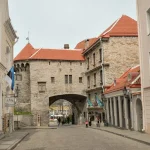
📷 Featured image by Kristin Wilson on Unsplash.