💰 Click here to see Estonia Budget Breakdown
💰 Prices updated: October, 2026. Budget figures are estimates — always verify before travel.
Exchange Rate: $1 USD = €0.88
Daily Budget (per person)
Shoestring: €40.00 – €70.00 ($45.45 – $79.55)
Mid-range: €120.00 – €250.00 ($136.36 – $284.09)
Comfortable: €300.00 – €900.00 ($340.91 – $1,022.73)
Accommodation (per night)
Hostel/guesthouse: €15.00 – €40.00 ($17.05 – $45.45)
Mid-range hotel: €60.00 – €150.00 ($68.18 – $170.45)
Food (per meal)
Budget meal: €15.00 ($17.05)
Mid-range meal: €35.00 ($39.77)
Upscale meal: €100.00 ($113.64)
Transport
Single metro/bus trip: €2.00 ($2.27)
Monthly transport pass: €30.00 ($34.09)
Tallinn’s Old Town is still one of Europe’s most photographed medieval centres, but in 2026 the crowds have reached a point where Summer weekends feel more like a theme park queue than a city break. Savvy visitors — and most locals — have shifted their attention northwest, to Kalamaja. This neighbourhood rewards curiosity far more than another loop around Toompea Castle, and it takes less than fifteen minutes on foot from the Old Town gates to reach it.
What Makes Kalamaja Different
Kalamaja translates literally as “fish house” — a name left over from the 16th century when Estonian fishermen built their small homesteads along the Kopli Bay shoreline. That working-class, practical identity never fully disappeared, even when the Soviet era turned the district into a dense residential zone and sealed off the waterfront behind factory walls.
What you get today is something genuinely unusual in a Baltic capital: a neighbourhood that went from semi-derelict to desirable without losing its soul entirely. The wooden houses — painted in deep ochres, faded blues, and forest greens — are still lived in by real people. Washing lines appear between buildings. Cats sleep on windowsills. The streets smell of cut grass and, on weekend mornings, coffee drifting from open café windows.
Kalamaja sits between two anchor points: Balti Jaam (Baltic Station) to the east and the Kopli Bay coastline to the west. The neighbourhood is compact enough to walk end-to-end in under 30 minutes, but dense enough in detail that half a day disappears without effort. It draws architects, designers, musicians, young families, and an increasing number of international visitors who come specifically because they want something other than amber jewellery shops and tourist menus.
The character here is best described as unhurried confidence. Kalamaja knows it’s interesting. It doesn’t need to prove it.
The Streets Worth Walking
Start at the corner of Telliskivi tänav and work your way west. This street is Kalamaja’s spine — it links Balti Jaam to the deeper residential quarters and shows the neighbourhood’s full range, from converted factory buildings to quiet stretches where elderly neighbours tend small garden plots between wooden houses.

Turn south onto Kotzebue tänav for some of the best-preserved wooden architecture in the district. The houses here date mostly from the late 19th and early 20th century, built during a period when Tallinn was expanding rapidly under Russian imperial administration. Look for the decorative window frames — carved timber painted white or cream against coloured façades. These details were the Estonian carpenter’s equivalent of fine art, and they survived because nobody could afford to demolish the buildings during the Soviet period.
Vana-Kalamaja tänav (Old Kalamaja Street) runs parallel and offers a slightly quieter pace. The further west you go, the more residential it becomes — fewer cafés, more front gardens, the occasional smell of woodsmoke from a chimney even in spring. This is where Kalamaja stops performing for visitors and just gets on with being itself.
If you’re interested in architecture specifically, Kalju tänav and the surrounding blocks contain some experimental residential projects completed between 2022 and 2025 — contemporary infill buildings that sit alongside the wooden houses without bulldozing them. The results are mixed, debated loudly by locals, and worth seeing regardless of which side you come down on.

Where to Eat and Drink in Kalamaja
The food scene here has matured significantly since the early 2020s, when Kalamaja was still mostly known for its craft beer bars. Today the neighbourhood covers a proper range — fermented foods, serious coffee, natural wine, wood-fired cooking, and a handful of spots doing Estonian ingredients with genuine skill rather than tourist-facing gimmickry.
F-Hoone, inside the Telliskivi complex, remains the neighbourhood’s most reliable all-day venue. It’s a converted factory building with high ceilings, long communal tables, and a menu that shifts with the season. On a cold morning the buckwheat porridge with lingonberry compote is exactly what you want. The interior holds the warmth well — exposed brick on all sides, amber lighting even at noon — and the espresso is pulled properly.
Põhjala Tap Room, the brewery and taproom from one of Estonia’s best-known craft beer producers, occupies a warehouse space a short walk from Telliskivi. In 2026 they expanded their food menu to include proper plates rather than just bar snacks, which makes it a more complete stop than it used to be. The dark lagers and seasonal sours are the reason to go; the food is a solid bonus.
For something smaller and more neighbourhood-feeling, Kalamaja Kohvik on Kotzebue tänav is the kind of place that doesn’t need a marketing budget. It seats maybe 20 people inside, has mismatched furniture, and serves open sandwiches on dense rye bread with local toppings — smoked fish, pickled vegetables, soft cheese. The bread itself has that specific weight and earthiness that factory-produced rye bread never achieves. Saturday mornings here are unhurried and worth building a morning around.
Natural wine has a strong foothold in the neighbourhood. Pudel Bar keeps a well-chosen list of low-intervention bottles, mostly from small European producers, and the staff actually know the wines they’re pouring. It’s the kind of place that opens at 4pm and fills up by 7pm without anyone making a reservation.

Telliskivi Creative City
Telliskivi Loomelinnak — Creative City — is the former industrial complex that became Kalamaja’s cultural anchor when it opened to the public in 2009. In 2026 it continues to evolve, which is both its strength and the source of occasional complaints from locals who miss some of what it used to be.
The complex covers several connected warehouse and factory buildings around a large courtyard. On any given weekend you might find an outdoor flea market, a food truck event, a vinyl record fair, a contemporary art opening, or a children’s theatre performance — sometimes all on the same afternoon. The programming is genuinely varied rather than curated to appeal to one demographic.
Permanent tenants include independent clothing designers, a climbing wall, several restaurants, a cinema (Kino Sõprus moved its operations here partially in 2024), concept stores selling Estonian-made objects, and a significant number of creative studios that are occasionally open to visitors. The mix changes frequently enough that even regular visitors find something new.
What Telliskivi does particularly well is providing a physical space for Estonian creative culture that isn’t mediated through a museum context. The designers selling here made the clothes. The ceramics in the small shops were thrown and fired locally. When you buy something at Telliskivi, the supply chain is short enough that you can often ask where it came from and get a direct answer.
The courtyard is the social centre on warm evenings. People bring dogs, meet after work, eat from the food trucks, and sit on the steps with beer from the on-site shop. The atmosphere is relaxed in a way that doesn’t require you to spend money to participate in it.

Balti Jaam Market
Directly adjacent to Baltic Station — the city’s main railway terminus — Balti Jaam Turg is a covered market that operates daily and represents one of the most honest food experiences in Tallinn. This is not a tourist market. The vendors here sell to the same customers week after week, which creates a standard of quality that tourist-facing markets can’t always sustain.
The market is divided into sections — produce, dairy, meat, fish, preserved goods, and a growing street food area near the south entrance. The preserved goods section alone is worth the visit: rows of hand-labelled jars containing pickled mushrooms, fermented cabbage, various berry preserves, smoked garlic, and combinations you won’t find anywhere else. The scent in that section is sharp and complex — vinegar, dill, the faint sweetness of cooked berries — and it hits you properly when you step inside from the street.
The dairy stalls carry products from small Estonian farms that never reach supermarket shelves. Thick sour cream, fresh curd cheese, cultured butter with a flavour that commercial versions approximate but don’t match. Prices are lower here than in the city’s organic food shops, and the quality is higher.
For street food, the market’s southern end has expanded considerably since 2023. Georgian khinkali, Korean bibimbap, Vietnamese pho, and traditional Estonian black bread with various toppings are all available within a small area. It sounds chaotic but it works — the clientele is local enough that only the food that’s actually good survives.
The market is busiest on Saturday mornings between 9am and 12pm. Arriving at 8:30am means you get the best selection and the most relaxed atmosphere before the weekend crowd builds.

Green Spaces and the Sea
One of Kalamaja’s less-advertised qualities is how close it sits to water and green space. The neighbourhood is bordered to the north and west by Kopli Bay, and the opening of the Kalamaja promenade — completed in stages between 2021 and 2024 — means you can now walk along the waterfront from the Linnahall area to Patarei without interruption.
Kalamaja Park sits in the middle of the residential district, a few minutes’ walk from Telliskivi. It’s a genuinely local park: a playground used by neighbourhood children, benches occupied by older residents, and enough mature trees to provide shade even in July when Tallinn can reach 28°C. In late spring the park smells strongly of lilac — the old bushes along the perimeter have been there for decades and flower heavily.
Patarei Sea Fortress is the neighbourhood’s most complex landmark. This early 19th-century sea fortress served as a Soviet-era prison until 2002 and has been in various states of redevelopment since. In 2026 the outer courtyards and several interior sections are open for guided and self-guided visits. The conversion project remains incomplete and funding has been irregular, but what’s accessible is genuinely powerful — weathered walls, sea light coming through barred windows, a building carrying decades of difficult history without sanitising it.
The waterfront walk from Patarei north toward Kopli offers views across the bay toward the islands. On clear days you can see Naissaar Island. The path is popular with joggers, cyclists, and people walking dogs in the early morning — the kind of routine urban waterfront activity that signals a neighbourhood functioning normally rather than performing for cameras.
2026 Budget Reality
Kalamaja is more affordable than the Old Town for almost everything, but Tallinn overall has moved up in cost since 2023. Here’s an honest breakdown for a full day in the neighbourhood.

Food and Drink
- Budget: Balti Jaam Market lunch (street food plate + coffee) — €6–9. Open sandwich at a neighbourhood café — €4–6.
- Mid-range: Sit-down lunch at F-Hoone or similar — €14–20 per person including a drink. Craft beer at Põhjala Tap Room — €5–7 per pint.
- Comfortable: Dinner with wine at a proper restaurant in Telliskivi or nearby — €35–55 per person.
Culture and Activities
- Kalamaja Heritage Walk (self-guided app): free
- Telliskivi Creative City entry: free (individual events and exhibitions vary — typically €0–12)
- Patarei Fortress guided tour: €12 per adult in 2026 (self-guided sections free during open hours)
- Põhjala Tap Room tasting flight: €10–14 depending on selection
Getting Around
- Tram or bus within Tallinn: €1.50 per single journey with the Ühiskaart travel card (free for Tallinn residents; tourists need to register or pay contactless at €2 per journey)
- Most of Kalamaja is walkable — budget €0 for internal movement if your accommodation is reasonably placed
A realistic full day in Kalamaja — market breakfast, cultural wandering, sit-down lunch, afternoon drinks, and a light dinner — runs €40–65 per person at a comfortable pace. Budget travellers doing it on market food and free cultural sites can manage on €20–30.
Getting to and Around Kalamaja
From the Old Town, Kalamaja is a 12–18 minute walk depending on your starting point. Exit the Old Town through the Nunne or Pikk tänav gate, head northwest, and you’ll cross into Kalamaja territory around Balti Jaam.
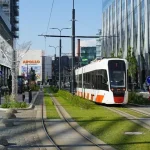
By public transport, tram line 2 runs along the southern edge of Kalamaja with stops at Balti Jaam and Telliskivi. In 2026 the Tallinn tram network expanded its frequency on the line 2 corridor — daytime headways are now every 7–8 minutes rather than the previous 10–12, which makes it genuinely useful rather than just theoretically available.
From Tallinn Airport, take tram line 4 toward the city centre and connect at Hobujaama to line 2, or walk from the city centre. The full journey takes around 30–35 minutes depending on connection timing. No taxi or rideshare is necessary from the airport to Kalamaja — the public transport link works well.

Within the neighbourhood itself, everything is walkable. Kalamaja’s street grid is compact and relatively flat. The waterfront path is cycling-friendly and Tallinn’s city bike scheme — Üürikas — has docking stations at Telliskivi and near Balti Jaam Market. Day passes for the bike scheme cost €3.50 in 2026.
Rail Baltica construction continues to affect the area around Balti Jaam in 2026. Some pedestrian routes near the station are modified from 2024 alignments, and noise is an occasional factor on weekday mornings. The actual rail line is not expected to reach operational status until 2030 at the earliest, but the groundwork and access disruptions are present now. Check the Tallinn city transport website for current pedestrian diversions before visiting the station area.
Frequently Asked Questions
Is Kalamaja safe to visit?
Kalamaja is one of Tallinn’s safer and more welcoming neighbourhoods. It has a strong residential community presence, active streets during the day and early evening, and no particular areas to avoid. Standard urban awareness applies at night near Balti Jaam, as with any railway station area, but serious incidents are rare.
How much time should I spend in Kalamaja?
A half-day covers the highlights — Telliskivi, the market, a café stop, and a walk through the wooden house streets. A full day allows the waterfront, Patarei, proper meals, and unhurried exploration. Overnight stays in the neighbourhood are increasingly possible as small guesthouses and short-term rental availability has grown since 2024.
When is the best time of year to visit Kalamaja?
Late May through September gives you the best weather for the waterfront walk and outdoor market atmosphere. July and August are the warmest but also the busiest. October through March is quieter, cheaper, and shows a different side of the neighbourhood — the wooden houses look striking against snow, and the indoor café culture becomes more central to the experience.

Are there good shopping options in Kalamaja beyond Telliskivi?
Yes. Several independent designers operate studios with retail space on Kotzebue and Vana-Kalamaja streets. Balti Jaam Market is excellent for local food products to take home — preserved goods and Estonian spirits travel well. Avoid buying anything labelled “Estonian design” in generic tourist packaging; the real thing is found in small, often unmarked spaces where someone is actually making the product.
Does Kalamaja work as a base for exploring all of Tallinn?
It works well. Tram line 2 connects you to the Old Town and city centre in under 10 minutes. Kadriorg Park is reachable in 20 minutes by tram. The neighbourhood has enough accommodation options at various price points in 2026 that staying here is a genuine alternative to Old Town hotels, with the added benefit of quieter nights and more local daily life around you.
Explore more
Best Restaurants in Tartu: A Foodie’s Guide to Estonia’s University City
Tallinn Nightlife Hotspots: The Ultimate Guide to Bars & Clubs
Where to Stay in Rural Estonia: Best Areas & Unique Countryside Stays
📷 Featured image by Marek Lumi on Unsplash.