On this page
- Planning Your Route — Choosing the Right Loop
- Western Loop — Haapsalu, Lihula, and the Coastal Villages
- Southern Swing — Viljandi, Põltsamaa, and the Quiet Middle
- Eastern Edge — Rakvere, Iisaku, and the Alutaguse Wilderness
- 2026 Budget Reality — What a Road Trip in Estonia Actually Costs
- Eating Your Way Through the Countryside
- Practical Tips for Driving in Estonia in 2026
- Frequently Asked Questions
💰 Click here to see Estonia Budget Breakdown
💰 Prices updated: October, 2026. Budget figures are estimates — always verify before travel.
Exchange Rate: $1 USD = €0.88
Daily Budget (per person)
Shoestring: €40.00 – €70.00 ($45.45 – $79.55)
Mid-range: €120.00 – €250.00 ($136.36 – $284.09)
Comfortable: €300.00 – €900.00 ($340.91 – $1,022.73)
Accommodation (per night)
Hostel/guesthouse: €15.00 – €40.00 ($17.05 – $45.45)
Mid-range hotel: €60.00 – €150.00 ($68.18 – $170.45)
Food (per meal)
Budget meal: €15.00 ($17.05)
Mid-range meal: €35.00 ($39.77)
Upscale meal: €100.00 ($113.64)
Transport
Single metro/bus trip: €2.00 ($2.27)
Monthly transport pass: €30.00 ($34.09)
Most people land in Tallinn, spend three days in the Old Town, and fly home thinking they’ve seen Estonia. They haven’t. The country that locals actually love — the one with pine forests swallowing narrow roads, wooden farmhouses with hand-painted shutters, and small-town market squares where almost no one speaks tourist English — starts the moment you pick up a rental car and drive past the city limits. In 2026, with rail connections still limited outside the main corridors, a road trip remains the single best way to reach the Estonia that doesn’t appear on postcards.
Planning Your Route — Choosing the Right Loop
Estonia is small — roughly 450 kilometres from west to east — which means you can see a genuinely diverse slice of the country in three to five days without exhausting yourself. The key decision is which loop you drive. There are three natural circuits from Tallinn: a western coastal loop, a southern inland swing, and an eastern wilderness edge. You can combine two of them into a five-day trip, or focus on one for a long weekend. A combined five-day itinerary — west on days one and two, south on days three and four, east on day five before returning to Tallinn — is the strongest option for first-time visitors with a rental car.
Don’t try to cover all three in one go. The pleasure of Estonian road tripping is stopping without a reason — a roadside smoke sauna sign, a lake you didn’t expect, a village shop selling local honey. Build in at least one unscheduled half-day per two days of driving.
Google Maps works reliably across Estonia in 2026, but download offline maps before leaving Tallinn. Mobile coverage drops out in Alutaguse and parts of Hiiumaa without warning.
Western Loop — Haapsalu, Lihula, and the Coastal Villages
The western loop is the most visually varied. Leave Tallinn on Road 8 heading southwest and you’ll reach Haapsalu in about 90 minutes. The town sits on a peninsula surrounded by reed beds and shallow sea bays, and its wooden architecture — pastel-coloured villas from the 19th-century spa era — gives it a quietly faded elegance unlike anywhere else in the country. The Episcopal Castle is free to walk around outside and worth an hour of your time.
From Haapsalu, continue south on Road 10 toward Lihula. This is where the tourist trail genuinely disappears. Lihula is a one-street town with a castle hill, a handful of local shops, and the kind of slow-moving afternoon atmosphere that feels almost theatrical if you’re used to city life. The Lihula Museum holds a surprisingly strong collection of West Estonian rural artefacts — it’s small, it costs around €4, and it’s usually empty.
Push further south toward Virtsu to catch the ferry to Muhu Island (and from there Saaremaa), or loop back north along the coastal road through Noarootsi — a peninsula with a distinct Swedish-Estonian cultural history, visible in old place names and a Lutheran church with Swedish-language memorial plaques inside. The smell of salt air and dried reeds along this stretch is something you notice the moment you roll the window down.
Southern Swing — Viljandi, Põltsamaa, and the Quiet Middle
If the west is about coast and history, the south-central route is about landscape and a slower, warmer version of Estonian culture. Head from Tallinn on Road 2 toward Paide, then cut southwest to Viljandi — a university-influenced town built around a dramatic castle hill overlooking a long lake. In July, Viljandi Folk Music Festival transforms the entire town, and accommodation books out months in advance. Outside festival season, Viljandi is calm, walkable, and home to some of the best craft food producers in the country.
The drive between Viljandi and Põltsamaa takes you through some of the most agricultural land in Estonia — flat fields interrupted by old farmsteads and stork nests on telegraph poles. Põltsamaa itself is often skipped, but it deserves an hour. There’s a ruined castle in the town centre, a local winery producing Estonian fruit wines (tours available, worth calling ahead), and a bakery on the main street that makes black rye bread the old way, dense and slightly sour, cooling on wooden boards in the window.
Loop back to Tallinn via Türi, a small town that becomes briefly famous each spring for its flower festival, or push further south to Tartu if you want a city night before driving home.
Eastern Edge — Rakvere, Iisaku, and the Alutaguse Wilderness
The eastern loop is the least travelled of the three and the most rewarding for anyone who genuinely wants to get off-grid. Start with Rakvere, about 100 kilometres east of Tallinn on the E20. The town has a well-preserved medieval castle on a hill — the bronze aurochs statue outside it has become an unlikely symbol of the town — and a compact centre with good coffee shops and a strong local food market on Saturday mornings.

From Rakvere, head south on Road 31 toward Iisaku. The road narrows, the forest closes in, and within 40 minutes you’re in Alutaguse — Estonia’s largest bog and forest region, protected as a national park since 2018. The crunch of frost underfoot on the boardwalk trails here in early spring, when the birch trees are still bare and the bog pools reflect a white sky, is one of the most striking sensory experiences Estonia offers.
Iisaku itself is a village of around 800 people with a wooden church and a local history museum focused on the Old Believer communities that settled this area centuries ago — a cultural thread completely absent from western Estonia. There’s limited accommodation here: one guesthouse and a few farmstays. Book ahead or treat this as a long day trip from Rakvere.
2026 Budget Reality — What a Road Trip in Estonia Actually Costs
Costs have risen since 2024, particularly for accommodation in smaller towns where supply is limited and demand from Scandinavian and Finnish visitors has increased. Here’s a realistic breakdown:
- Car rental: From €35–50 per day for a compact car (booked in advance through Tallinn Airport). Electric vehicles are available from €55/day; charging infrastructure along the main roads is now reliable in 2026, though fast chargers are sparse in Alutaguse.
- Fuel: Around €1.55–1.70 per litre for petrol. Budget roughly €40–60 in fuel for a five-day loop covering 800–1000 km.
- Budget accommodation: Guesthouses and farmstays €30–55 per night for a double room.
- Mid-range accommodation: Small hotels and better guesthouses €65–110 per night.
- Comfortable: Boutique hotels in Haapsalu or Viljandi €120–180 per night.
- Meals: Lunch at a local café €8–13 per person. Dinner with a glass of beer €15–22. Farm shops and markets can cover breakfast and snacks for €5–8 per day per person.
A realistic total for two people over five days — car, fuel, accommodation, and food — runs €600–900, depending on your choices. This is significantly cheaper than the equivalent trip through Finland or Sweden.
Eating Your Way Through the Countryside
Rural Estonian food is not fancy. It is, however, honest and increasingly interesting. The farm-to-table movement that started in Tallinn has now spread to smaller towns, with local producers selling directly at weekend markets and a growing number of farmstays offering meals made entirely from their own land.

Specific places worth planning around:
- Viljandi Market (Saturday mornings): Local cheese, smoked meats, fermented vegetables, and fresh-baked goods. One of the best rural markets in the country.
- Rakvere Saturday Market: Smaller but strong on smoked fish and local dairy.
- Haapsalu’s waterfront cafés: Seasonal fish dishes using local catch — pike-perch and Baltic herring appear regularly in summer.
- Põltsamaa Winery: Apple and currant wines that are genuinely drinkable, not the sweet tourist versions. Tastings from €5.
Carry a small cooler bag. Farm shops along rural roads sell things you won’t find elsewhere — cold-smoked pork from a wood-fired smokehouse, wild berry jams, unpasteurised farmhouse cheese — and most of them don’t have websites.
Practical Tips for Driving in Estonia in 2026
A few things that actually matter on the ground:
- Speed limits are enforced: Fixed cameras are common on main roads. The standard limit is 90 km/h outside towns in summer, dropping to 70 km/h in winter (November–March on some roads). Fines are issued to rental car companies and passed directly to you.
- Gravel roads (kruusatee): A significant portion of rural Estonia’s road network is unpaved. Standard rental cars handle these fine at moderate speeds. Slow down — loose gravel damages windscreens.
- Wildlife: Moose and deer crossings are a genuine hazard, especially at dawn and dusk in forested areas. This is not a scenic warning — collisions with moose are frequently fatal. Drive below the speed limit near forests after dark.
- Parking: Free in most small towns. Tallinn and Tartu have paid zones — use the EasyPark app, which works across Estonia and is the most reliable option in 2026.
- Winter driving: Rental cars come with winter tyres from November through March by law. Check that yours does before leaving the lot.
Frequently Asked Questions
Do I need an international driving licence for Estonia?
If your driving licence is issued by an EU country, you don’t need anything extra. Drivers from the UK, USA, Canada, and Australia can use their national licences in Estonia for up to 12 months. Some rental companies ask for an IDP alongside a non-EU licence — check with your provider before you travel.
Is it safe to drive on Estonian roads in winter?
Yes, with the right preparation. Roads are gritted and ploughed regularly, and rental cars must legally carry winter tyres from November to March. The main risks are black ice on rural roads early in the morning and reduced visibility during snowfall. Drive slower than the limit in those conditions and you’ll be fine.

What’s the best time of year for an Estonian road trip?
Late May through September gives you the longest daylight hours and the best road conditions. June and July are peak season — accommodation books out in popular towns. May and September offer nearly as much light with fewer visitors and lower prices. Winter road trips are possible and atmospheric, but require more planning and a higher comfort threshold.
Can I rent an electric car and road trip through rural Estonia?
Yes, but plan your charging stops in advance. The main highways and larger towns have reliable fast chargers in 2026. Remote areas like Alutaguse and the Noarootsi peninsula have very limited charging infrastructure. The ELMO charging network app shows live charger availability and is the most useful tool for EV road trippers in Estonia.
How far in advance should I book accommodation for a rural Estonian road trip?
For summer travel (June–August), book at least four to six weeks ahead for popular stops like Haapsalu and Viljandi. Farmstays and small guesthouses in remote areas often have only two or three rooms — those can book out months in advance. In shoulder season (May, September), two weeks’ notice is usually enough.
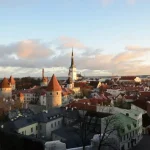
📷 Featured image by Kazuki Taira on Unsplash.