💰 Click here to see Estonia Budget Breakdown
💰 Prices updated: August, 2026. Budget figures are estimates — always verify before travel.
Exchange Rate: $1 USD = €0.86
Daily Budget (per person)
Shoestring: €45.00 – €70.00 ($52.33 – $81.40)
Mid-range: €120.00 – €170.00 ($139.53 – $197.67)
Comfortable: €250.00 – €420.00 ($290.70 – $488.37)
Accommodation (per night)
Hostel/guesthouse: €10.00 – €40.00 ($11.63 – $46.51)
Mid-range hotel: €50.00 – €140.00 ($58.14 – $162.79)
Food (per meal)
Budget meal: €10.00 ($11.63)
Mid-range meal: €25.00 ($29.07)
Upscale meal: €80.00 ($93.02)
Transport
Single metro/bus trip: €1.50 ($1.74)
Monthly transport pass: €30.00 ($34.88)
Saaremaa gets the headlines, the Instagram posts, and in summer 2026, the ferry queues that stretch back far enough to ruin an afternoon. If you’ve already done Kuressaare or you’re simply looking for Estonian island life without the crowds, Hiiumaa and Muhu are the answer — and most visitors still don’t know the difference between them, let alone which one suits them better. This guide fixes that.
Hiiumaa vs Muhu — Two Islands, Two Personalities
These two islands are not interchangeable. They feel different, they work differently as destinations, and they attract different kinds of travellers.
Hiiumaa is Estonia’s second-largest island — about 1,000 square kilometres — and it has a reputation for being slow, forested, and a little eccentric. Locals call themselves hiidlased and have a whole tradition of self-deprecating humour about the island’s relaxed pace. There are lighthouses at almost every point of the compass, bog trails, cycling routes through pine and juniper, and almost no traffic. In peak July, you might share a road with more cyclists than cars.
Muhu sits right next to Saaremaa, connected to it by a causeway. Most people drive through it on the way to Kuressaare without stopping, which is a genuine mistake. Muhu is small — about 200 square kilometres — but remarkably dense with character: ancient stone walls stitching together meadows, a medieval church, and Koguva village, one of the best-preserved fishing settlements in the entire Baltic region. It rewards slow walkers far more than fast drivers.
Getting There in 2026
Both islands are served by ferry, and both connections have seen schedule updates for 2026 that are worth knowing before you book.
Ferries to Hiiumaa
The main route runs from Rohuküla (near Haapsalu, about 100 km from Tallinn) to Heltermaa on Hiiumaa’s eastern shore. Crossing time is approximately 1 hour 45 minutes. Saaremaa Laevakompanii operates this route year-round. In 2026, the summer timetable runs up to six daily crossings each direction. Book vehicle tickets well in advance for July and August — the ferry fills fast on Friday evenings and Sunday afternoons.
A faster but less frequent option connects Triigi on Saaremaa’s northern tip to Sõru in southern Hiiumaa — useful if you’re combining both large islands. That crossing takes about 1 hour.
Getting to Muhu
Muhu is reached by ferry from Virtsu on the mainland to Kuivastu on Muhu. The crossing is only 25 minutes, runs roughly every hour in summer, and connects directly to the road that leads across the causeway into Saaremaa. If you’re driving, Muhu is simply the island you pass through — but that framing is exactly the problem. Plan to stop.
There is no airport on either island. Public bus connections exist but are limited — having a car or bicycle gives you significantly more freedom on both islands.
What to Do on Hiiumaa
Hiiumaa’s main draw is its landscape — untouched in a way that feels deliberate rather than overlooked. About half the island is covered by forest, and the coastline is broken up by peninsulas and bays that most visitors never find.
The Lighthouses
There are four major lighthouses, each different in character. Kõpu lighthouse, in the island’s western tip, is one of the oldest working lighthouses in the world — built in 1531, still functioning. You can climb it for a few euros and see the forest canopy spreading out in every direction. The stone walls are nearly four metres thick at the base. Ristna lighthouse nearby is slim and red-striped, standing at the westernmost point of Estonia. On a clear evening the light catches the sea in a way that makes you understand immediately why people have lived here for centuries.
Cycling and Bogs
Hiiumaa has a well-maintained cycling network — around 220 km of marked routes — ranging from easy coastal roads to more demanding forest tracks. Bicycle rental is available in Kärdla, the island’s small capital. The Käina Bay area, a protected bird reserve on the southern coast, is excellent for cycling. Early mornings in June and July, the silence is broken only by curlews calling across the reeds.
The Tahkuna peninsula in the north has both a lighthouse and a bog trail — the kind of spongy, amber-coloured landscape where every step feels slightly unpredictable underfoot. Bring rubber boots if you plan to go off the boardwalk.
Kärdla Town
Kärdla is compact and unhurried — a couple of streets, a market square, a few cafés. The Hiiumaa Museum in the old factory building gives a clear picture of island history, including the island’s Swedish-speaking community that was deported in 1944. Worth an hour of your time.
What to Do on Muhu
Muhu rewards people who get out of their cars. Its scale is human — you can walk across much of it — and its cultural layers are surprisingly deep for such a small island.
Koguva Village
This is the centrepiece. Koguva is an open-air museum village on Muhu’s western coast, but unlike many open-air museums, people actually live here. The thatched farmsteads, the dry stone walls, the narrow lanes — it’s all intact because the community maintained it, not because a heritage board reconstructed it. Walk through on a weekday morning and you’ll hear hens, smell woodsmoke from a chimney, and see a fisherman mending nets by a boat shed. The writer Juhan Smuul was born here, and his childhood home is preserved and open to visitors.
Muhu Embroidery and Craft
Muhu is famous across Estonia for its embroidery — vivid floral patterns in red, black, and orange, traditionally used on skirts and mittens. Several local artisans still sell authentic work, and you’ll find pieces in small shops near Liiva (Muhu’s administrative centre) and in the Muhu Museum. The real thing is noticeably more expensive than souvenir-market versions, and noticeably more beautiful.
St Catherine’s Church
Muhu Church, dedicated to St Catherine and dating to the 13th century, sits at the top of a gentle hill surrounded by a stone wall and old lime trees. Inside, medieval frescoes survived the centuries in better condition than most. The tree canopy over the churchyard in summer is dense enough that the light through it feels green and underwater.
Where to Eat on Both Islands
Food on both islands leans heavily on what’s local and seasonal. Neither island has a restaurant scene that stays open year-round — plan accordingly outside June through September.
Hiiumaa
Liilia Hotel restaurant in Kärdla is the most consistent option — straightforward Estonian cooking, fish dishes that use what came off the boats that week. The smoked fish platter is a reliable order. Sõrve Kõrts near Sõru in the south is a rustic roadside spot popular with cyclists coming off the Saaremaa ferry — portions are large and the elk ragout appears on the menu most evenings in season. For coffee and pastry, Kärdla Bakery on the main square bakes dark rye loaves and cinnamon rolls that still feel warm when you tear them apart.
Muhu
Muhu Köök near Liiva is a small, seasonal kitchen serving lunch using island-grown vegetables and local pork. Bookings are recommended for weekend lunches. Alexander, the restaurant at Pädaste Manor, is in a different category entirely — one of Estonia’s finest rural dining experiences, set in a restored manor house. A tasting menu here in 2026 runs around €90–€120 per person, but for a special occasion it’s extraordinary. The service is formal without being stiff, and the plates arrive looking like something between food and landscape art.
Day Trip or Overnight?
Muhu can genuinely be done as a long half-day on the way to or from Saaremaa. If you’re crossing at Virtsu–Kuivastu, add two or three hours to explore Koguva, the church, and a coffee stop in Liiva. You won’t see everything, but you’ll see enough to understand why the island matters.
Hiiumaa needs at least one night, ideally two. The island’s rhythm doesn’t reveal itself quickly. The cycling routes, the multiple lighthouses, the bog walks — none of these compress comfortably into a day trip from Tallinn when you factor in the Haapsalu drive and the ferry. Arriving on a Friday evening and leaving Sunday afternoon is a practical and satisfying structure.
If you’re combining both islands, a logical route is: Tallinn → Virtsu ferry → Muhu (half day) → causeway to Saaremaa (optional night) → Triigi ferry → Hiiumaa (two nights) → Heltermaa ferry → Rohuküla → Tallinn. This loop works well and avoids doubling back.
2026 Budget Reality
Accommodation
- Budget: Hostel beds and basic guesthouses on Hiiumaa — €25–€40 per person per night. Self-catering cottages rented weekly can bring the nightly cost down further in groups.
- Mid-range: Guesthouse doubles on either island — €70–€110 per night. Most include breakfast.
- Comfortable: Pädaste Manor on Muhu — from €220 per night for a double room. Liilia Hotel in Kärdla — around €100–€130 per night.
Food
- Budget: Lunch at a local café or kõrts — €10–€15 per person including a drink.
- Mid-range: Dinner at a guesthouse restaurant or island pub — €20–€35 per person.
- Comfortable: Dinner at Pädaste’s Alexander — €90–€120 per person for the tasting menu with wine pairing.
Transport
- Virtsu–Kuivastu ferry (car + 2 passengers): approximately €18–€24 return depending on season.
- Rohuküla–Heltermaa ferry (car + 2 passengers): approximately €28–€36 return.
- Bicycle rental on Hiiumaa: €15–€20 per day.
Frequently Asked Questions
Is Hiiumaa worth visiting if I’ve already been to Saaremaa?
Yes — the two islands feel nothing alike. Saaremaa has more infrastructure, more history in one place, and more visitors. Hiiumaa is quieter, more forested, and better for cycling and lighthouse touring. If Saaremaa felt busy or commercialised, Hiiumaa will feel like a corrective.
Can I visit Muhu without a car?
Technically yes — buses connect Virtsu to Muhu and onward to Saaremaa. But Muhu’s highlights are spread out, and the bus schedule is sparse. A bicycle taken on the ferry, or a car, makes a real difference. Walk-on passengers can rent bikes near Kuivastu in summer 2026.
When is the best time of year to visit Hiiumaa and Muhu?
June through August offers the best weather and the most open restaurants and accommodation. June is the sweet spot — long days, wildflowers in the meadows, fewer crowds than July. September is quieter and beautifully autumnal but some smaller venues close by mid-month.
Are there any new services or changes in 2026 I should know about?
Saaremaa Laevakompanii updated its online booking system in early 2026, making vehicle reservations easier and more reliable. Hiiumaa’s cycling route signage was also improved in 2025–2026 with clearer distance markers and QR codes linking to digital maps at key junctions.
How long should I spend on Muhu specifically?
Three to five hours is enough for most visitors — time to walk Koguva village properly, see the church, and have lunch. If you’re staying overnight at Pädaste Manor or a local guesthouse, one full day lets you explore the quieter western coast and the embroidery shops at a genuinely relaxed pace.
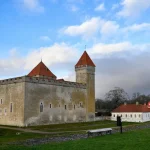
📷 Featured image by Urlaubstracker on Unsplash.