On this page
- Estonia’s Digital Infrastructure Outside the Capital
- Visa and Legal Setup: What Changes When You Are Not in Tallinn
- 2026 Budget Reality: Monthly Costs in Tartu, Pärnu, and Smaller Towns
- Long-Term Accommodation: How Renting Works Outside Tallinn
- Health Insurance and Practical Admin When Living Regionally
- Seasonal Rhythms: Matching Your Work Schedule to Estonia’s Calendar
- Frequently Asked Questions
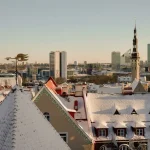
Tallinn’s Old Town looks beautiful on Instagram, but by 2026 its most walkable neighbourhoods have become genuinely crowded with remote workers, digital nomads, and e-residents treating the city like a permanent base. Apartment rents in Kalamaja and Ülemiste City have climbed steadily. Reliable long-term leases under €700 per month are hard to find. If you are planning to work from Estonia for one to six months, the honest answer is that the rest of the country deserves serious consideration — and in many practical ways, it outperforms the capital.
Estonia’s Digital Infrastructure Outside the Capital
One of the most persistent myths about Estonia is that its legendary digital infrastructure stops at the Tallinn ring road. It does not. Estonia’s national fibre broadband rollout, which accelerated through EU cohesion funding between 2022 and 2025, now covers over 97% of the country’s populated areas with high-speed fixed-line internet. In practical terms, this means a farmhouse rental in Lahemaa or a flat in central Pärnu can offer the same 200–500 Mbps speeds you would get in a Tallinn co-working space.
Mobile connectivity tells a similar story. Telia, Elisa, and Tele2 all completed their 5G rollouts across Estonia’s secondary cities — Tartu, Pärnu, Narva, Viljandi, Haapsalu, and Rakvere — by mid-2025. A local SIM card with unlimited data costs between €12 and €20 per month in 2026. For most remote workers, this is a reliable backup for any brief broadband interruption.
Estonia’s e-services infrastructure — the systems that make the country famous — operates nationally by design. The state portal eesti.ee, digital prescriptions, online tax filing through e-MTA, and public transport apps all function identically whether you are logged in from Tartu or Tallinn. There is no administrative disadvantage to living outside the capital.
Visa and Legal Setup: What Changes When You Are Not in Tallinn
Estonia offers two routes most remote workers use in 2026: the Digital Nomad Visa (DNV) and the Temporary Residence Permit for work or self-employment. Neither is geographically restricted to Tallinn, but there are procedural differences worth knowing before you commit to a regional base.
Digital Nomad Visa in 2026
The Estonian Digital Nomad Visa allows stays of up to one year. You apply through the Estonian Police and Border Guard Board (PPA). The application fee is €100, and the income requirement in 2026 is a minimum of €4,500 gross per month — a threshold that has not changed since 2024. Processing takes roughly 30 days if you apply from outside Estonia, or 15 days if you apply within the country on a valid short-stay visa.
When you register your Estonian address for the DNV, you can use any valid residential address in Estonia — not just a Tallinn postcode. However, you must register this address with the local municipality (omavalitsus) within 30 days of arrival. In Tallinn, this is handled through the city portal. In Tartu, Pärnu, or a smaller town, you typically visit the local government office (vallavalitsus or linnavalitsus) in person or use the national eesti.ee portal. The process is simple and takes under 20 minutes, but remote workers based in smaller municipalities sometimes miss this step because they assume registration only matters in Tallinn.
Temporary Residence Permit for Longer Stays
If you are planning to stay beyond one year, or if you want to establish a more formal legal presence — for example, as an Estonian OÜ (private limited company) director — you need a temporary residence permit. The application fee is €160 for standard processing. Applications are submitted through PPA offices. The nearest PPA service point to Pärnu is in Pärnu itself; Tartu has its own full PPA office. You are not required to travel to Tallinn for most stages of this process.
E-residency, which allows non-residents to run an Estonian company digitally, is a separate product and does not grant the right to live or work in Estonia. Many remote workers confuse e-residency with the right to reside. E-residency fees in 2026 remain €120–€150 depending on application method, and the digital card is still posted to your nearest Estonian embassy or a pickup point — it does not require your physical presence in Estonia at all.
2026 Budget Reality: Monthly Costs in Tartu, Pärnu, and Smaller Towns
Costs below reflect realistic monthly figures for a single remote worker in 2026, based on mid-range choices — not luxury, not rock-bottom.
Tartu
- Accommodation (1-bedroom flat, furnished, central): €550–€750/month
- Utilities (electricity, heating, water — included in many rentals): €80–€150/month if separate
- Groceries: €200–€280/month
- Mobile data (unlimited): €12–€20/month
- Public transport (monthly pass): €0 — Tartu city buses remain free for registered residents in 2026
- Total realistic monthly budget: €900–€1,300
Pärnu
- Accommodation (1-bedroom flat, furnished, central or near beach): €500–€700/month (off-season); €700–€1,100/month (June–August)
- Groceries: €190–€260/month
- Mobile data: €12–€20/month
- Total realistic monthly budget: €800–€1,200 (off-season), higher in summer
Smaller Towns: Viljandi, Haapsalu, Rakvere
- Accommodation (1-bedroom flat, furnished): €350–€550/month
- Groceries: €180–€250/month
- Total realistic monthly budget: €650–€950
For context, a comparable furnished one-bedroom flat in Tallinn’s Kalamaja or Kadriorg neighbourhoods in 2026 costs between €900 and €1,400 per month. The savings of living in Tartu or Pärnu over a three-month stay can easily reach €1,000–€2,500 — real money for a self-employed person watching their margins.
Long-Term Accommodation: How Renting Works Outside Tallinn
Finding a flat in Tallinn as a foreigner in 2026 is competitive. Finding one outside Tallinn is considerably easier, but the process works differently and you need to understand it before you arrive.
The dominant rental listing platforms in Estonia are KV.ee and City24.ee. Both cover the entire country. Listings in Tartu and Pärnu are updated regularly, and the supply of furnished, medium-term (1–6 month) rentals has grown since 2023 as more landlords have adapted to the remote worker market. You can reasonably expect to find a suitable furnished flat within 7–14 days of searching, compared to 2–4 weeks in Tallinn where competition is fiercer.
Rental contracts in Estonia are typically signed in Estonian. Landlords outside Tallinn are less likely to speak fluent English than those in the capital’s popular neighbourhoods. Having a short translated summary of standard rental terms, or using a local real estate agent (maakler), is worth considering. Agent fees are usually one month’s rent, split between landlord and tenant, though this varies.
A standard deposit is one to two months’ rent. Most landlords outside Tallinn request payment by Estonian bank transfer. If you do not yet have an Estonian bank account — which requires either residency registration or e-residency combined with a supported bank — Wise or Revolut transfers are widely accepted in practice, though not always written into the contract. Discuss this with the landlord before signing.
Utilities in smaller Estonian towns and cities are often included in the rent or charged as a fixed addition. Heating in particular can be significant: Estonian winters are cold, and district heating (kaugküte) bills for a 50 m² flat can run €80–€130 per month between October and March. The smell of a wood-burning stove drifting through an older building in Viljandi on a grey November afternoon is one of those small pleasures that photographs cannot capture — but it also means older buildings can be draughty, so ask specifically about insulation before committing.
Health Insurance and Practical Admin When Living Regionally
Health insurance is a requirement for the Estonian Digital Nomad Visa and the temporary residence permit. Estonia’s national health insurance (Haigekassa) is only available to people who pay Estonian social tax — which means employed or self-employed people registered in Estonia’s tax system. Most remote workers on a DNV working for foreign clients do not qualify automatically.
The practical solution for most remote workers in 2026 is a private international health insurance policy. Recognised providers accepted by PPA during visa applications include Cigna, AXA, Allianz Care, and several Baltic-regional insurers. Monthly premiums for a healthy adult aged 25–40 run between €40 and €90 per month depending on coverage level and deductibles.
Accessing healthcare regionally is straightforward. Estonia has family doctor (perearst) practices in every town of any size. Emergency care is handled through regional hospitals: South Estonia Hospital in Tartu, Pärnu Hospital, and Ida-Viru Central Hospital in Narva are all fully equipped. Tartu University Hospital is Estonia’s largest medical centre and handles complex cases from across the country. You are not at a medical disadvantage by living outside Tallinn — and in some cases, waiting times for non-emergency appointments are shorter in regional centres.
For tax purposes, remote workers earning from foreign clients while based in Estonia on a DNV are generally not subject to Estonian income tax on those earnings, as long as their employer or client is based abroad and they are not conducting business in Estonia. This has not changed in 2026. That said, your home country’s tax obligations still apply, and double-taxation treaties vary. A one-hour consultation with an Estonian tax advisor (typically €80–€120) is money well spent before you set up.
Seasonal Rhythms: Matching Your Work Schedule to Estonia’s Calendar
Estonia’s seasons are extreme by Western European standards, and they affect the practical reality of remote work more than most guides acknowledge. Getting the timing right can make the difference between a productive, genuinely enjoyable stint and a frustrating one.
Winter (November–February)
Days are short — Tallinn sees under seven hours of daylight in December, and smaller northern towns see less. For focus-heavy, heads-down work, this is actually Estonia’s best season. There are fewer distractions, accommodation is cheapest (especially in Pärnu, which is highly seasonal), and the country has a particular quiet intensity in winter. The crunch of frost underfoot on a forest trail near Otepää at dawn, with the air sharp enough to sting your cheeks, gives you the kind of morning clarity that city life rarely offers. Vitamin D supplements are standard practice among long-term residents — buy them before you arrive or from any Estonian pharmacy (apteek) for around €8–€15.
Spring (March–May)
Light returns fast in Estonia — faster than most newcomers expect. By late April, evenings stretch past 9 pm. This is arguably the best overall season for remote workers: accommodation is still at off-peak prices, nature is coming alive, and the country has a genuine energy. Tartu’s student population fills the streets, and the city has a productive creative buzz that suits people who work better around other working people.
Summer (June–August)
This is Estonia’s tourist season, and prices reflect it — especially in Pärnu and the islands (Saaremaa, Hiiumaa). If you want to base yourself in Pärnu in July, book accommodation at least two to three months ahead. The light is extraordinary — nights barely get dark in June — which disrupts sleep for many people. Blackout curtains are essential and most furnished rentals include them, but check before booking.
Autumn (September–October)
Underrated. Forests turn amber and copper across Lahemaa and Soomaa. Crowds are gone, prices drop, and the light has a low golden quality that makes even a mid-morning video call feel like you are working from somewhere more interesting than you probably deserve. Internet connectivity does not drop in autumn. Neither does productivity, for most people.
Frequently Asked Questions
Can I use the Estonian Digital Nomad Visa if I plan to live in Tartu rather than Tallinn?
Yes. The Estonian Digital Nomad Visa applies nationally with no geographic restrictions. Register your residential address with the local municipality within 30 days of arrival via eesti.ee or in person at the local government office.
Is long-term housing in smaller Estonian cities easy to find as a foreigner?
Easier than in Tallinn, generally. Platforms like KV.ee and City24.ee list furnished rentals across Tartu, Pärnu, Viljandi, and other towns. Budget 7–14 days to find a suitable place. Using a local real estate agent costs roughly one month’s rent but saves significant time and translation effort.
Do I need Estonian health insurance to live and work there as a remote worker?
Not necessarily Estonian state insurance (Haigekassa), which requires paying Estonian social tax. Most remote workers on a Digital Nomad Visa use private international health insurance instead. PPA accepts policies from major international insurers. Make sure your policy covers the full duration of your visa and specifies Estonia as a covered country.
How does Rail Baltica affect travel between Estonian cities in 2026?
Rail Baltica construction is ongoing through the Baltics in 2026, with the full Tallinn–Riga–Vilnius–Warsaw line still years from completion. Within Estonia, domestic train and bus connections between Tallinn, Tartu, and Pärnu are reliable and affordable — the Tallinn–Tartu express bus takes around 2.5 hours and costs €7–€14. Domestic travel has not significantly changed since 2024, though bus schedules have been optimised slightly on key routes.
Is Estonia outside Tallinn genuinely viable for remote work, or is the infrastructure too limited?
Genuinely viable. The main practical differences from Tallinn are fewer English-speaking service providers in smaller towns and less variety in the short-term rental market. Neither is a serious obstacle for someone prepared to spend a little time setting things up properly on arrival.
📷 Featured image by Glenn Carstens-Peters on Unsplash.