On this page
- Two Very Different Escapes, One Shared Coastline
- Matsalu National Park: Reeds, Raptors, and Open Water
- Where to Go Inside Matsalu — Specific Spots Worth Your Time
- Getting to Matsalu from Haapsalu
- Vormsi Island: Estonia’s Quietly Remarkable Fourth-Largest Island
- Getting to Vormsi: The Ferry from Rohuküla
- Exploring Vormsi by Bicycle — The Only Way That Makes Sense
- One Day or Two? An Honest Planning Guide
- 2026 Budget Breakdown: What Each Destination Actually Costs
- Practical Tips: What Most Visitors Get Wrong
- Frequently Asked Questions
💰 Click here to see Estonia Budget Breakdown
💰 Prices updated: October, 2026. Budget figures are estimates — always verify before travel.
Exchange Rate: $1 USD = €0.88
Daily Budget (per person)
Shoestring: €40.00 – €70.00 ($45.45 – $79.55)
Mid-range: €120.00 – €250.00 ($136.36 – $284.09)
Comfortable: €300.00 – €900.00 ($340.91 – $1,022.73)
Accommodation (per night)
Hostel/guesthouse: €15.00 – €40.00 ($17.05 – $45.45)
Mid-range hotel: €60.00 – €150.00 ($68.18 – $170.45)
Food (per meal)
Budget meal: €15.00 ($17.05)
Mid-range meal: €35.00 ($39.77)
Upscale meal: €100.00 ($113.64)
Transport
Single metro/bus trip: €2.00 ($2.27)
Monthly transport pass: €30.00 ($34.09)
Haapsalu is a slow town, and that’s exactly the point. But by day two or three, most visitors start eyeing the map. In 2026, public transport connections to the surrounding area remain thin — no rail link, limited bus frequency — so if you’re planning to reach either Matsalu National Park or Vormsi Island without your own wheels, you need to plan ahead. Both destinations reward the effort completely. This guide covers exactly how to do it.
Two Very Different Escapes, One Shared Coastline
Matsalu National Park and Vormsi Island sit within 30 kilometres of Haapsalu, but they offer almost opposite experiences. Matsalu is movement — hundreds of thousands of migratory birds, rustling reed beds, patient watching from wooden towers with binoculars pressed to your face. Vormsi is stillness — a small island of juniper meadows, Swedish heritage, and almost no cars. Pairing them across two days makes for one of the most layered nature escapes in western Estonia. Doing both in one day is possible but rushed.
What they share is the flat, windswept quality of the Estonian west coast: enormous skies, the smell of salt and wet grass, and a genuine sense of being far from anything urgent.
Matsalu National Park: Reeds, Raptors, and Open Water
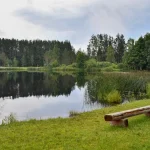
Matsalu is one of Europe’s most important wetland habitats. The park covers roughly 486 square kilometres of coastal meadows, flooded reed beds, shallow bays, and wooded islands around the mouth of the Matsalu River where it meets Matsalu Bay. It sits inside the larger West Estonian Archipelago Biosphere Reserve and has been a protected area since 1957.
The landscape here is horizontal in a way that feels almost theatrical. Standing on the Haeska observation tower in April, the sky takes up two-thirds of your view. Below, the water is barely distinguishable from the flooded meadow grass. The sound is constant — a layered chorus of geese, waders, and ducks that builds before dawn and doesn’t stop until well after dark during migration season.
Spring migration (mid-April through May) is the headline event. The park hosts hundreds of thousands of barnacle geese, bean geese, whooper swans, and dozens of wader species during peak weeks. Autumn migration runs from August through October and is quieter but still impressive. Summer is lush and green but bird activity drops. Winter is stark and largely empty — beautiful in its own way, but not the primary draw.
The park’s visitor centre is in Penijõe, about 25 kilometres from Haapsalu. It has good English-language exhibits, trail maps, and staff who can tell you which towers are most active on any given day. In 2026, entry to the visitor centre remains free. Guided tours can be booked through the visitor centre website or through local nature tour operators based in Haapsalu.
Where to Go Inside Matsalu — Specific Spots Worth Your Time
The park has multiple access points and observation structures. Not all are equally worthwhile depending on the season.
- Haeska Observation Tower — the most visited spot in the park, directly on the bay shore. A two-level wooden tower gives unobstructed views across open water and flooded meadows. Best at dawn during spring migration. The short trail from the car park takes about ten minutes on a wooden boardwalk over wet ground.
- Keemu Observation Tower — smaller and less visited, reached by a 3-kilometre forest trail from the Penijõe area. Good for woodland birds and raptors. Quieter and worth the walk if you have time.
- Salevere Meadow Trail — a 4-kilometre loop through coastal meadows. In May, this trail passes through ankle-deep wildflowers with lapwings calling from every direction. The ground can be very wet — waterproof boots are not optional.
- Matsalu Bay boat tours — local operators run two-hour guided boat trips into the bay from late April through September. These give access to areas of the park not reachable on foot and let you get close to nesting birds on the smaller islands. Book at least two days ahead in peak season.
Getting to Matsalu from Haapsalu
The honest answer is that a car makes this much easier. The Haeska observation area is about 37 kilometres from Haapsalu town centre.
In 2026, your options without a car are:
- Taxi or rideshare from Haapsalu — the most reliable option. Expect to pay around €25–35 one way to Penijõe. Pre-booking with a Haapsalu taxi company is strongly recommended; the area has no reliable on-demand rideshare coverage. Ask the driver to wait or arrange a return time.
- Bicycle — Haapsalu has bike rental options (several guesthouses offer bikes, or check the Haapsalu tourist information centre on Posti Street). The route to Matsalu is mostly flat. It’s a 35–40 kilometre round trip to Penijõe, manageable in a day for a fit cyclist. Road surfaces are good on the main roads but some smaller access tracks are gravel.
- Guided day tours — several operators based in Haapsalu and Tallinn run Matsalu-specific nature tours, particularly during spring migration. These include transport, guiding, and sometimes a boat trip. Prices run €45–85 per person depending on group size and inclusions. This is the best option for birdwatchers who want expert guidance.
- Regional bus — limited service exists between Haapsalu and Lihula, passing through the Matsalu area. Check current timetables at peatus.ee. Frequency is low (sometimes two buses daily) and stops don’t always land close to the key observation points. Workable if you plan carefully.
Vormsi Island: Estonia’s Quietly Remarkable Fourth-Largest Island
Vormsi is Estonia’s fourth-largest island and one of its least visited. It covers about 93 square kilometres and has a permanent population of around 400 people — a number that has held roughly steady through the 2020s. For most of its history, Vormsi was Swedish-speaking. The Swedish community largely left during World War Two and never fully returned, though their influence survives in place names, the Lutheran church at Hullo, and the distinctive carved wooden gravestones in the churchyard — ancient wheel-cross stones that appear nowhere else in Estonia.
The island has one main village (Hullo), a handful of farms, juniper-dotted coastal meadows, and virtually no tourist infrastructure in the commercial sense. There are no hotels in the traditional sense — accommodation is in guesthouses and farm stays. There are one or two small cafés near the ferry terminal that operate seasonally. You bring your own pace here.
What Vormsi does have is extraordinary quiet. On a Tuesday afternoon in June, you might cycle the entire south coast road and see three cars. The juniper meadows — low, fragrant, silvery-green — stretch to the shore in a way that makes you understand why people live here voluntarily with no cinema, no shopping street, and ferry-dependent access to everything else.
Getting to Vormsi: The Ferry from Rohuküla
The ferry to Vormsi departs from Rohuküla harbour, which is about 10 kilometres west of Haapsalu town centre. The crossing takes approximately 30 minutes to Sviby harbour on Vormsi’s eastern tip.
In 2026, the ferry is operated by TS Laevad, the same company that runs routes to Hiiumaa and Saaremaa. The Vormsi route runs multiple times daily in summer (typically 4–6 departures each direction) and reduces to 2–3 per day in winter. Always check the current timetable at laevad.ee before planning — the schedule changes seasonally and periodically updates.
Key practical points for 2026:
- Foot passenger tickets cost around €3–5 each way. Taking a bicycle costs a small additional fee (typically €1–2).
- Taking a car requires advance reservation, especially in summer weekends when Latvian and Finnish visitors have discovered the island in larger numbers since 2024.
- The ferry does not always run in severe weather. Check conditions if visiting between November and March.
- Getting from Haapsalu to Rohuküla: taxi costs €10–15 one way. There is also a local bus connection — check current schedules at peatus.ee.
Exploring Vormsi by Bicycle — The Only Way That Makes Sense
There is no public transport on Vormsi. Walking between points of interest is possible but slow given the distances. The practical solution — and honestly the ideal one — is a bicycle.
You can bring your own on the ferry for a small fee, or rent one on the island. As of 2026, bicycle rental is available at Sviby harbour through a small local operator (check availability at vormsi.ee or with your accommodation). Rental prices run around €10–15 per day for a standard bike.
A full circuit of Vormsi’s main roads and tracks covers around 40–50 kilometres. For a day trip, a focused southern and central loop of about 25 kilometres hits the main points:
- Hullo village and St. Olaf’s Church — the medieval church is the island’s cultural anchor. The churchyard has the wheel-cross gravestones that archaeologists still debate. The church itself is simple inside, all whitewash and old wood. The door is usually unlocked.
- Förby and the west coast meadows — riding west from Hullo on gravel tracks through juniper scrub, you reach the low limestone cliff sections of the west coast. In summer, these meadows are full of orchids. The smell of wild thyme is immediate when the sun warms the ground.
- Saxby lighthouse — at the island’s northwest tip, a red-and-white striped lighthouse marks the passage between Vormsi and Noarootsi. The area around it is open and windswept with views toward Osmussaar island on a clear day.
- Hullo harbour and café — a seasonal café near the harbour serves coffee, homemade cake, and sometimes soup. Hours are irregular — if it’s open, stop.
One Day or Two? An Honest Planning Guide
The question most visitors ask is whether they can see both Matsalu and Vormsi in a single day. The short answer: technically yes, practically no.
Vormsi’s ferry schedule and Matsalu’s distances make a genuine same-day combination very rushed. The earliest Rohuküla–Vormsi ferry typically departs around 8:00–9:00 AM. The last return ferry from Sviby is typically around 6:00–7:00 PM. Matsalu’s best observation points are 35+ kilometres in the other direction from Haapsalu. Trying to do both means doing neither properly.
The recommended approach for a two-night stay in Haapsalu:
- Day 1: Matsalu National Park — full day, start early, bring a picnic. Focus on Haeska and one trail.
- Day 2: Vormsi Island — catch the morning ferry, spend 6–7 hours cycling, return on the late afternoon ferry.
If you only have one extra day from Haapsalu, choose based on your interests: Matsalu for wildlife and birding, Vormsi for cultural quietness and cycling. Both are genuinely excellent. Neither is a compromise.
2026 Budget Breakdown: What Each Destination Actually Costs
Prices reflect 2026 conditions. Both destinations are affordable compared to similar nature destinations in Scandinavia.
Matsalu National Park
- Budget — cycling from Haapsalu, self-guided: €0 entry + bike rental if needed (€10–15/day). Total day: €15–25 including food.
- Mid-range — taxi to park, self-guided with visitor centre: €50–70 for the day including transport and meals.
- Comfortable — guided birding tour with transport from Haapsalu, including boat trip: €85–120 per person.
Vormsi Island
- Budget — foot passenger + own bike: €6–10 in ferry fees. Bring your own food. Total day: €15–20.
- Mid-range — foot passenger + island bike rental, lunch at harbour café: €30–45 for the day.
- Comfortable — car ferry + overnight at a guesthouse (€50–90/night), dinner included: €120–160 for one night and a day.
Practical Tips: What Most Visitors Get Wrong
Both destinations have specific conditions that catch visitors off guard.
For Matsalu
- Waterproof footwear is non-negotiable — the trails around Haeska and Salevere are wet even in dry summer conditions. Trainers will be soaked within ten minutes.
- Timing matters more than anywhere else in Estonia — visiting Matsalu outside migration season (April–May or August–October) is still worthwhile but dramatically quieter. Don’t arrive in July expecting the spectacle you see in photos.
- Bring binoculars — the park’s magic is in the distance. Birdwatching without optics here is like visiting a gallery in the dark.
- Mosquitoes from June through August — the reed beds breed them in serious numbers. Insect repellent is not optional in summer.
For Vormsi
- Check the ferry before you do anything else — weather cancellations happen. Have a backup plan for your day if the crossing is off.
- Bring cash — card payment is available at some businesses but coverage is patchy. A small amount of euro cash covers all eventualities.
- Food is limited — the seasonal café at Hullo is the only reliable food option on a day trip. Bring lunch, water, and snacks for anything beyond a short visit.
- The island is not signposted for tourists — download an offline map (Maps.me or OsmAnd work well for Vormsi’s rural tracks) before you board the ferry.
- Respect the quiet — Vormsi is someone’s home. Cycling through private farmyards, playing music on trails, or treating the island as a photo backdrop rather than a lived-in place is noticed and not appreciated by the small community.
Frequently Asked Questions
Is Matsalu National Park worth visiting if you’re not a birdwatcher?
Yes, though you’ll get less from it. The landscape itself — flat coastal meadows, reed beds, wide open sky — is beautiful and peaceful at any time of year. Hiking, cycling, and boat trips are enjoyable regardless of your interest in birds. Spring migration is exceptional, but summer and autumn visits still offer real natural scenery worth the trip from Haapsalu.
Do you need to book the Vormsi ferry in advance?
As a foot passenger, advance booking is not required but recommended in July and August when the ferry fills. Taking a car across always requires advance reservation, especially on summer weekends. Book through laevad.ee. In spring, autumn, and winter, foot passengers can generally show up without a reservation.
Can you do Vormsi as a day trip from Tallinn?
It’s possible but very long. Tallinn to Rohuküla is about 110 kilometres, adding at least 1.5 hours of driving each way to the ferry schedule and cycling time. A much better approach is to stay one or two nights in Haapsalu, which puts both Vormsi and Matsalu within easy reach and is a worthwhile destination on its own.
What is the best time of year to visit Matsalu National Park?
Mid-April through mid-May is peak season for bird migration — this is when the park is at its most spectacular. August through October offers good autumn migration with fewer crowds. Summer is green and pleasant but quieter for wildlife. Winter is stark and mostly empty; the park is still open but there’s little wildlife activity to observe.
Is there accommodation on Vormsi Island?
Yes, though options are limited. As of 2026, there are several small guesthouses and farm-stay accommodations operating on the island, most bookable through vormsi.ee or directly by phone. There are no hotels in the conventional sense. Staying overnight is a genuinely different experience from a day trip — quieter, more immersive, and highly recommended if your schedule allows it.
Explore more
What Souvenirs Should You Buy in Haapsalu?
📷 Featured image by Kylli Kittus on Unsplash.