On this page
- Where to Eat in Narva: The Ultimate Foodie Guide for Travelers
- The Old Town & Castle Quarter — Eating Near Narva’s Most-Visited Landmark
- Peetri Plats & the City Centre — Everyday Restaurants Locals Actually Use
- Joaorg & the River District — Spots With Direct Views of the Narva River and Ivangorod
- Russian and Soviet-Era Comfort Food — What to Order and Where to Find It
- Cafés and Bakeries for a Slower Morning
- The Market Scene — Narva’s Central Market and Street Food Reality
- 2026 Budget Reality — What Meals Cost in Narva
- Practical Eating Tips Specific to Narva
- Frequently Asked Questions
💰 Click here to see Estonia Budget Breakdown
💰 Prices updated: October, 2026. Budget figures are estimates — always verify before travel.
Exchange Rate: $1 USD = €0.88
Daily Budget (per person)
Shoestring: €40.00 – €70.00 ($45.45 – $79.55)
Mid-range: €120.00 – €250.00 ($136.36 – $284.09)
Comfortable: €300.00 – €900.00 ($340.91 – $1,022.73)
Accommodation (per night)
Hostel/guesthouse: €15.00 – €40.00 ($17.05 – $45.45)
Mid-range hotel: €60.00 – €150.00 ($68.18 – $170.45)
Food (per meal)
Budget meal: €15.00 ($17.05)
Mid-range meal: €35.00 ($39.77)
Upscale meal: €100.00 ($113.64)
Transport
Single metro/bus trip: €2.00 ($2.27)
Monthly transport pass: €30.00 ($34.09)
Where to Eat in Narva: The Ultimate Foodie Guide for Travelers
Most travelers who arrive in Narva in 2026 come for the castle, the border crossing view, and the raw, unpolished atmosphere of Estonia’s easternmost city. Food is rarely the reason anyone books a trip here — and that’s exactly why the eating scene catches people off guard. Narva is not Tallinn. There are no trendy natural wine bars or farm-to-table tasting menus. What you find instead is something harder to replicate: unpretentious, filling food rooted in Russian and Soviet culinary tradition, served cheaply, in a city where the euro goes further than almost anywhere else in Estonia. The challenge in 2026 is not finding a meal — it’s knowing where to look, because many of the best spots have no Instagram presence, limited English menus, and hours that make no obvious sense to outsiders.
The Old Town & Castle Quarter — Eating Near Narva’s Most-Visited Landmark
The area directly around Hermann Castle and the Old Town bastions has seen modest but real development since 2024. The Narva city government invested in the riverside promenade as part of a broader tourism push, and a handful of food businesses followed. This is the most reliable zone for visitors who want to eat without wandering far from the sightseeing route.
Rondeel Kohvik sits just inside the castle grounds area and is the most predictable choice near the fortress. The menu leans into traditional Estonian dishes alongside Russian staples — think pelmeni (dense meat dumplings), a respectable borscht, and open-faced sandwiches on dark rye that smell exactly as good as they look: that dense, slightly sour tang of Estonian black bread with cold butter and smoked fish is hard to shake once you’ve had it properly. Portions are generous. Service is slow but not unfriendly. Expect to wait.
Bastion Café, positioned near the defensive earthworks of the 17th-century Swedish bastion, functions more as a tourist café — meaning the prices are slightly higher and the English menu exists. It’s not the most exciting food in the city, but the terrace has an unobstructed line of sight toward Ivangorod Fortress on the Russian side, which makes a lunch here feel worth the small premium. Soup and a main course here runs around €10–12.

One honest note: avoid the kiosk-style vendors near the main castle gate selling packaged snacks. They are priced for distracted tourists and offer nothing you can’t find better and cheaper two streets away.
Peetri Plats & the City Centre — Everyday Restaurants Locals Actually Use
Peetri plats (Peter’s Square) and the streets radiating off it form the functional heart of Narva’s daily life. This is where the city’s Russian-speaking majority shops, meets, and eats. The food here is honest and priced for people who live on Estonian wages, not tourist budgets.
Café Sherbet on Puškini tänav is the kind of place where the daily soup special is written on a small chalkboard by the door and changes every weekday. The Uzbek and Central Asian influence on the menu — rice-based plov, grilled skewers of shashlik, and pilaf with dried fruit — reflects Narva’s historically diverse Soviet-era population. A full meal with soup, main, and a glass of kompot (a cold sweet fruit drink) rarely exceeds €7. The dining room is small and fills up fast at lunch; arrive before 12:30 or expect to share a table.
Restaurant Aleksandr near the central square is the closest thing Narva has to a sit-down mid-range restaurant with proper tablecloths and a longer menu. The food is Russian-European — herring under a fur coat, chicken Kiev, and solyanka (a thick, tangy meat soup) done properly. It functions as a venue for local birthdays and small celebrations, which means service staff are actually accustomed to managing a full table. Main courses run €9–15.
The Soviet-era shopping centre on Tallinna maantee hosts a ground-floor canteen-style eatery that looks uninviting from the outside but operates on the old Soviet stolovaya principle: a cafeteria line, hot food displayed under glass, pay by weight or portion. Nobody working there speaks English. Point at what you want. It works. Lunch for €4–5.
Joaorg & the River District — Spots With Direct Views of the Narva River and Ivangorod
Joaorg is the residential and park-side district that runs along the river south of the castle. The walking path here is genuinely beautiful in summer — wide, tree-lined, with the Narva River on one side and Soviet-era apartment blocks softened by greenery on the other. A few small food spots have positioned themselves along this stretch, and they’re worth knowing about.
Jõe Kohvik (River Café) operates seasonally from late April through September, set up on the lower riverbank terrace with plastic chairs and a simple grill menu: sausages, marinated chicken portions, basic salads, and cold beer. It is not a restaurant in any formal sense — it’s closer to a summer beer garden — but on a warm June evening with the light bouncing off the water and Ivangorod’s towers silhouetted across the river, eating a plate of grilled sausage here is one of the most atmospheric cheap meals you’ll have in Estonia. The river wind carries a faint smell of pine and cool water off the surface. Plates run €4–8.

In the colder months, this stretch is largely quiet for food. The alternative is to walk back toward the castle zone and use the indoor options there. Narva is a city that honestly contracts in winter — food options in outlying areas thin out, and you rely more on the centre.
Along the embankment promenade, a new kiosk-style coffee and snack stand opened in 2025 as part of the Narva riverfront development project. It serves decent espresso drinks, Estonian-brand packaged pastries, and occasionally fresh crepes made to order. It’s not destination eating, but it fills the gap if you’ve spent the morning walking the fortification walls and need coffee before lunch.
Russian and Soviet-Era Comfort Food — What to Order and Where to Find It
Narva has the highest proportion of Russian-speaking residents of any city in Estonia — around 95 percent of the population. That demographic reality shapes the entire food culture in a way that makes Narva genuinely different from Tallinn or Tartu. Soviet and Russian culinary traditions are not “ethnic food” here — they are simply the food.
If you eat only one thing in Narva, make it the pelmeni. These small meat dumplings — typically pork and beef, sometimes with onion — are boiled and served with sour cream, butter, or a splash of vinegar. They are cheap, filling, and made fresh in several spots in the city centre. Pelmennaya Vostok on Kreenholmi tänav is the most dedicated version of this: a narrow room, steamed windows, metal tables, and a menu that is essentially just pelmeni variants plus borscht. A portion of 15 pelmeni with sour cream costs around €4.50. This is not a glamorous meal. It is a perfect one.
Borscht — the deep-red beetroot soup with cabbage, carrot, and meat stock — appears on nearly every menu in Narva. Quality varies. The best versions have been simmered long enough that the broth has real depth; the weaker ones taste of canned beetroot and salt. The Sherbet Café and Aleksandr Restaurant both do reliable versions. Always order it with smetana (sour cream) stirred in at the table.

Olivier salad (what most of the world calls Russian salad — potato, carrot, peas, pickled cucumber, boiled egg, mayo) appears everywhere as a starter or side. It is inexpensive and filling. Selyodka pod shuboi — herring under a fur coat, layered with grated beet, potato, carrot, and mayo — is another fixture on celebratory menus at Aleksandr and similar restaurants.
One thing worth knowing in 2026: since the geopolitical shifts of the past two years have further reduced cross-border food trade from Russia, some traditional Russian food products that once came directly across the Narva River crossing are now sourced from within Estonia or the EU. This means certain specialty items — particular smoked fish varieties, some cured meats — are slightly harder to find or come from different producers than they did before 2022. The food is still there; the supply chain has shifted.
Cafés and Bakeries for a Slower Morning
Narva does not have a developed specialty coffee scene. There is no third-wave roaster with pour-over options and exposed brickwork. What it does have is a set of quiet, warm neighbourhood cafés where the coffee is functional and the pastries are genuinely good.
Kohvik Narva near the town hall area is the most civilised option for a sit-down morning coffee. The interior is compact, heated reliably in winter, and sells a rotating selection of layered cream cakes — the kind involving sponge, sour cream filling, and either fresh berries or jam — that are made in-house or sourced from local producers. On a cold morning in Narva, the warmth hits you when you open the door, along with the smell of cinnamon and warm yeast from the pastry shelf. Latte and a slice of cake: around €5.50.

Pagarikoda (bakery) on Vestervalli tänav is strictly a takeaway counter but produces the best kringel (a braided sweet bread) in the city. The queue outside on Sunday mornings is reliable proof. Loaves sell for €2.50–3.50 depending on size.
Several Soviet-era style cafés near the bus station serve strong black tea in glass cups with a saucer of sugar cubes and a small pastry for about €1.80 total. They are not decorated for Instagram. They are exactly what they are, and they’re busy every morning because working people in Narva use them. Sitting in one for 20 minutes and watching the morning foot traffic is one of the more genuine experiences the city offers to an outside visitor.
The Market Scene — Narva’s Central Market and Street Food Reality
The Narva Central Market (Narva Turg) on Tallinna maantee operates Tuesday through Sunday and is the most concentrated source of cheap, fresh, and locally produced food in the city. It runs on a hybrid model: part covered hall, part outdoor stalls that expand considerably in summer.
Inside the hall, vendors sell smoked fish caught from the Narva reservoir and the river itself — perch, bream, and roach, cold-smoked to a deep golden brown with a firm, intensely flavoured flesh. Buying a piece wrapped in paper and eating it standing outside is one of the cheaper and more satisfying snacks available in Narva. Expect to pay €2–4 for a portion depending on size and fish type.
The market also carries a strong selection of pickled and fermented vegetables — sauerkraut, pickled cucumbers, marinated mushrooms, brined garlic — sold in bulk from large buckets. These are produced by local home producers and sold direct. The pickling brine smell is sharp and vinegary but the products themselves are excellent. A bag of sauerkraut large enough for several servings costs around €1.50.

Hot food inside the market is limited to a couple of stalls selling freshly made pastries: pirogi (stuffed baked buns with fillings of potato, cabbage, or meat) and pirozhki (fried or baked smaller versions). A single pirozhok runs €0.80–1.20. They are sold hot, just out of the oven, and eating one on the spot while the filling is still steaming is the market’s best food experience.
One honest note on the market in 2026: the outdoor stall section has been reduced slightly due to ongoing renovation of the adjacent square, which began in late 2024 and is expected to complete in 2027. The indoor hall is fully operational, but some of the summer vegetable and fruit vendors have relocated temporarily. If you’re visiting in summer 2026, check locally for the current stall layout.
2026 Budget Reality — What Meals Cost in Narva
Narva is consistently the most affordable city in Estonia for food. Prices have risen since 2022 due to general Eurozone inflation, but the gap between Narva and Tallinn remains significant — you should expect to spend roughly 30–40 percent less for equivalent meals.
- Budget (under €6 per meal): Market pirozhki, pelmennaya portions, stolovaya canteen lunches, market smoked fish, bakery items. This tier covers a full, filling meal multiple times a day without difficulty. Most city-centre canteens and cafeteria-style spots fall here.
- Mid-range (€7–14 per meal): Café Sherbet, Rondeel Kohvik, most sit-down restaurant lunch specials, a proper borscht plus main plus drink at any of the city-centre restaurants. This covers the majority of named restaurants in Narva.
- Comfortable (€15–25 per meal): Restaurant Aleksandr for dinner with a starter and dessert, the Bastion Café at full menu prices, or any restaurant in the castle zone in the evening. There is essentially no fine dining tier in Narva — the comfortable bracket is the ceiling.

Drinks pricing (2026): A 0.5L local beer (Saku or A. Le Coq) at a bar or restaurant: €3–4. Espresso: €1.80–2.50. A glass of house wine where available: €4–5. Tap water is safe to drink throughout Narva and is served free on request, though some cafés may not proactively offer it.
Tipping is not standard in Narva in the way it is in Tallinn tourist restaurants. Rounding up the bill is appreciated but not expected. At canteen-style spots, there is no mechanism for tipping at all.
Practical Eating Tips Specific to Narva
Language: Russian is the working language of essentially every restaurant, café, and market stall in Narva. Estonian is less commonly spoken in food service here than in any other Estonian city. English is available at tourist-facing spots near the castle and at Aleksandr Restaurant, but do not assume it elsewhere. A few words of Russian — or simply pointing confidently — will get you through most situations. Google Translate’s camera function works well for translating Cyrillic menus in 2026.
Opening hours: Narva restaurants keep idiosyncratic hours. Many close for a “sanitary break” (usually 15:00–17:00 or 14:30–17:00) between the lunch and dinner service — a holdover from Soviet-era scheduling that persists in practice. Showing up at 15:30 expecting lunch is a common mistake tourists make. The market closes at 17:00 on weekdays and 15:00 on Sundays. Several smaller cafés are closed Monday entirely.
Payment: Card payment is widely accepted in sit-down restaurants and larger cafés. The market stalls and smaller pelmennaya-style spots are often cash only. Carry €10–20 in small notes. There are working ATMs near Peetri plats and inside the central shopping centre.

Dietary requirements: Vegetarian options exist but require some navigation — Russian and Soviet cuisine is heavily meat- and dairy-based. Purely vegetarian dishes do exist: cheese pirogi, potato pelmeni, mushroom soups, pickled vegetable plates, and dairy-heavy pastries. Vegan options are genuinely limited. Gluten-free eating in Narva is difficult — there is no specialised offering and most staples (rye bread, dumplings, pirozhki) are wheat or rye-based. Communicate clearly and ask what specific dishes contain before ordering.
Alcohol and evening food: Narva’s bar scene is modest. A few bars near the city centre serve food in the evenings, but kitchen closing times are often earlier than the bar itself stays open. If you’re arriving on an evening train from Tallinn (a roughly 2.5-hour journey on the Elron service), plan for a meal before 20:00 to have the full range of options. After 21:00, options reduce significantly to convenience stores and one or two bars near the bus station.
Frequently Asked Questions
Is the food in Narva safe to eat?
Yes, completely. Estonia has EU-standard food safety regulations that apply equally in Narva. Market smoked fish, street pastries, and canteen food are all prepared under regulated conditions. The tap water in Narva is safe to drink. Travelers with no experience of Eastern European food may find portions heavier and richer than they’re used to, but there are no safety concerns.
Can I get a vegetarian meal in Narva?
With some effort, yes. Cheese and potato pirozhki, vegetable soups, dairy-based salads, and rye bread with cheese are all available. However, Narva’s food culture is heavily meat-centred, and menus don’t typically flag vegetarian options clearly. You’ll need to ask about specific dishes directly — Russian-language phrases help, or use a translation app on the menu.

Do restaurants in Narva accept card payment?
Most sit-down restaurants and larger cafés accept Visa and Mastercard contactless payment in 2026. Smaller canteens, market stalls, bakeries, and pelmennaya-style spots are frequently cash-only. Carry at least €15–20 in cash if you plan to use the market or smaller local eateries, where card readers are not available.
What is the best single dish to try in Narva?
Pelmeni — small boiled meat dumplings served with sour cream — are the most distinctive and authentic dish in Narva’s food culture. Find them at Pelmennaya Vostok on Kreenholmi tänav. A portion costs around €4.50 and the quality is reliable. Smoked fish from the central market is an equally strong alternative if you prefer something lighter.
Are there any restaurants open late in Narva?
Late-night eating options in Narva are limited. Most restaurants close their kitchens by 21:00, and some earlier. A few bars near Peetri plats and the bus station area serve food or snacks until 22:00–23:00, and convenience stores (Maxima and Selver on Tallinna maantee) are open late for packaged food. If arriving on an evening train, plan to eat before 20:00 for full choice.
Explore more
Narva Food Guide: Best Restaurants, Cafes & Authentic Estonian Eats
Narva Travel Essentials: Your Guide to Getting There from Tallinn & Top Tips
The 7 Best Day Trips from Narva You Can’t Miss
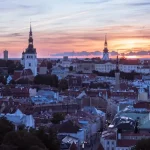
📷 Featured image by Margo Evardson on Unsplash.